Presiding over a working session on policies for people with disabilities on the afternoon of 3/12, General Secretary To Lam stressed that supporting people with disabilities is a moral obligation and a benchmark of a civilized, modern, and sustainably developing society.
In recent years, the Party and State have implemented various support policies, including rehabilitation, inclusive education, and employment opportunities. People with disabilities have also made efforts to pursue education and work. However, many still encounter significant daily challenges, and women and children with disabilities remain vulnerable to violence, neglect, or discrimination.
The General Secretary urged agencies to develop policies to ensure "no person with disabilities is left behind". He outlined the objective: enhancing access to services and rehabilitation, and shifting the approach from solely medical care to fostering social integration. Disability, he noted, is not merely a health concern but also involves social barriers that impede participation in economic and cultural life.
Policies must therefore focus on reducing prejudice, bridging inequalities, expanding opportunities, and empowering people with disabilities as active contributors, not passive recipients of care. Beyond medical support, insurance, and rehabilitation, the State should champion inclusive education, appropriate vocational training, and preferential employment. Enhancing transportation infrastructure, public facilities, and digital transformation is crucial to ensure convenient access.
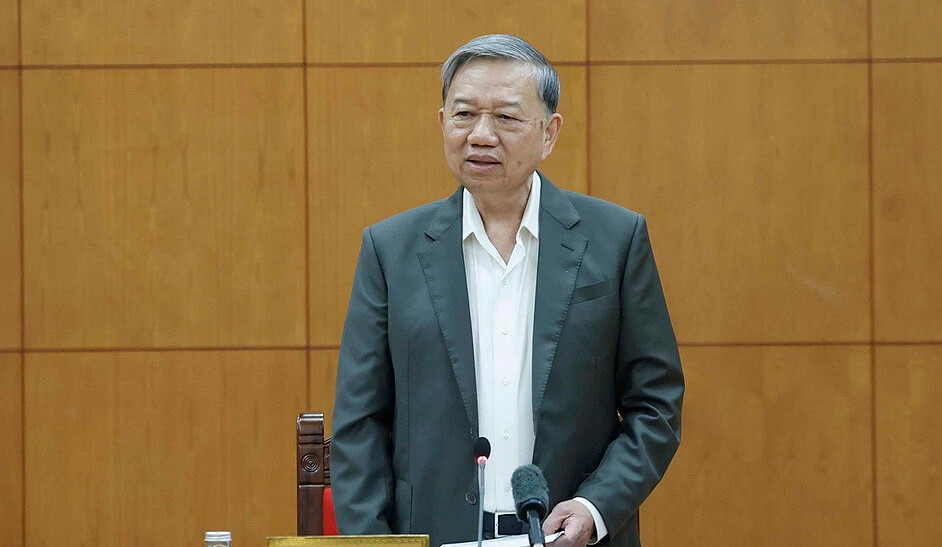 |
General Secretary To Lam speaks on the afternoon of 3/12. *Photo: TTXVN*
Social welfare policies must guarantee a minimum standard of living, livelihood support, housing, and legal aid to facilitate genuine integration for people with disabilities. The General Secretary also emphasized the need to enhance community awareness, eliminate stigma, and create a barrier-free society, while encouraging businesses, social organizations, and the community to participate in supporting people with disabilities.
For children with disabilities, the General Secretary urged early detection and ensuring their right to attend school, learn, and integrate. The Ministry of Education and Training was tasked with reviewing the system of inclusive education support centers, prioritizing localities lacking facilities for visually and hearing-impaired children, and training specialized support teachers.
According to the Ministry of Health, Vietnam currently has over 8 million people with disabilities. Individuals with severe and extremely severe disabilities receive monthly social allowances, health insurance cards, and educational support. Nationwide, 165 social assistance facilities care for approximately 25,000 people with disabilities and mental health conditions, while managing about 80,000 people with disabilities within communities.
Vu Tuan