Speaking on 11/12 at the national conference summarizing anti-corruption, anti-waste, and anti-negativity efforts for the 13th Party Congress term, General Secretary To Lam stated that this work has made strong and significant progress. The theoretical system and policies on preventing and combating corruption, waste, and negativity have been perfected, and the scope of agencies has expanded from fighting corruption to also combating negativity and waste. "We have halted the risk of corruption, waste, and negativity", he said, asserting that disciplining errant officials does not weaken the Party but rather strengthens it.
In recent times, internal affairs, inspection, auditing, investigation, prosecution, adjudication, and enforcement agencies have handled many serious corruption cases under the principle of "no forbidden zones, no exceptions". Through investigations, many sophisticated corruption schemes and acts of collusion forming special interest groups were uncovered, and lost assets were recovered to the maximum extent possible. The handling of cases ensures strictness while remaining humane, helping those involved to fully accept the verdict.
During the past term, 174 officials under Central Committee management, including some former key leaders of the Party and the State, were disciplined; 66 cases were criminally prosecuted. This demonstrates a commitment to anti-corruption that goes beyond mere slogans, with no forbidden zones and no exceptions.
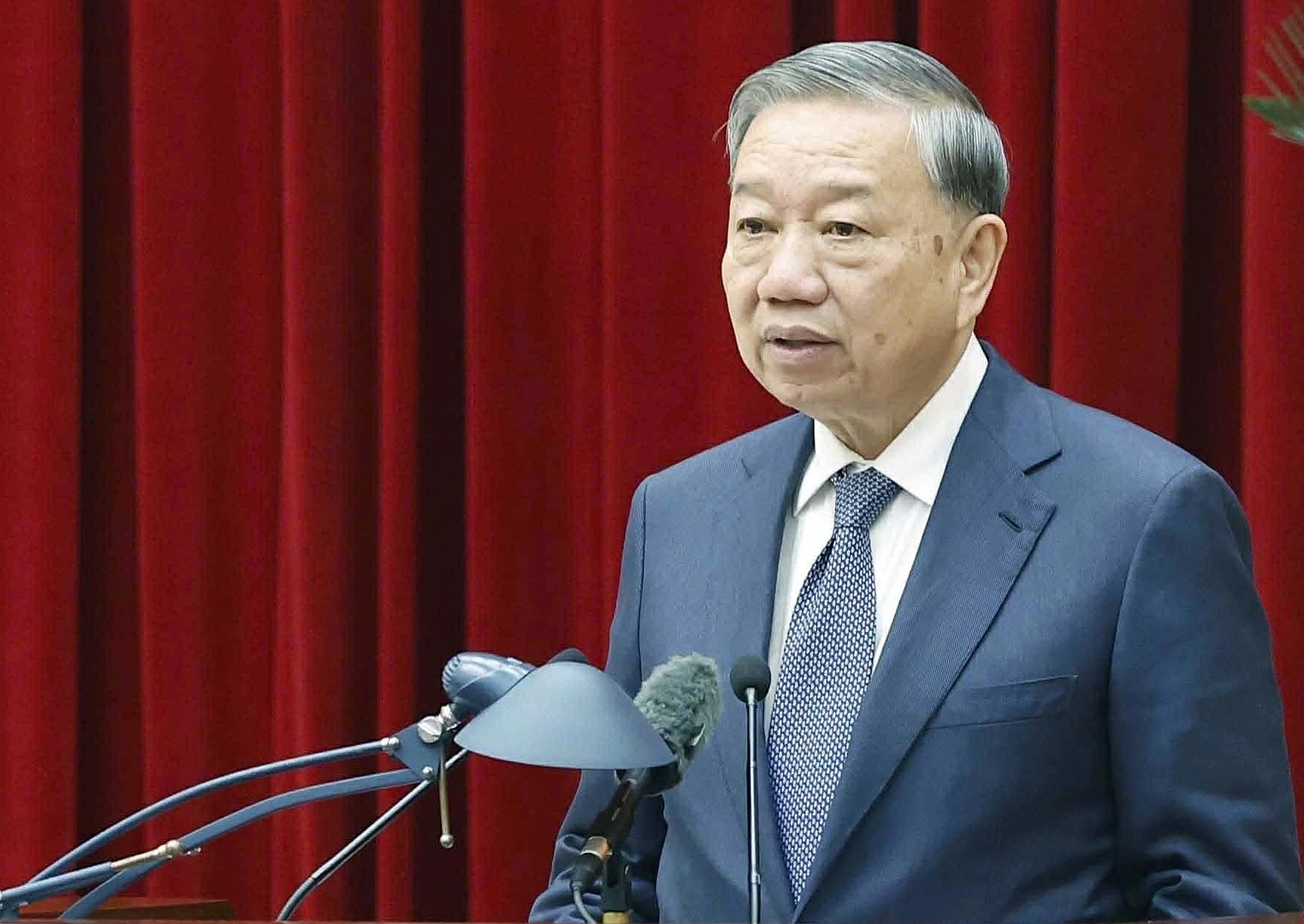 |
General Secretary To Lam speaking on the morning of 11/12. *Photo: Hoang Phong* |
Alongside the revolution to streamline the apparatus and implement a two-tier local government model, all provincial secretaries and chairmen nationwide are, for the first time, appointed from outside their respective localities to prevent special interest groups. The culture of integrity and salary policy reform continue to be promoted to create a foundation for preventing corruption, ensuring that officials do not want, do not need, and do not engage in corruption, waste, or negativity.
The General Secretary frankly pointed out limitations: a segment of officials and Party members still avoid responsibility and fear making mistakes, while institutions in some areas remain flawed and inadequate. Many violations have repeatedly occurred over extended periods, especially cases involving collusion between corrupt officials and businesses, forming special interest groups to illicitly gain profits, "even manipulating and disrupting power, causing particularly serious consequences."
Based on the practical experience of the term, the General Secretary summarized the work of anti-corruption, anti-waste, and anti-negativity into ten words: "perseverance - determination - consensus - comprehensive - breakthrough". Agencies are persistently perfecting institutions to prevent corruption, strictly punishing to deter corruption, and building an integrity culture while improving living standards so that officials do not want and do not need to engage in corruption.
He called for creating consensus within the system and society, strengthening "public consensus and support", and ensuring that all prevention and handling solutions are comprehensive, linking "construction" with "combat".
In the coming period, as many large projects are implemented with more open mechanisms, the risk of corruption may increase. The General Secretary urged agencies to prevent it "early, remotely, and at the root", abolish the "ask-give mechanism", close policy loopholes, and prevent special interest groups from embedding themselves or manipulating mechanisms, policies, and planning.
Concurrently, agencies must persistently practice an integrity culture and promptly implement strong reforms in salary and housing policies to ensure a decent life for officials and Party members, so they do not need to engage in corruption, waste, or negativity. The action strategy is built upon three pillars: integrity institutions, integrity public service, and integrity officials.
The principle for future handling is proactive detection and strict punishment of all corrupt acts, adhering to the rule that "no one is allowed to cross the red line". The General Secretary emphasized the need to prevent the formation of special interest groups and to end collusion between officials, businesses, and criminals for illicit gain. All economic, civil, administrative, and criminal relationships must be handled according to their true nature; Vietnam will enhance international cooperation to ensure corrupt individuals cannot evade responsibility.
He called for studying a vertical organizational model for internal affairs, Party inspection, and State inspection agencies, ensuring a "dual" control mechanism between the central and local levels. "Corruption must be fought even within anti-corruption agencies", the General Secretary stated.
The Party leader outlined three breakthroughs: perfecting institutions to end the practice of blaming mechanisms when violations occur; a breakthrough in personnel work to ensure that every official, especially leaders, is "exemplary, adheres to organizational discipline, complies with regulations, and overcomes temptations"; and a breakthrough in the application of science, technology, and digital transformation to increase transparency, accountability, expand cashless payments, and control large transactions via banks.
Vu Tuan