On the morning of 25/11, Minister of Health Dao Hong Lan, authorized by the Prime Minister, presented to the National Assembly a proposal for the National Target Program on healthcare, population, and development for the 2026-2035 period. This program aims to institutionalize the Party's policies on enhancing public health, effectively managing population development, and addressing current limitations within the grassroots healthcare system, preventive medicine, and population care services.
The government projects a total capital of 88,635 billion VND for the 2026-2030 phase, comprising 68,000 billion VND from the central budget, over 20,000 billion VND from local budgets, and 600 billion VND from other legal mobilization sources. For the 2031-2035 phase, the estimated capital requirement is 36,843 billion VND, bringing the program's total investment to over 125,000 billion VND.
According to Minister Dao Hong Lan, the program targets 90% of male and female couples receiving pre-marital counseling and health check-ups by 2030, increasing to 95% by 2035. By 2030, 70% of pregnant women will be screened for at least 4 common congenital diseases, rising to 90% by 2035. Additionally, 90-95% of newborns will be screened for at least 5 congenital diseases during the same period.
The government also aims to increase the crude birth rate by 0,5‰ by 2030 and by another 0,5‰ by 2035. Goals include reducing the sex ratio at birth to below 109 boys per 100 girls by 2030, and further to below 107 by 2035. The program also seeks to reduce the rate of stunting in children under 5 years old to below 15%.
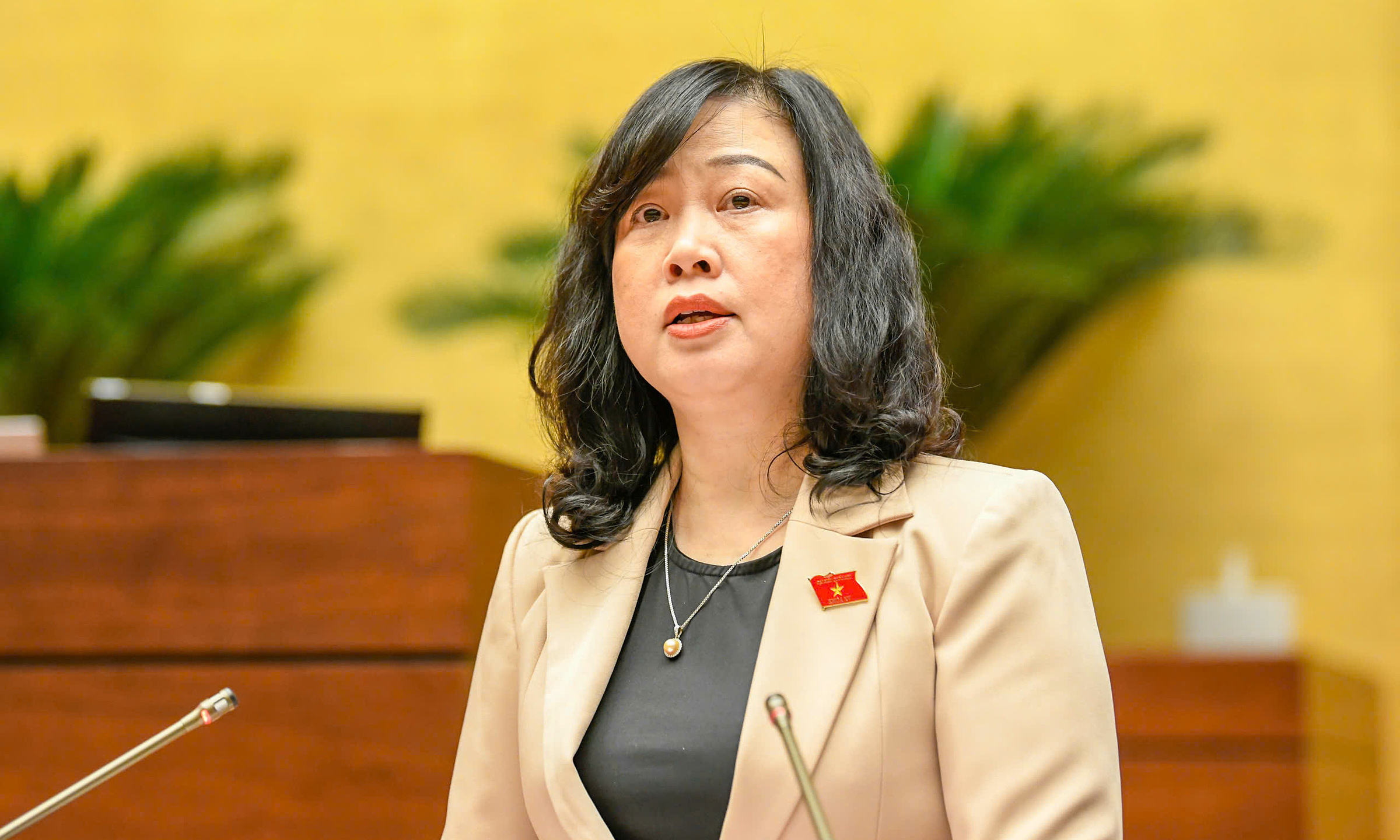 |
Minister of Health Dao Hong Lan presenting the report to the National Assembly. *Photo: Hoang Phong* |
Beyond population goals, the program prioritizes enhancing grassroots healthcare capacity. By 2030, 90% of communes and wards are expected to meet the national health criteria. The plan includes ensuring 100% of citizens have electronic health records, 100% of provincial Centers for Disease Control and Prevention (CDC) are capable of testing, disease surveillance, water quality inspection, and school hygiene. Furthermore, 100% of commune health stations will manage and treat non-communicable diseases according to standard procedures.
The government also targets increasing the proportion of citizens accessing official health information to at least 50% by 2030 and 80% by 2035. Social care for vulnerable people is projected to increase to 70% by 2030 and 90% by 2035.
To achieve these objectives, the government has designed the program with 5 component projects: enhancing the capacity of the grassroots healthcare network; improving the effectiveness of disease prevention and health promotion systems; population and development; social care for vulnerable people; and communication - management - supervision. Each project encompasses numerous sub-projects, ranging from infrastructure investment and training for preventive health staff to non-communicable disease prevention, reducing sex ratio imbalance at birth, adapting to population aging, community-based care for people with disabilities, and health and population communication.
Specifically, the population and development project focuses on encouraging two-child families, narrowing the sex ratio imbalance at birth, improving population quality in line with human resource development requirements, providing healthcare for the elderly, and rehabilitation for people with disabilities.
The Ministry of Health will lead the program's implementation. Other ministries, including National Defense, Public Security, Labor - Invalids and Social Affairs, Education and Training, Culture - Sports and Tourism, and Industry and Trade, will participate according to their respective tasks. Provincial People's Committees will organize the implementation, while the Fatherland Front and other organizations will coordinate advocacy, communication, and supervision efforts.
The Culture and Social Affairs Committee endorsed the program's necessity but suggested further reviewing objectives, targets, and solutions based on results-based management principles. They also recommended increasing resources for population-related content and adding people with disabilities to the priority groups. Additionally, the Committee proposed exploring projects to promote traditional medicine, medicinal herbs, and ensure food safety, while considering mechanisms to exempt disadvantaged localities from providing counterpart funds.
The Committee also urged the government to finalize the draft resolution, clarifying principles for fund allocation and the responsibilities of ministries and localities to avoid duplication with ongoing programs.
The National Assembly will discuss this content in group sessions this morning, followed by a plenary discussion on 2/12, with a vote scheduled for 11/12.
Son Ha