According to a plan issued by the Ca Mau Department of Agriculture and Environment, the province strives to have at least 30,000 hectares certified VietGAP or equivalent by 2030, and 20% of crab output integrated into value chains with businesses.
The province will review and establish key farming areas in Nam Can, Ngoc Hien, Dam Doi, Phu Tan districts and other potential regions. It will develop high-value farming models such as soft-shell crab, roe crab, and recirculating aquaculture systems. Concurrently, it will domesticate parent crab breeds, control seed quality, and monitor the environment.
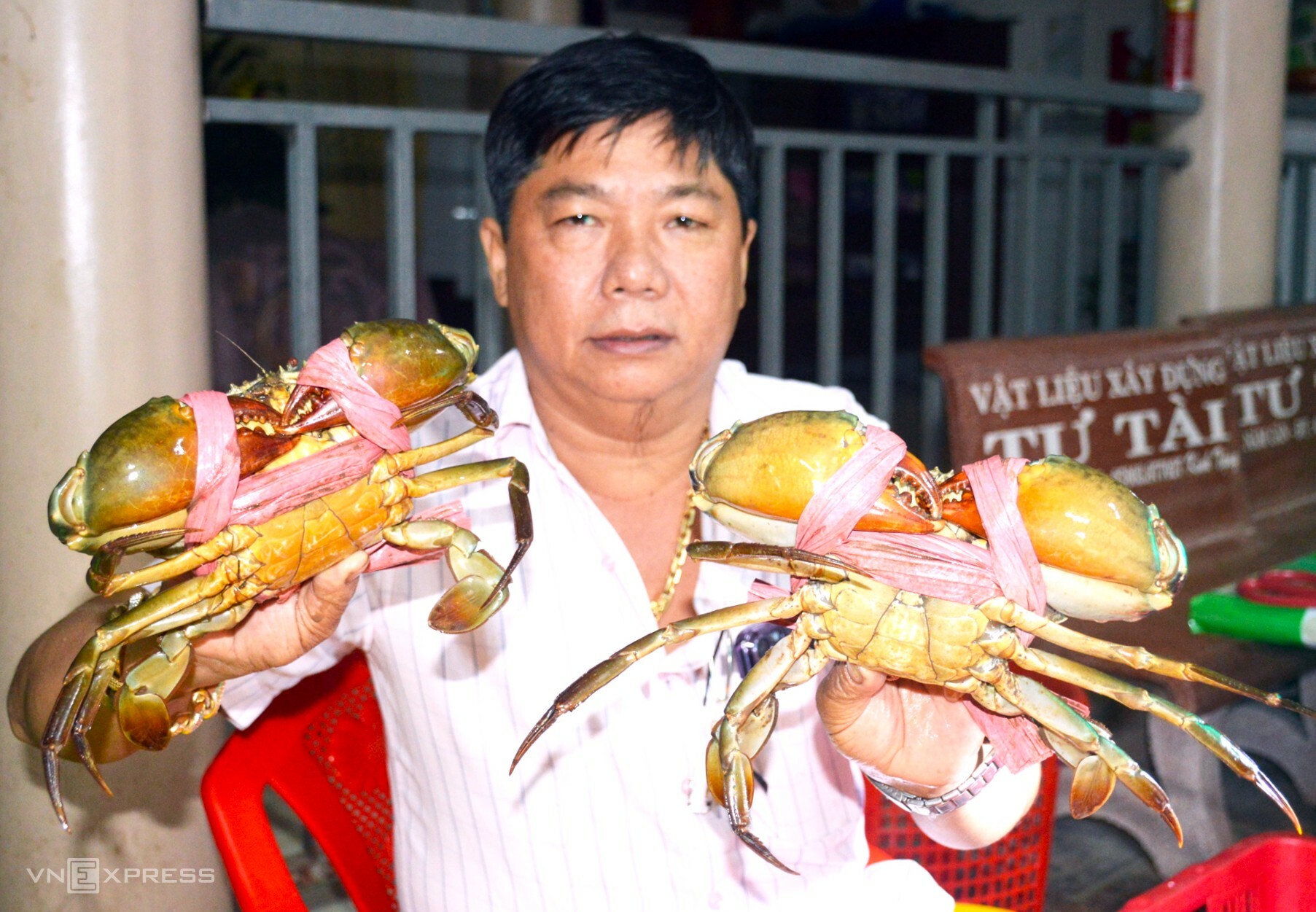 |
Over 80% of Ca Mau crab output is sold through traders. *Photo: Chuc Ly* |
Ca Mau will collaborate with CCIC Inspection and Certification Company Limited (Trung Quoc) to build a local certification center, aiming to reduce time and costs for official exports. The province will also implement a QR code traceability system and digital farming logs across the entire farming area.
In parallel, the locality will strengthen existing and establish new crab farming cooperatives. It will develop model purchase contracts and encourage businesses to invest in deep processing, such as peeled crab, frozen crab, and soft-shell crab, to enhance export value.
Ca Mau currently has over 365,000 hectares dedicated to sea crab farming, with an annual output exceeding 36,000 tons. Ca Mau crab is renowned for its firm, sweet meat and is a popular gift. This aquatic species provides livelihoods for over 45,000 households and is a key product of the province, with over 70% of its output exported to Trung Quoc.
Chuc Ly