The Hanoi People's Committee (HPC) is currently gathering public feedback on a draft Resolution. This proposal outlines policies for transport development, the application of high technology in managing and operating the transport system, and measures to restrict personal vehicles from entering the city's central areas.
The draft resolution includes a chapter dedicated to restricting personal vehicles and implementing congestion charges. The proposed phased implementation for motorized vehicles entering the inner city, aiming to reduce congestion and environmental pollution, is as follows: within ring road one from 1/1/2028; within ring road two from 1/1/2030; and within ring road three from 1/1/2032.
The Department of Construction, in its explanation of the draft, highlighted the significant traffic pressure on the inner city. This pressure stems from the rapid growth of personal motorized vehicles, coupled with limited land allocated for transport infrastructure. Frequent congestion on central roads and areas leads to longer travel times, increased social costs, and higher pollutant emissions.
"Implementing economic measures, such as charging vehicles entering the inner city, is a necessary solution to regulate personal vehicle usage, reduce traffic volume, and promote public transport," the explanatory document emphasizes.
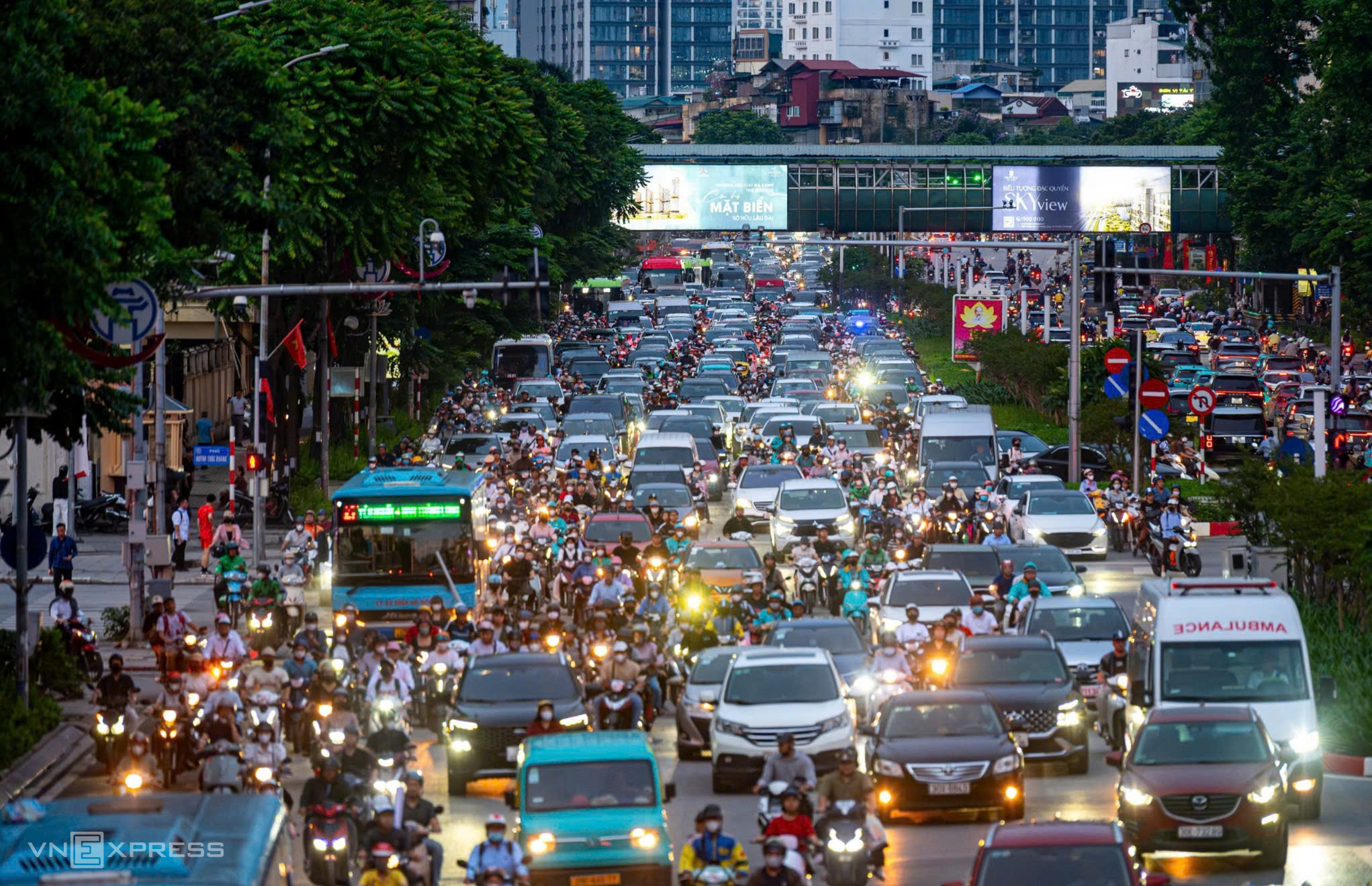 |
Nguyen Chi Thanh street, a main traffic artery into and out of the city center, is consistently overloaded during peak hours. Photo: The Bang |
According to the Department of Construction, the phased fee collection by ring road aims to ensure feasibility. This approach aligns with the progress of transport infrastructure development, the public passenger transport system, and the city's socioeconomic conditions, allowing residents and businesses time to adapt to the new policy.
The initial focus on ring road one is due to its highest population density, vehicle volume, and traffic pressure. Following an evaluation of its effectiveness, the city plans to expand the policy to ring road two and ring road three, ensuring a unified approach to urban traffic management.
Hanoi has been considering vehicle charges for inner-city entry for decades. In 2017, the Hanoi People's Council approved a project to enhance personal vehicle management, with targets for 2020 and a vision to 2030. This project included developing a fee system for motorized vehicles in congestion-prone areas as a measure to curb personal vehicle use and environmental pollution.
In late 2021, a proposal for inner-city vehicle charges was initially on the agenda for a People's Council session but was subsequently removed due to various dissenting opinions.
Hanoi's roads are home to approximately 8,1 million motorized vehicles, comprising 1,1 million oto (13,6%) and about 7 million moto and motorbikes (86,7%). This total excludes an additional 1,2 million motorized vehicles from other provinces and cities that regularly travel in the capital. Notably, 95% of the 7 million moto and motorbikes are gasoline-powered.
Vo Hai