The contract was signed between the Hanoi Metropolitan Railway Management Board (MRB) and the Vinhomes - SGC Investment and Construction Joint Stock Company Consortium. This agreement follows a turnkey (EPC/Turnkey) format, where the contractor assumes full responsibility for all aspects of the project.
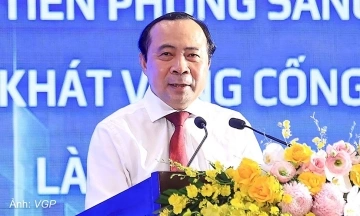
City Chairman Vu Dai Thang acknowledged the project's significant scale, complex technical demands, and tight schedule. To meet these progress requirements, the city opted for the turnkey method. Under this approach, the contractor is responsible for organizing the entire implementation process, from design, equipment procurement, and construction to installation, system integration, testing, trial runs, and final handover of the completed works.
The city also recognized the consortium's dedication to allocating resources for the project and controlling investment costs. The target is to keep expenditures from exceeding 120 million USD per kilometer.
Upon completion, these five railway lines will play a crucial role in establishing a comprehensive mass public transport network. This expansion is expected to significantly reduce traffic congestion, improve environmental quality, and foster the development of urban areas based on transit-oriented development (TOD) principles.
The city's leader urged the Hanoi Metropolitan Railway Management Board, the contractor consortium, and relevant departments to carefully consider technology selection, ensuring system synchronization. Emphasis was placed on technology transfer and developing domestic capabilities, alongside guaranteeing quality, safety, and effective cost control.
The five new lines include:
Line one: Spanning 59 km, this route connects Hung Vuong Stadium, the Railway Industrial Park, Ngoc Hoi, Hanoi Station, Yen Vien, Thu Lam urban area, and Noi Bai International Airport.
Line two: Approximately 60 km long, running from Noi Bai International Airport through Nam Thang Long, Tran Hung Dao, Thuong Dinh, to Thuong Phuc/Hung Vuong Stadium.
Line 8: Measuring 64 km, it will link Hoa Lac, Son Dong, Mai Dich, Ring Road 3, Linh Nam, and Thuan An.
Line 10: This 38,7 km line will connect Vo Chi Cong, Ring Road 2,5, Times City/Vinh Tuy, Co Loa, and Dong Anh.
Line 14: The final line, approximately 31,8 km long, will run from Thang Long Bridge through Hong Ha to Ocean Park/Gia Lam. All five railway lines are expected to be completed by 2030.
 |
Hanoi city leaders and relevant units attended the contract signing ceremony on the afternoon of 15/10. Photo: Hoang Phong |
A representative from the consortium confirmed that to ensure timely progress and high quality for the project, Vinhomes - SGC proactively procured specialized and modern construction equipment. This includes over 100 Tunnel Boring Machine (TBM) lines and more than 50 diaphragm wall excavation equipment lines.
Earlier, Vinhomes also finalized a contract with Alstom, a global leader in railway technology, to supply 200 Metropolis trains for the five metro lines. These new-generation trains, each comprising five carriages, are engineered for optimal carrying capacity, operational efficiency, and stringent safety standards.
 |
Proposed route map for the five urban railway lines, which commenced on the morning of 22/6. Graphics: Tam Thao |
The Hanoi Metropolitan Railway Management Board (MRB) explained that the development of these five urban railway lines is integrated into the capital's comprehensive 100-year development vision. This initiative is supported by specific mechanisms and policies outlined in National Assembly Resolutions 188/2025 and 258/2025, the Capital Law, and other plans approved by competent authorities.
According to the capital's 100-year master plan, Hanoi's urban railway network is projected to extend approximately 979 km. When national and inter-regional railways are included, the entire system will reach nearly 1,200 km. Currently, Hanoi operates the Cat Linh - Ha Dong line and the elevated Nhon - Cau Giay section of the Nhon - Hanoi Station line. The city aims to invest in approximately 500 km of urban railway by 2035, with the remaining 479 km slated for completion between 2036 and 2045.
Vo Hai