On the morning of 17/12, Vu Dai Thang, Chairman of the Hanoi People's Committee, chaired a dialogue conference with the capital's youth for 2025. The event, themed "Hanoi Youth: Igniting Aspirations, Fostering Innovation, Acting Responsibly," addressed key challenges and opportunities for the city's young generation.
During the conference, Pham Huy Hieu, a lecturer from the Research and Innovation Center at VinUni University, proposed policies to encourage young intellectuals. He advocated for creating conditions that allow them to directly participate in shaping, designing, building, and implementing projects and public platforms, thereby leveraging their creative and technological capabilities.
 |
Tran Anh Tuan, Director of Hanoi Department of Science and Technology, at the dialogue. Photo: Hoang Phong |
Responding to this, Tran Anh Tuan, Director of the Hanoi Department of Science and Technology, announced that the department is submitting a proposal to the city for a multi-faceted human resource training program. The first type of training aims to cultivate approximately 50,000 high-quality digital personnel through "contract orders" with universities and academies.
Under this initiative, the city can select second-year and third-year students based on rigorous criteria. Hanoi will then fund their specialized training at educational institutions, focusing on strategic technologies and priority sectors. Upon graduation, these individuals will commit to serving the city for a specified period.
The second type is the "Next 1,000" excellence program. Hanoi plans to allocate funds for the rigorous selection of bachelors and engineers from strategic technology fields. The city will cover their tuition fees for studies at leading global educational institutions. Participants in this program must commit to working for Hanoi for at least five years after completing their studies. This program is expected to launch from 2026.
The third type of training, focusing on "elite" talent, will be implemented at two levels through collaboration between the Department of Science and Technology, the Department of Education and Training, and the Department of Home Affairs. The first level involves selecting outstanding middle school students for a separate, more comprehensive curriculum, enhanced by artificial intelligence, digital transformation, and support from domestic and international experts. The second level focuses on gene selection for elite training from an early age through adulthood, including scientific research on prenatal education.
According to Mr. Tuan, the city will select young individuals directly from their undergraduate and engineering stages for programs like "Next 1,000." Within a few years, Hanoi aims to establish a high-quality workforce that will first serve the city's needs and then meet the demands of global businesses investing in Hanoi.
Roadmap for relocating universities and colleges
Also at the conference, Nguyen Thi Viet Linh, Vice Secretary of the Youth Union of Vietnam National University, Hanoi, inquired about the relocation roadmap for universities and colleges to suburban areas. She also asked about the city's plans to ensure a stable learning and living environment for students after this transition.
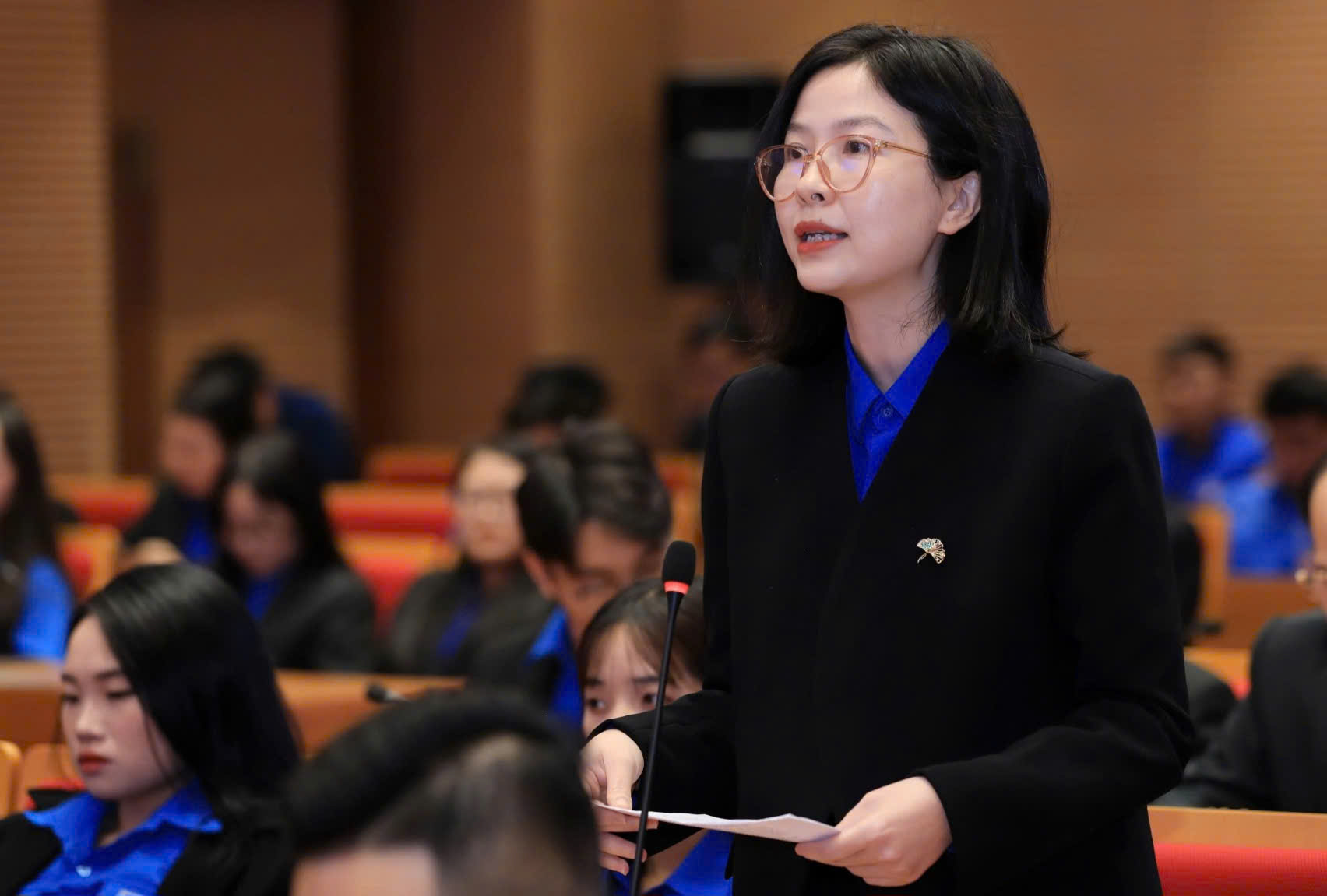 |
Lecturer Nguyen Thi Viet Linh, Vice Secretary of the Youth Union of Vietnam National University. Photo: Hoang Phong |
Nguyen Phi Thuong, Director of the Hanoi Department of Construction, explained that Hanoi's master plan involves developing a multi-center urban model with distinct growth poles. The Hoa Lac Urban Area is designated as a science-technology, education-training hub, where higher education institutions will relocate. This move aims to create a new development pole for the capital, with the Hoa Lac Hi-Tech Park at its core.
Vietnam National University, Hanoi, has already partially moved to Hoa Lac, and many other universities are developing their relocation plans and projects. The City People's Council has passed a resolution mandating a plan for relocating higher education institutions to suburban areas, prioritizing large public institutions. By 2030, the goal is to establish university cities, such as Hoa Lac and its satellite areas, supported by integrated infrastructure.
Mr. Thuong stated that during the 2025-2030 period, the city aims to relocate public training institutions with large student populations. This initiative targets approximately 200,000 students studying in new university cities, alongside the development of training, research, and innovation centers linked to the Hoa Lac Hi-Tech Park.
The Director of the Department of Construction announced that on 19/12, the city will break ground for urban railway line 05 Van Cao - Hoa Lac. This project, with a total investment of approximately VND 74 trillion, is expected to be completed and operational before 2030, forming a vital transportation artery for the Hoa Lac area and its surroundings.
Addressing inappropriate behavior in cyberspace
Nguyen Kim Hoai Nam, Principal of Thanh Cong Secondary School, highlighted two major challenges facing the educational environment for Hanoi's youth and children: the spread of harmful, false information in cyberspace and school violence, particularly online violence.
Pham Quoc Toan, Deputy Director of the Hanoi Department of Education and Training, noted that Hanoi is a signatory to the Hanoi Convention on cybersecurity and has been recognized by UNESCO as a "Global Learning City." To address current challenges, the Education sector has advised the city on several key initiatives. These include developing coordination regulations, clearly defining responsibilities for units in life skills and digital skills education, protecting children in cyberspace, and handling school violence incidents.
The Education sector has also signed coordination regulations with the City Police to ensure security and order at educational institutions, enhance moral and lifestyle education, and equip students with safe digital skills.
Nguyen Phuong Ngoc, Secretary of the Youth Union of Nguyen Binh Khiem Secondary and High School (Cau Giay), expressed concern that many culturally inappropriate products, especially from celebrities and influencers, are widely circulating on social media, negatively affecting youth and children.
Bach Lien Huong, Director of the Hanoi Department of Culture and Sports, stated that the city manages approximately 500-600 electronic information pages and online platforms operating within its jurisdiction. In 2025, the Department collaborated with central and city agencies to address hundreds of violations on social media, resulting in the removal of many posts and videos.
The Department of Culture and Sports affirmed the city's resolve to strictly address acts violating fine customs, traditions, and cultural conduct. Several artists exhibiting inappropriate behavior or statements during performances in Hanoi have faced the highest penalties, including performance bans.
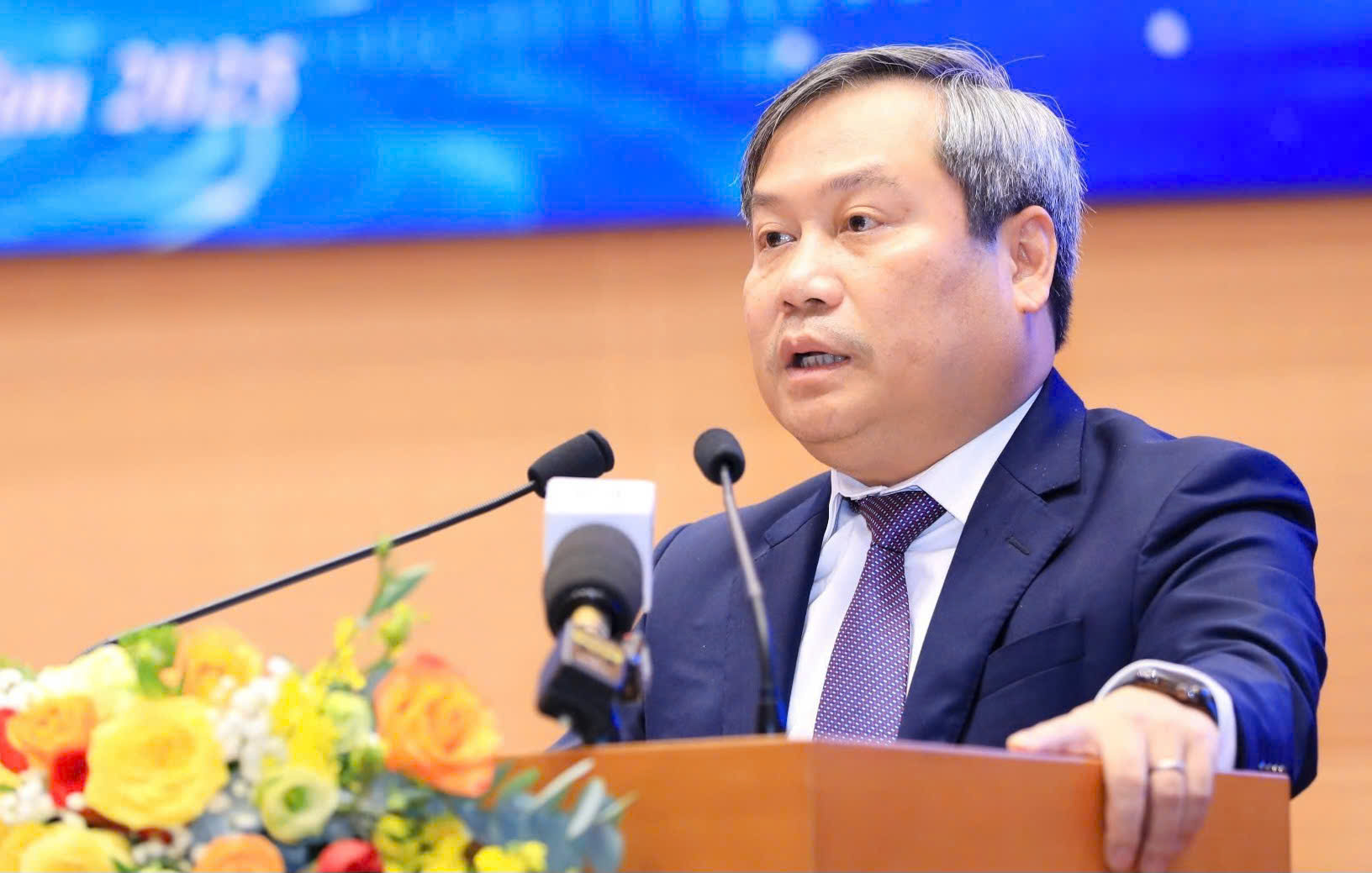 |
Chairman of Hanoi People's Committee Vu Dai Thang speaks at the end of the dialogue. Photo: Hoang Phong |
Concluding the conference, Chairman of the Hanoi People's Committee Vu Dai Thang remarked that the dialogue was frank, responsible, and constructive. He noted that the opinions expressed by the youth demonstrated their courage, policy insight, digital capabilities, and aspiration to contribute to the capital.
According to the Chairman, 2025 marks the first year Hanoi will comprehensively implement the goals outlined in the 18th City Party Congress Resolution. It also involves concretizing key resolutions, projects, and programs on digital transformation, science-technology development, innovation of growth models, and private economic development.
He emphasized that Hanoi youth are not merely policy beneficiaries but must be a leading force in accessing and mastering new technologies. They should actively participate in building and operating data platforms, forming an innovation ecosystem, thereby directly contributing to the implementation of policies and resolutions.
Vo Hai