The Ho Chi Minh City Institute for Development Studies is conducting a survey as part of a research project to establish names for urban railway stations in the area. The public opinion collection covers evaluating the current naming system, proposing principles for future line and station naming, along with a system of symbols, abbreviations, sequential numbers, and identifying colors for each line.
For station names, the survey offers criteria such as: being concise, easy to remember, easy to pronounce for both Vietnamese and foreigners; reflecting traditional place names; being associated with historical-cultural sites and values; coinciding with or near major road names; or being linked to important structures like hospitals, schools, airports, and shopping centers.
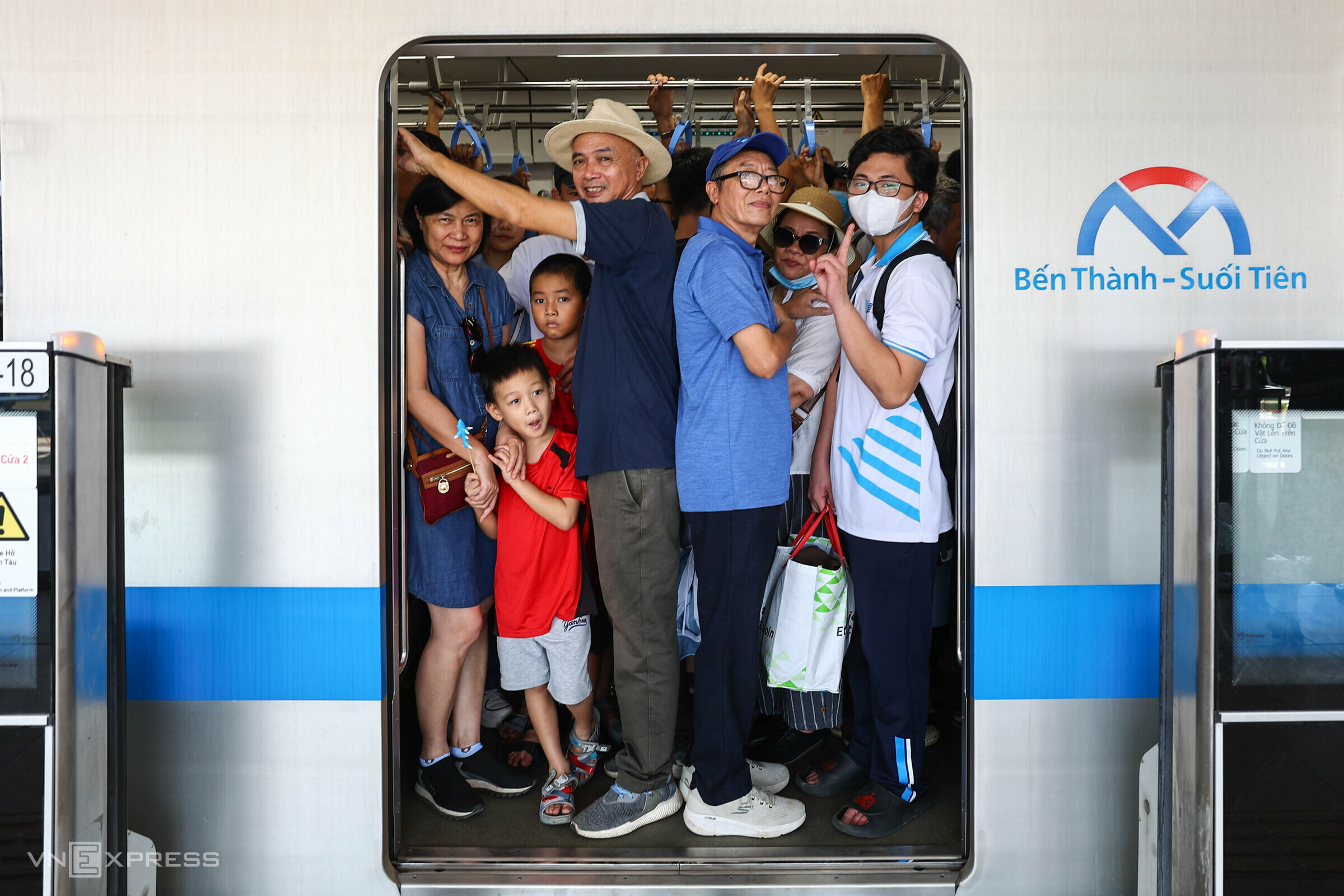 |
Passengers on the Ben Thanh - Suoi Tien metro. Quynh Tran.
Residents can also suggest station naming options based on traditional place names such as Ben Thanh, Cho Lon, Thu Thiem; street names like Le Loi, Hai Ba Trung, Nguyen Hue; prominent landmarks like Cho Ray hospital, National University, Tan Son Nhat airport; administrative unit names, historical figures, or combining line codes with station names.
Regarding metro line names, the survey provides several options for public input: naming by sequential number (Line 1, 2, 3); by color (Red Line, Blue Line); lines combining number and color (Line 1 - Red); by the line's start-end points (Ben Thanh - Suoi Tien); or combining sequence number, color, and start-end points.
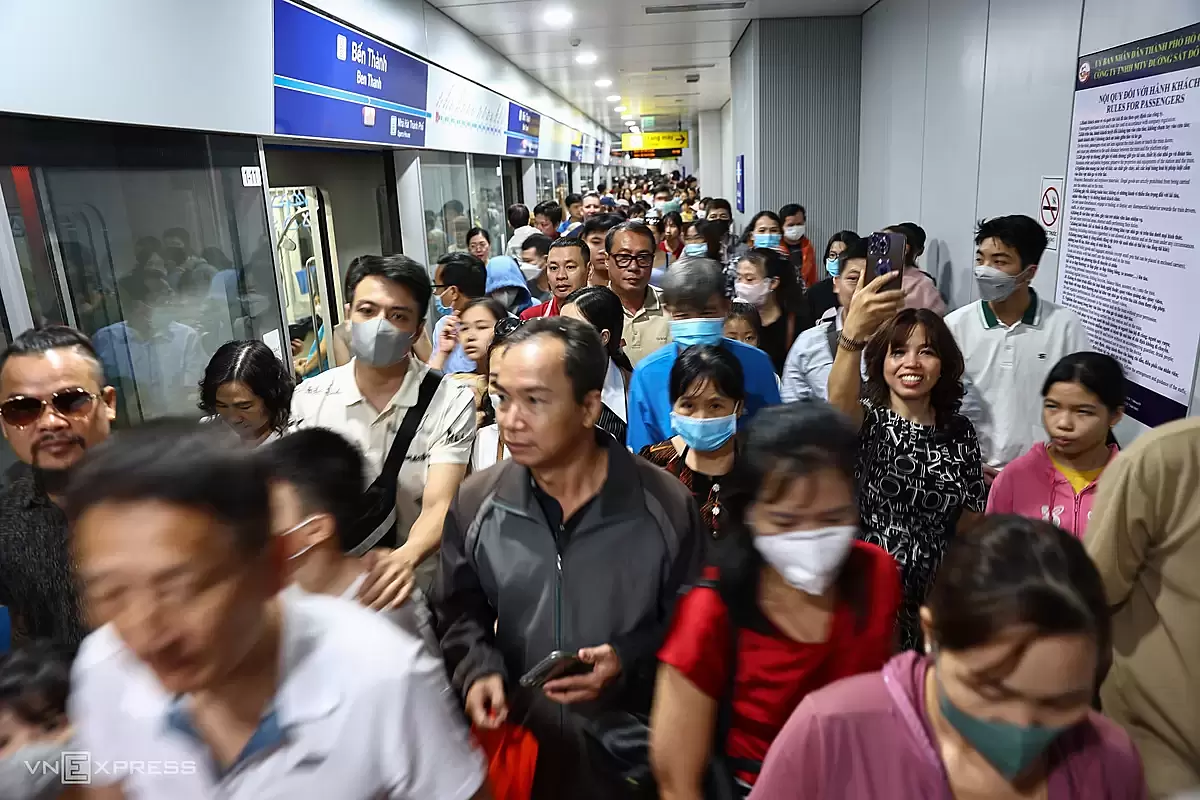 |
Passengers waiting for the train at Ben Thanh station of the Ben Thanh - Suoi Tien metro. Thanh Tung.
Ho Chi Minh City currently operates Metro Line one (Ben Thanh - Suoi Tien) with 14 stations, including three underground and 11 elevated stations. The station names are Ben Thanh, City Theater, Ba Son, Van Thanh Park, Tan Cang, Thao Dien, An Phu, Rach Chiec, Phuoc Long, Binh Thai, Thu Duc, High-Tech Park, National University, and Suoi Tien Bus Station. This naming system was established when the project was approved nearly 20 years ago, primarily based on historical place names, geographical locations, or major landmarks near the stations.
However, some names are considered confusing. For example, the terminal station is named Suoi Tien Bus Station but is actually next to the new Mien Dong Bus Station, while Suoi Tien Tourist Area is over 3 km away. Conversely, the station near this tourist area is currently named National University.
Additionally, after Ho Chi Minh City merged with Binh Duong and Ba Ria - Vung Tau, the metro network in the newly expanded area also experienced duplicate line numbers because each locality previously used a numbering system combined with the line's start-end points.
After administrative boundary expansion, HCMC's metro network is planned for 27 lines, with a total length of over 1,000 km. Besides the Ben Thanh - Suoi Tien metro, which is nearly 20 km long, the city aims to expand the network to 200 km between now and 2030.
Metro and railway line names worldwide are often based on sequential numbers, colors, start-end points, or historical place names.
Giang Anh