The Department of Construction recently submitted this content to the Ho Chi Minh City People's Committee for consideration, following a review and development process for new advertising plans concerning the city's bus system.
Advertising on bus bodies in TP HCM was previously implemented starting in 2017, after a long period of prohibition. At that time, the city divided bus routes into four bid packages for auction. However, only one package, comprising 25 routes with over 490 buses, was successful, contributing approximately 135 billion VND to the budget over three years. The remaining packages, despite multiple adjustments to the plans, failed to attract businesses. This activity was then suspended from 3/2021.
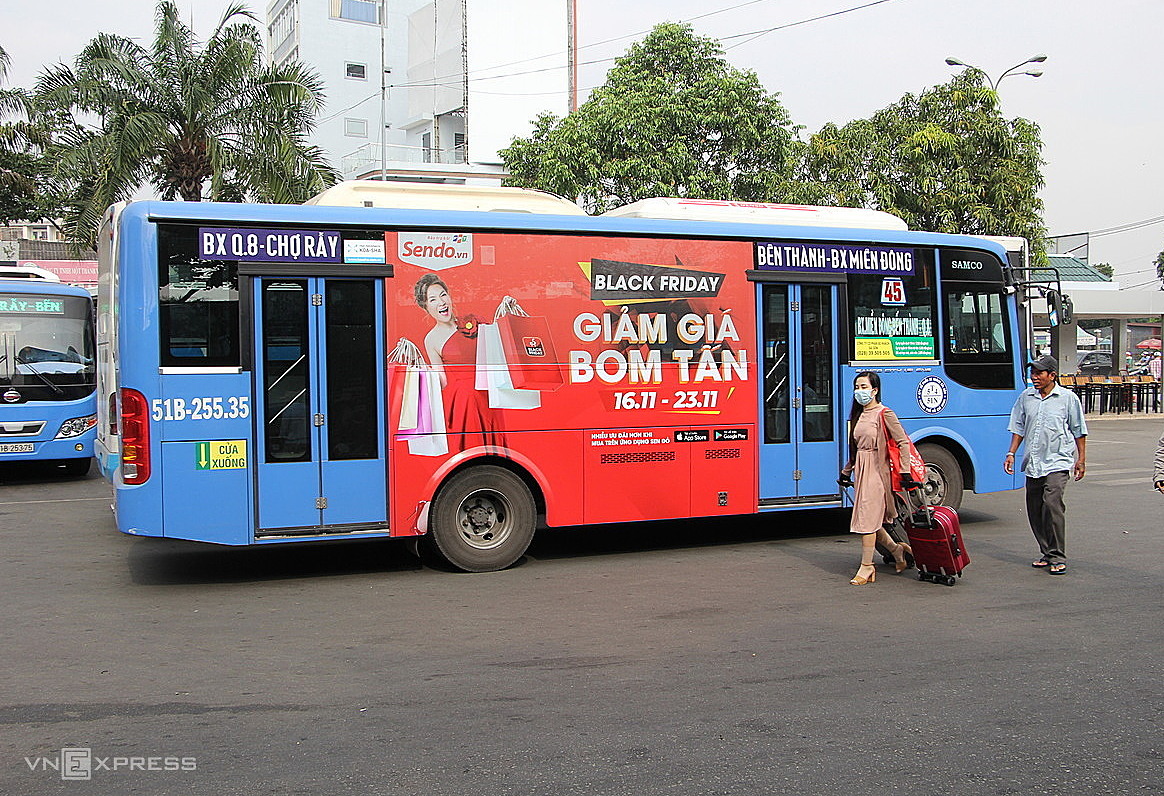 |
Advertising on bus bodies in TP HCM, 2019. Photo: Giang Anh |
According to the Department of Construction, bus body advertising contributes to increasing budget revenue and modernizing the public transport system's image. However, its implementation faced several obstacles, preventing it from meeting expectations. Some cooperatives ceased operations, and routes shifted to other transport units, complicating advertising activities.
Furthermore, most of the revenue was remitted to the city budget, while the buses are assets of businesses and cooperative members. This structure failed to create a positive incentive for participation. Additionally, the proliferation of other advertising formats also diminished the appeal of bus advertising.
During the process of researching new plans and working with transport units, the Department of Construction stated that if implemented with an appropriate mechanism, bus advertising would generate additional revenue for businesses to invest in and improve service quality. This revenue source would also encourage units to reduce bid prices for operating routes, contributing to budget savings.
To ensure effective implementation, the Department of Construction proposes discontinuing the old advertising scheme and adopting a new approach. Businesses would continue to advertise on bus bodies with compliant content and format; they would independently find partners and negotiate market-based prices. For non-subsidized routes, transport units would retain all advertising revenue after tax payments.
For subsidized routes that have already been tendered, businesses would also receive 100% of the advertising revenue until the end of the route's operating period. However, they would need to allocate a portion to implement promotional programs and enhance service quality.
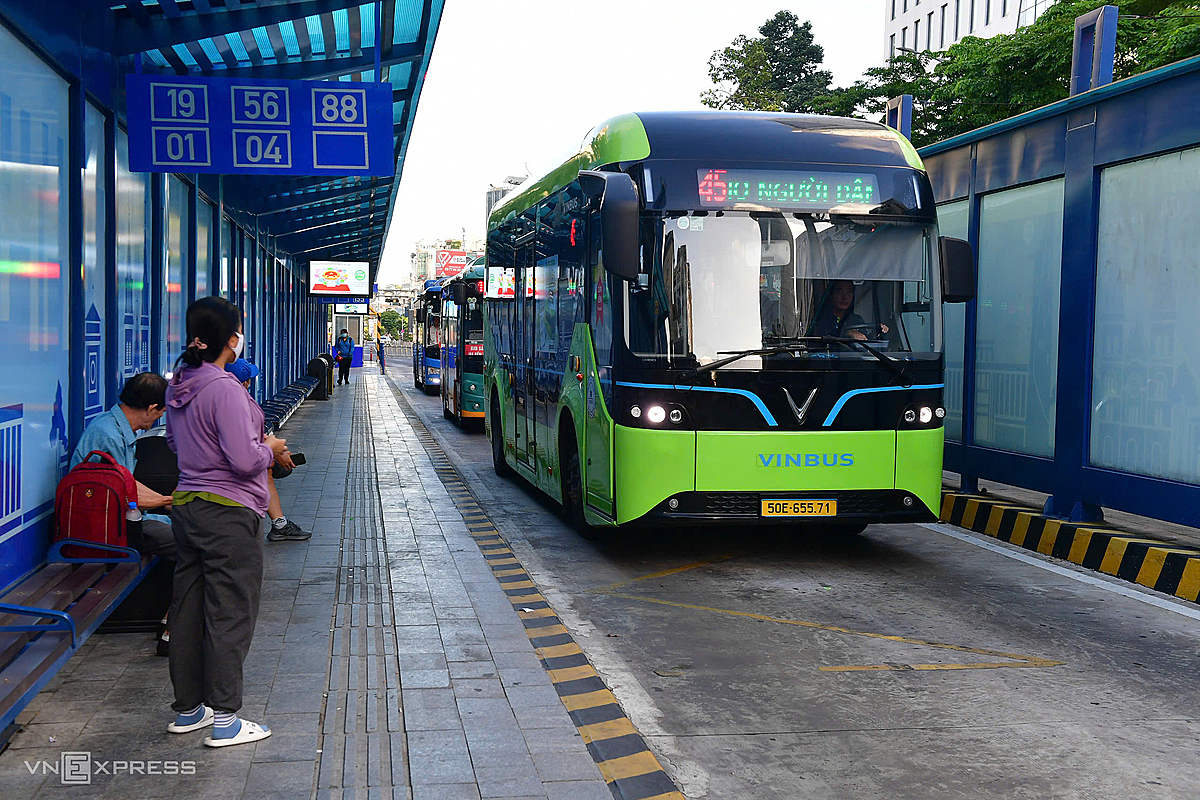 |
Electric bus fleet in TP HCM, 7/2026. Photo: Thanh Tung |
For routes not yet tendered or those being re-tendered, the bidding documents would include provisions allowing bus advertising. Participating businesses would forecast advertising revenue independently to reduce their bid prices and retain this revenue during the contract period, after fulfilling financial obligations.
TP HCM currently operates 180 bus routes, comprising 109 subsidized and 71 non-subsidized routes, with a total of 2,432 buses. The fleet largely consists of new electric vehicles. Among these, 134 intra-provincial routes are currently offering free fares to passengers, a policy effective until the end of this year.
Giang Anh