Ho Chi Minh City is exploring the implementation of priority bus lanes and leveraging artificial intelligence (AI) to improve the punctuality of its public bus system. This initiative follows a one-month free fare policy on 134 routes, which led to a significant 39% surge in passenger numbers. City officials recognize that maintaining punctuality is crucial for retaining these new riders.
At a review meeting on 30/7 for the one-month free fare policy on 134 bus routes, Deputy Director of the Department of Construction Bui Hoa An announced the policy's success, citing a strong increase in passengers. However, An emphasized that for residents to continue choosing buses, the service must ensure punctuality.
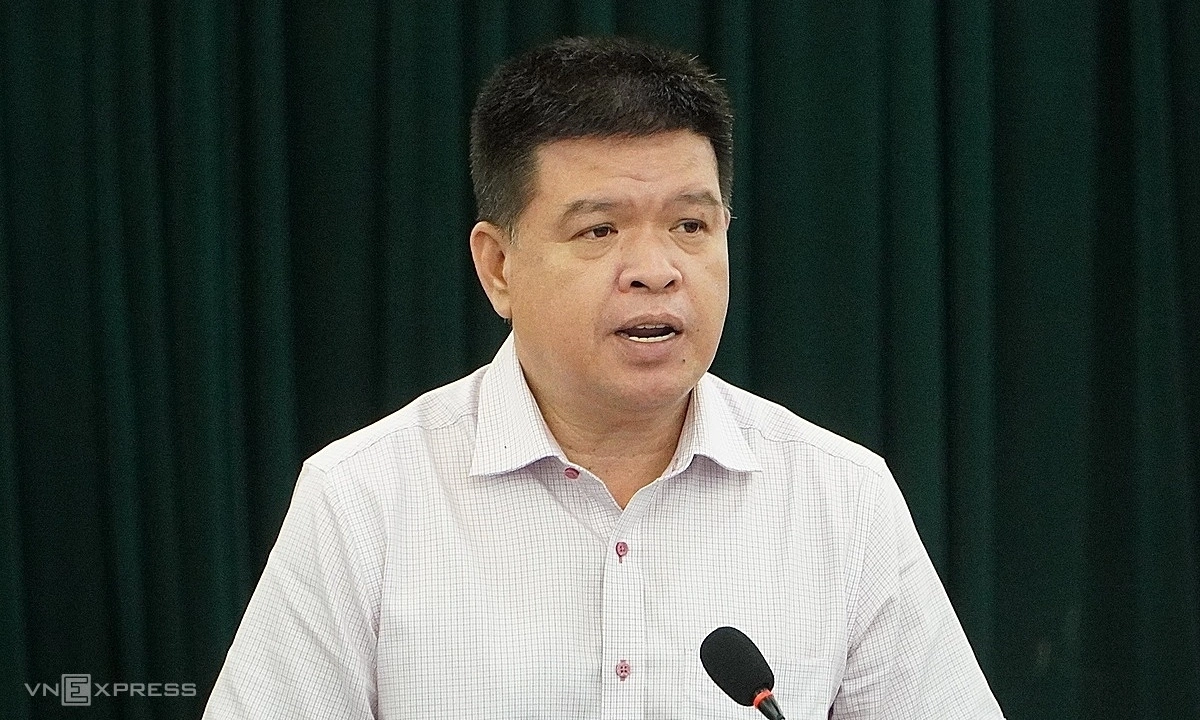 |
Deputy Director of the Department of Construction Bui Hoa An speaks at the working session, morning of 30/7. *Photo: Giang Anh* |
An noted that while the on-time departure rate currently stands at about 97%, the more crucial aspect is buses arriving at stops and terminals on schedule. Additionally, easy connections between bus stops, shelters, and passengers' origins and destinations significantly influence their choice of transport.
Given the city's dense traffic, ensuring bus punctuality is almost impossible if buses share lanes with other vehicles. To address this, authorities are planning to implement priority lanes on suitable routes or organize them during set time slots to improve bus speed and stability.
The transport sector first proposed the priority lane plan when submitting the free bus fare proposal in May. Two routes currently under consideration are Nguyen Huu Canh and Nguyen Tat Thanh roads; however, a specific plan is still being evaluated as both are main arteries with very high traffic volume.
Nguyen Huu Canh road is about 3 km long, connecting Ho Chi Minh City's center with the eastern area, and currently has 10 lanes. Nguyen Tat Thanh road is about 2,5 km long, connecting the center with the southern area, currently has 4 lanes and is preparing for expansion to 10 lanes.
Ho Chi Minh City previously implemented priority bus lanes on Tran Hung Dao road but later ceased operations. Almost 10 years ago, the city also studied this option on Dien Bien Phu and Vo Thi Sau roads but did not implement it. In recent years, the solution has been raised again, but it could not be implemented due to limited infrastructure and increasing private vehicle numbers.
In parallel with infrastructure solutions, the Department of Construction will also research applying artificial intelligence (AI) in bus operations. This will initially be piloted on route 33 (An Suong Bus Station - National University). AI is expected to optimize operations, frequency, and travel times based on past trip data and current traffic conditions.
Additionally, the city will continue to optimize bus schedules, review, and reorganize the bus network to enhance connections with metro lines, river buses, and public bicycles.
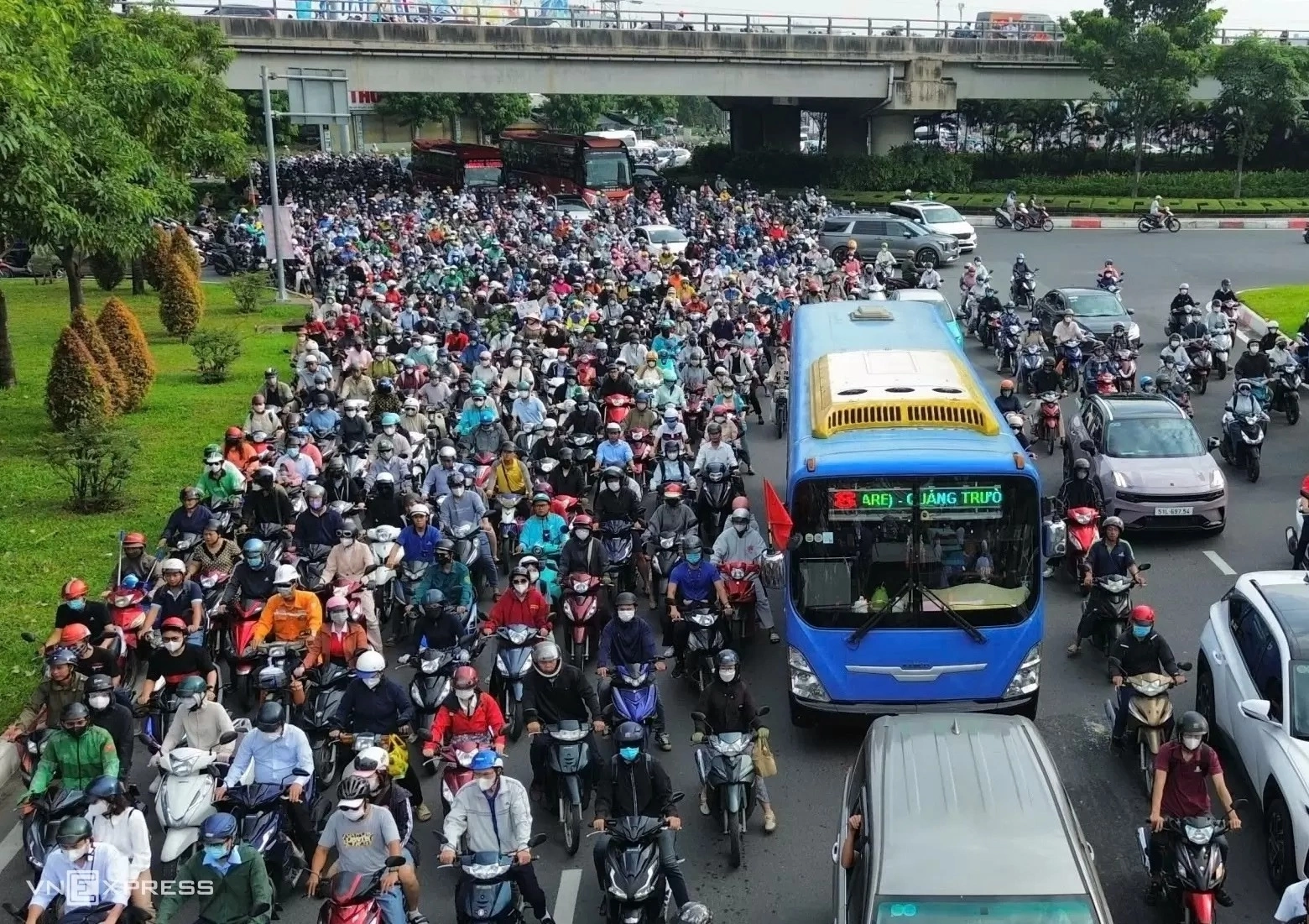 |
A bus travels amidst cars and motorbikes near Binh Trieu 2 bridge to enter Ho Chi Minh City center, 8/2025. *Photo: Dinh Van* |
Ho Chi Minh City began offering free fares on 134 bus routes from early July. After one month, the bus system served nearly 8,4 million passengers, an increase of over 39% compared to the same period last year. Passenger numbers surged from the first week and remained high in subsequent weeks.
According to Le Minh Triet, Director of HURC1 Company, the operator of the Ben Thanh - Suoi Tien metro, during the first month of free bus fares, the metro served about 1,83 million passengers, a 15% increase year-on-year. These results indicate that integrated connections between buses and the metro are effectively attracting people to public transport.
The free fare policy is being implemented in two phases: From 1/7 until the end of September, passengers on 134 routes receive free fares without required identification. From 1/10 until the end of the year, free fares will continue but require identification via citizen ID, VNeID, bank cards, e-wallets, or the MultiGo app.
After merging with Binh Duong and Ba Ria - Vung Tau, Ho Chi Minh City currently has 180 inter- and intra-provincial bus routes with over 2.400 vehicles. The free fare policy applies to 134 intra-provincial routes, not including the remaining routes.