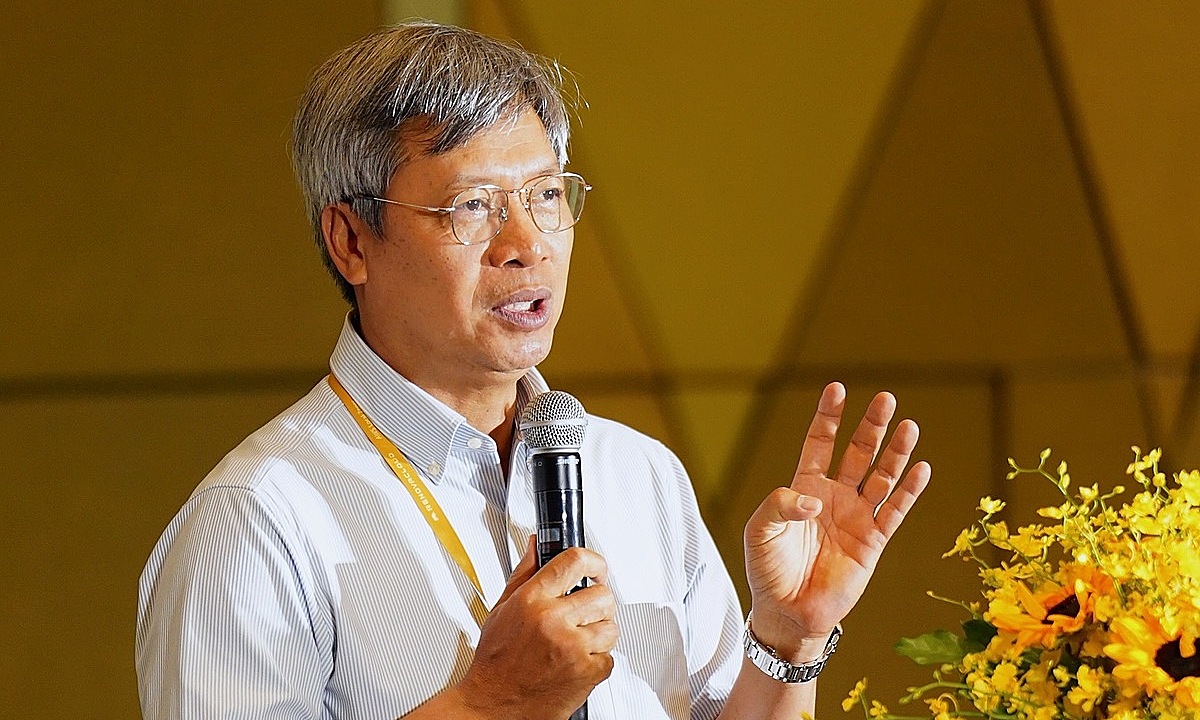
On 31/5, the Ho Chi Minh City High Command brought Mr. Vo Huy Thinh, 70 years old, to survey Le Thi Rieng Park in Hoa Hung ward. Mr. Thinh stated that 58 years ago, he witnessed the mass burial of soldiers at Do Thanh cemetery, now Le Thi Rieng Park.
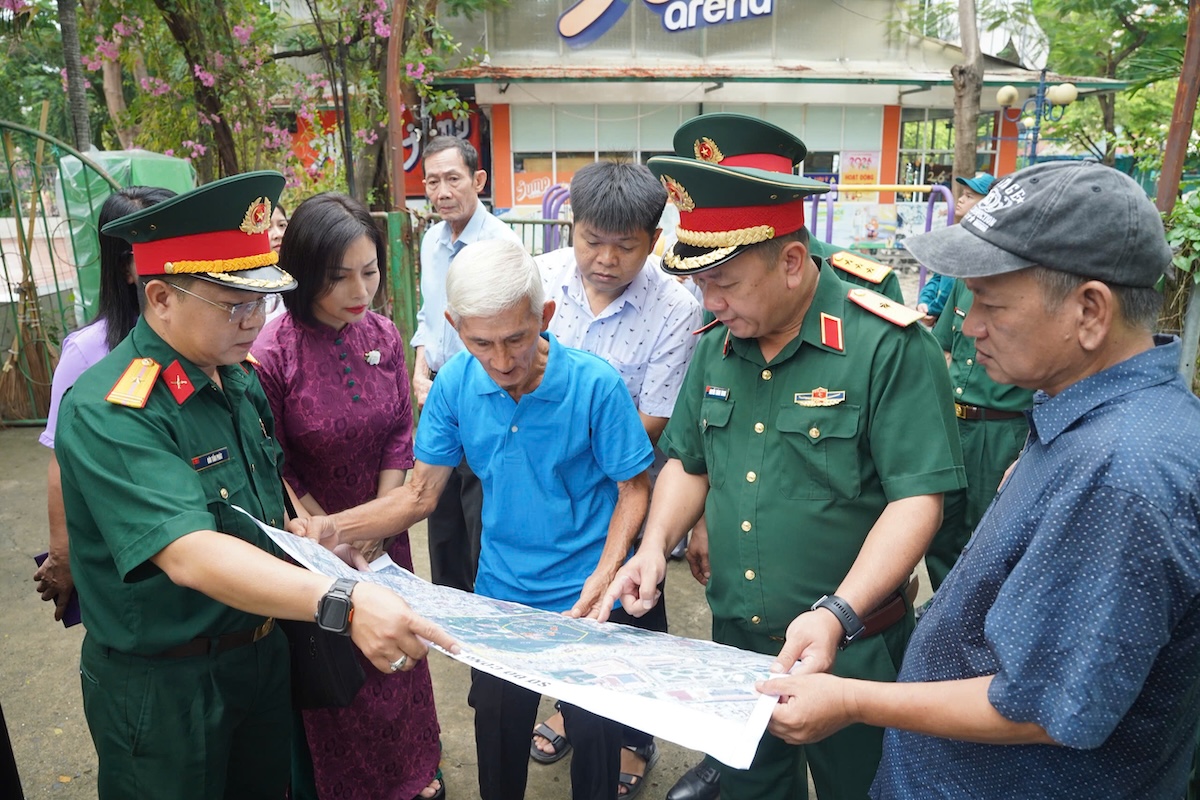 |
Mr. Vo Huy Thinh (in a blue shirt) marks the location where he witnessed the mass burial at the former Do Thanh cemetery to compare it with the current Le Thi Rieng Park. *Photo: Nguyen Hue*
At that time, Mr. Thinh was 12 years old, studying in seventh grade (equivalent to 6th grade today). Due to continuous battles in downtown Saigon, schools were closed. Around 10 h one day after the Tet Offensive, he and his friends went from Ong Ta Junction to Do Thanh cemetery to play.
There, he saw a Republic of Vietnam army truck enter the cemetery on Le Van Duyet street (now Cach Mang Thang Tam street). It carried dozens of decomposed, swollen, and disfigured bodies from bomb and bullet impacts. Some individuals were dressed in black *ba ba* attire (traditional Southern Vietnamese clothing).
According to Mr. Thinh, Sanitation Department staff used stretchers to move the bodies into a rectangular pit, over 10 meters long and about 5 meters deep. They then sprinkled a layer of white powder to reduce the odor. "The bodies were neatly stacked like sardine cans, then a bulldozer covered them with earth", Mr. Thinh said.
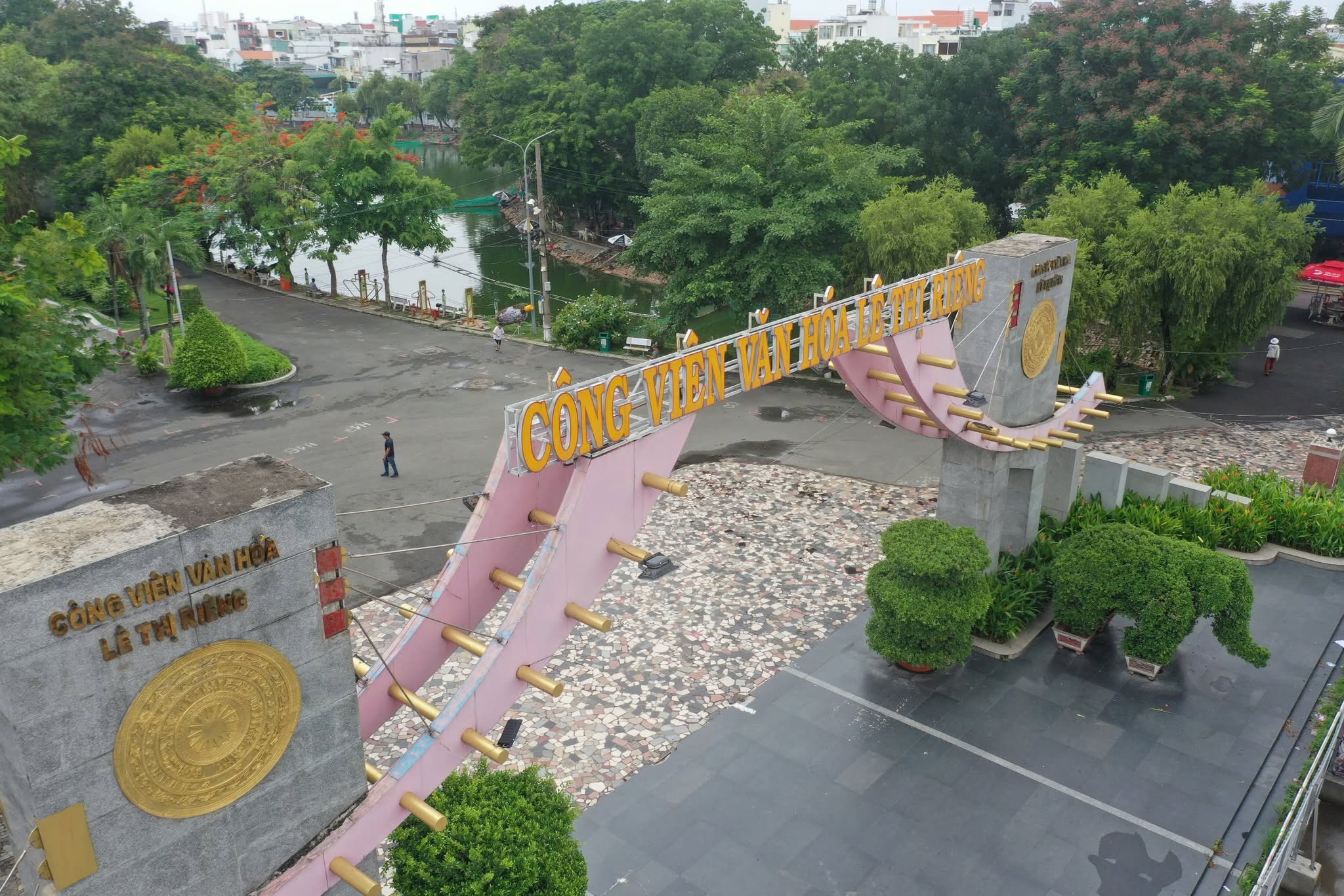 |
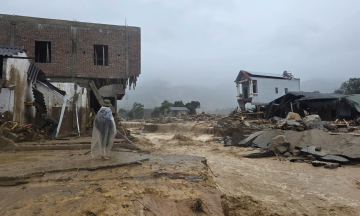
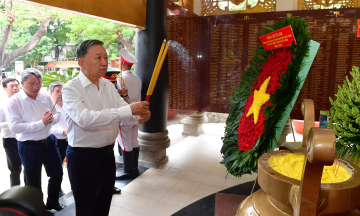
The location of the traditional house and The Huc bridge behind the Le Thi Rieng Park gate is suspected to contain a mass grave of fallen soldiers. *Photo: Dinh Van*
He identified the grave site as about 50 meters from the cemetery gate, to the left when viewed from Le Van Duyet street. Comparing the former Do Thanh cemetery map with the current Le Thi Rieng Park, he believes this area might be near the traditional house behind the park's gate on Cach Mang Thang Tam street, about 500 meters from Bac Hai residential area.
After 1975, Mr. Thinh joined the army and fought in Cambodia. In 1978, he was injured, suffering a perforated eardrum, and returned to Ho Chi Minh City. "I always remember that mass burial and hope to contribute to finding the fallen soldiers", he said.
Leading the survey team, Major General Nguyen Thanh Trung, Political Commissar of the Ho Chi Minh City High Command, stated that the search process began with a recent photograph sent by a former AP (US) reporter. The photo shows two men and three children observing the burial of soldiers in a vacant lot at Chi Hoa cemetery, also known as Do Thanh cemetery.
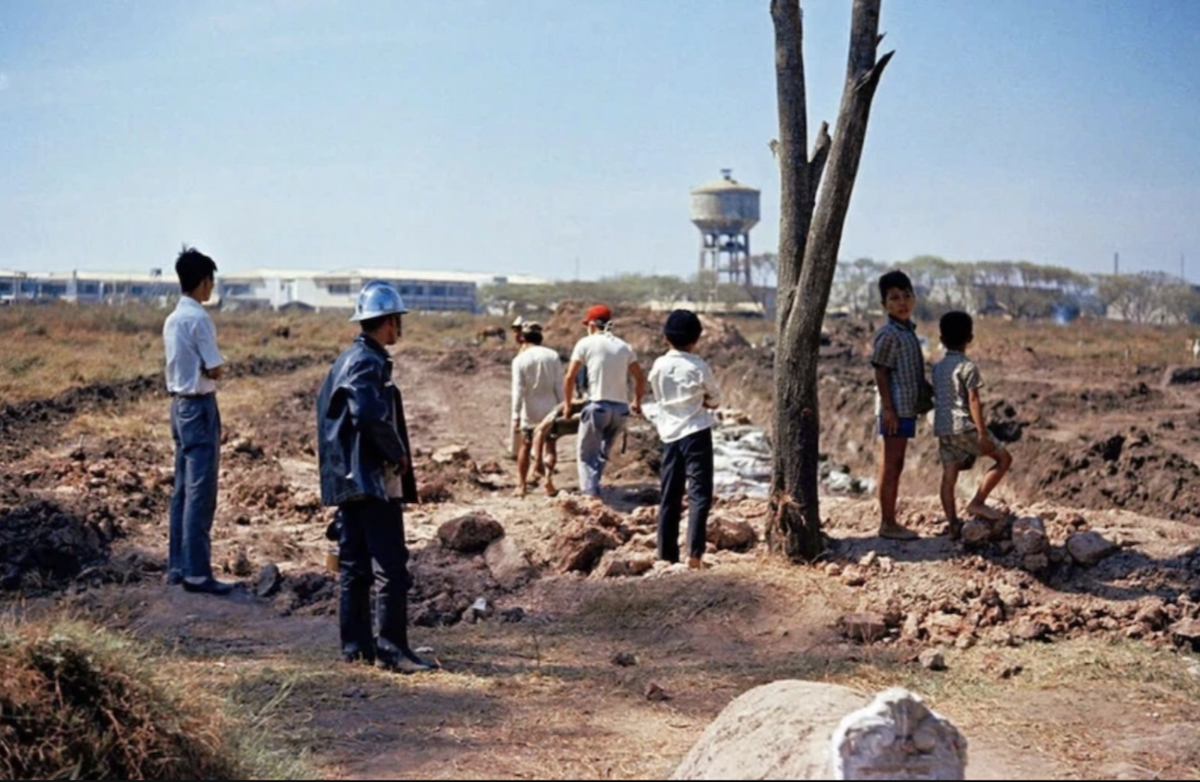 |
An AP (US) reporter's photo provided to the Ho Chi Minh City High Command, taken in 1968 at the burial site of fallen soldiers in the Do Thanh cemetery area, now Le Thi Rieng Park.
Combining various historical documents, Major General Trung stated that after the 1968 Tet Offensive, the area now known as Le Thi Rieng Park was a mass burial site for Saigon special forces and commando soldiers in two deep, rectangular trenches.
Before the park's construction in 1983, authorities had gathered dozens of fallen soldiers' remains here. Based on documents, images, and witness accounts, the military unit initially believes the mass grave might be near the traditional house and The Huc bridge within the park.
According to Major General Nguyen Thanh Trung, after the survey, the Ho Chi Minh City High Command will report to the Steering Committee for the Search, Collection, and Identification of Fallen Soldiers' Remains of Military Region 7. They will also organize a workshop to consolidate information and delineate the suspected area.
The unit also plans to coordinate with the Department of Geophysics, Ho Chi Minh City University of Science, to use geophysical survey equipment with ultrasonic waves (sonar) to examine the ground at suspected fallen soldier remains sites before developing a collection plan.
Dinh Van