According to the Ho Chi Minh City (HCMC) Department of Construction, these projects are part of a group of priority transport infrastructure investments, expected to be completed by 2027. In addition to three bridges in the central area, the city is considering building four overpasses in the former Binh Duong and Ba Ria - Vung Tau areas to meet the increasing demand for travel and goods transport following the expansion of its administrative boundaries.
In central HCMC, a steel overpass is proposed for construction at the six-way Cong Truong Dan Chu intersection, connecting 3/2 Street with Cach Mang Thang Tam Street. This structure will be approximately 560 m long and 9 m wide, featuring two mixed-use lanes, with a preliminary capital of nearly 230 billion VND.
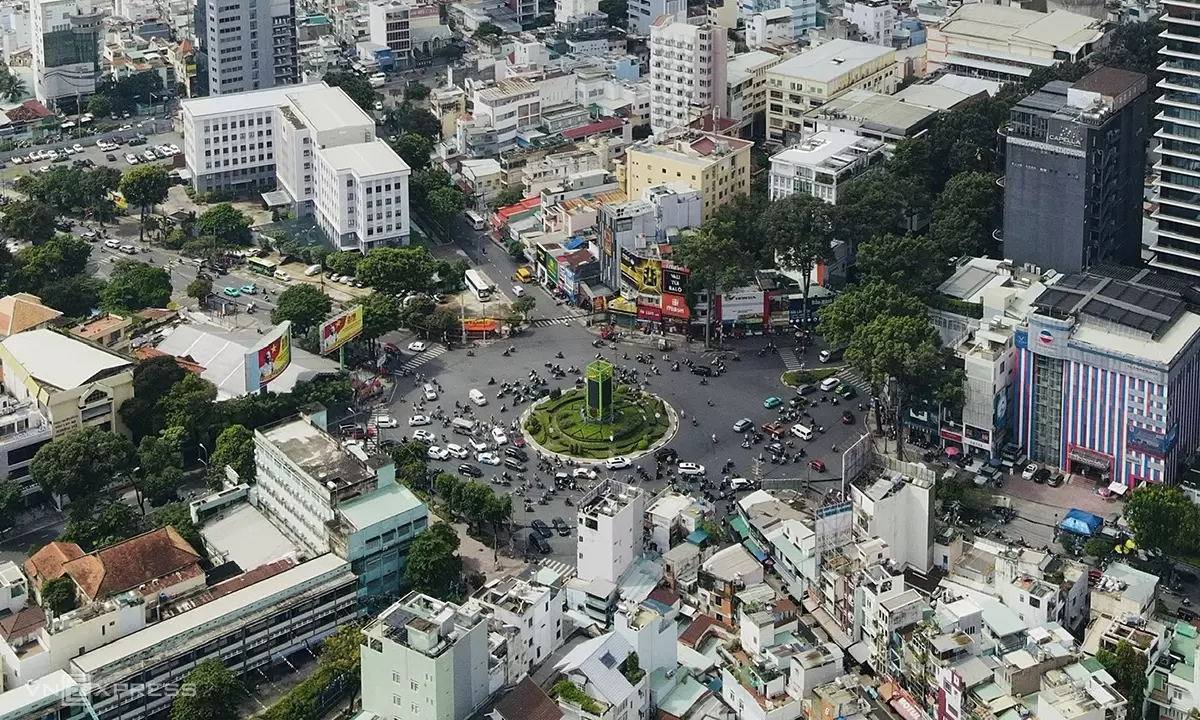 |
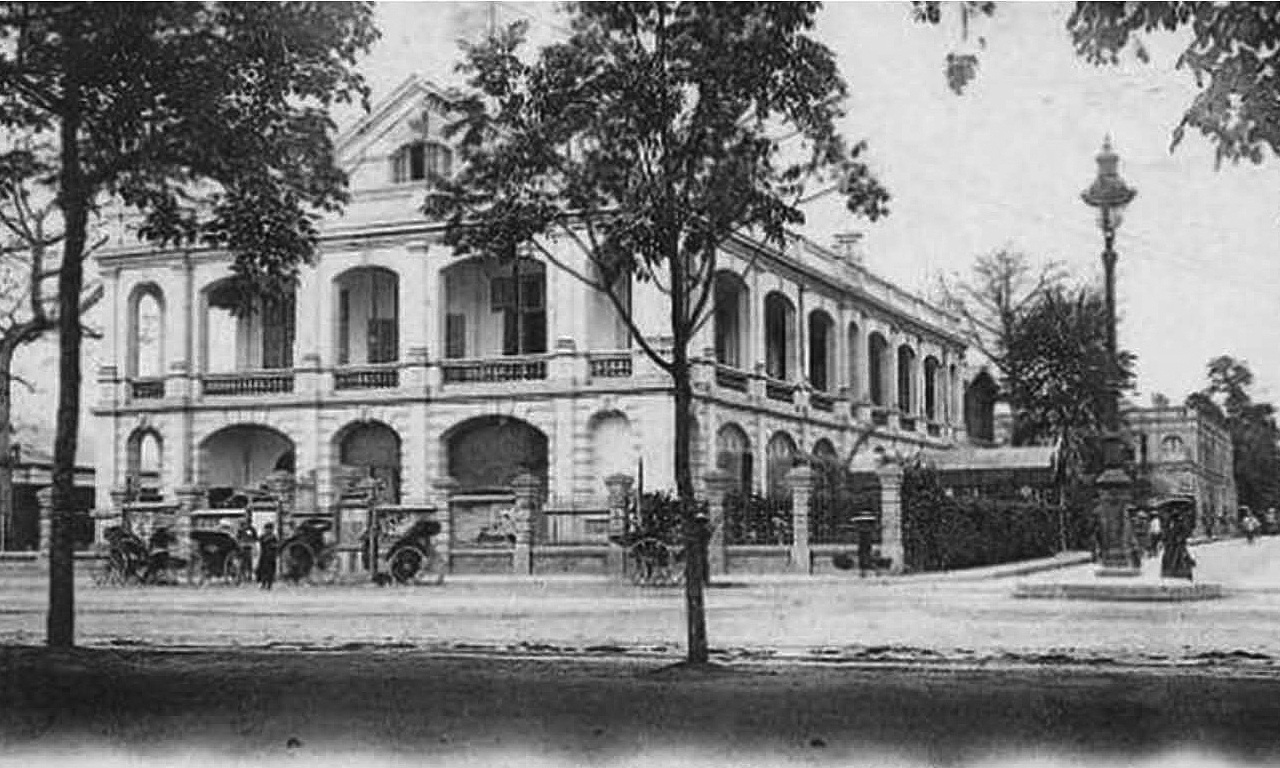
The Cong Truong Dan Chu roundabout before construction began on the Ben Thanh - Tham Luong metro station. *Photo: Quynh Tran* |
The Cong Truong Dan Chu intersection is a confluence of six streets: Vo Thi Sau, Cach Mang Thang Tam, 3/2, Ly Chinh Thang, Nguyen Phuc Nguyen, and Nguyen Thuong Hien. The city had previously considered building a steel overpass here, but the project was not implemented due to the need for synchronization with the underground Ben Thanh - Tham Luong metro station and concerns about its impact on the urban landscape and roadside structures.
Currently, the intersection operates as a roundabout with traffic lights. The large volume of vehicles, compounded by ongoing metro construction, causes frequent congestion, especially during peak hours.
Two other overpasses are proposed for 3/2 Street, at the Le Dai Hanh and Ly Thuong Kiet intersections, to separate through traffic. These structures will be approximately 480 m and 320 m long, both 9 m wide, with preliminary investments of nearly 200 billion VND and 187 billion VND, respectively.
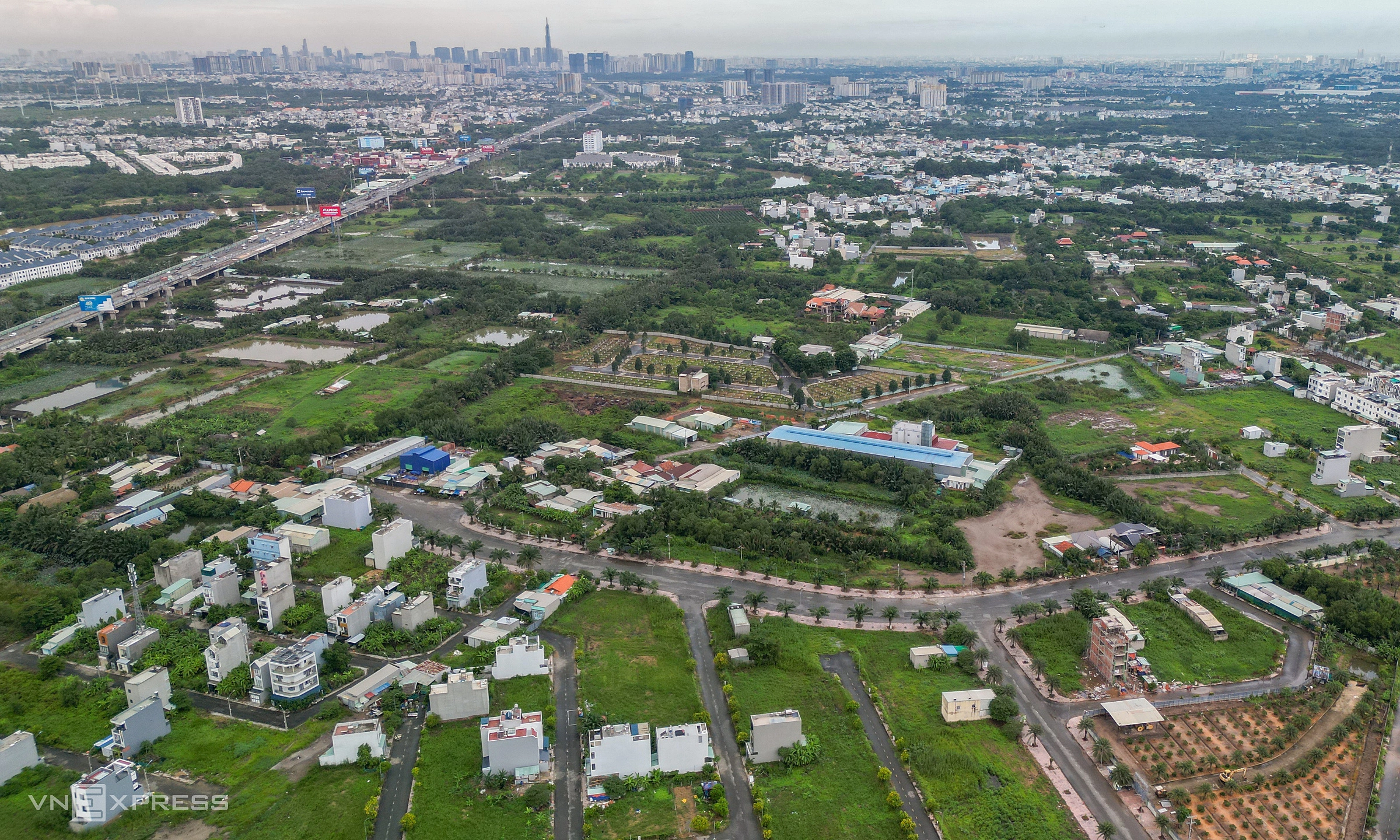
In the former Binh Duong area, the city is considering a steel overpass at the Cach Mang Thang Tam - Huynh Van Cu intersection. This project will be approximately 300 m long, feature two lanes, and include widening of the adjacent roads, with an estimated cost of 530 billion VND.
The remaining three overpasses are proposed for the former Ba Ria - Vung Tau area, specifically at the following intersections: National Highway 51 - Phuoc Binh; National Highway 51 - B1 Road leading to My Xuan B1 Industrial Park; and DT.994C - 30/4 Street in the Eo Ong Tu area.
These overpasses are planned to be approximately 280 m long, with four lanes and connecting access roads. Each of these projects has a preliminary total investment of about 530 billion VND.
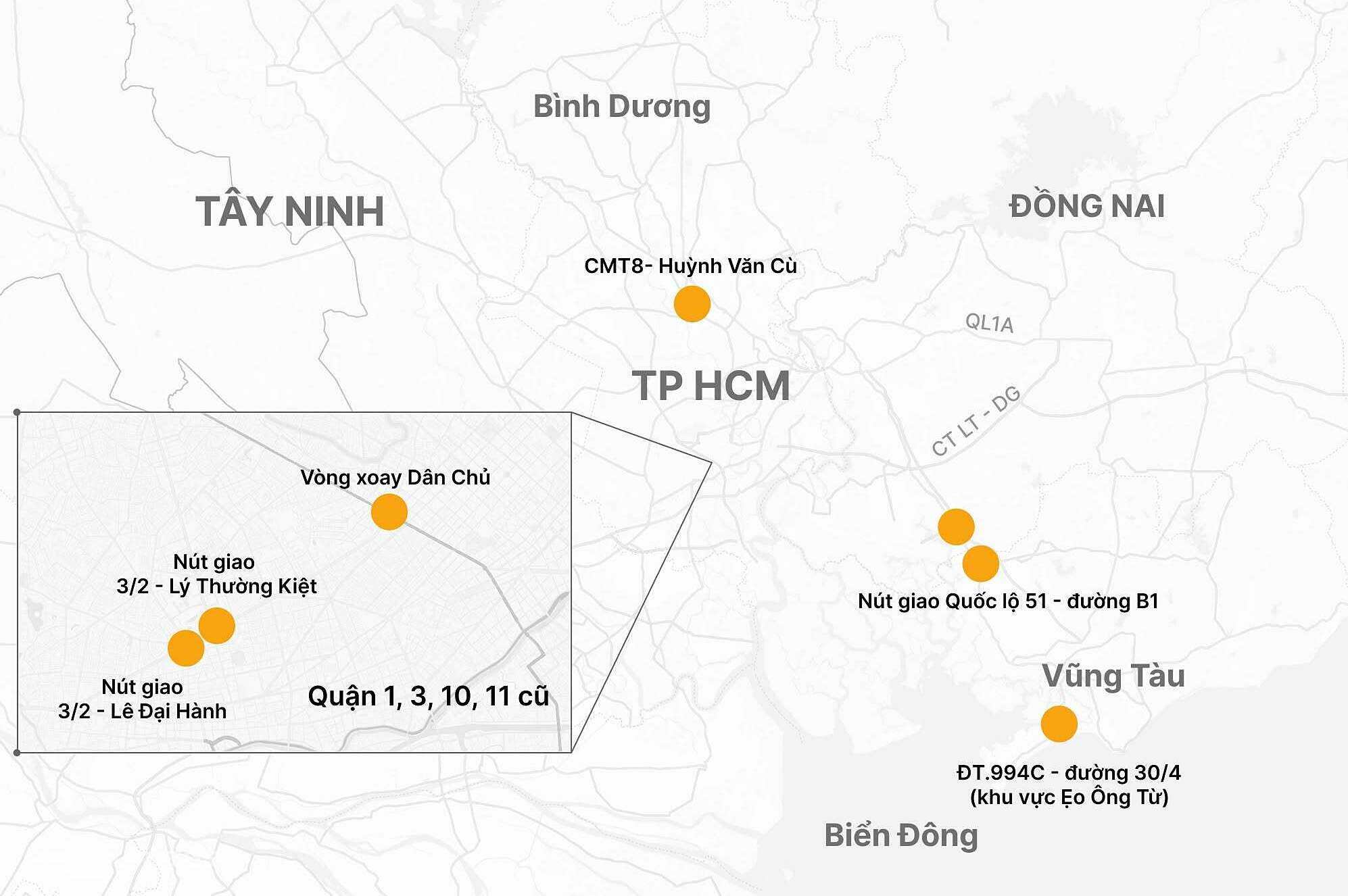 |
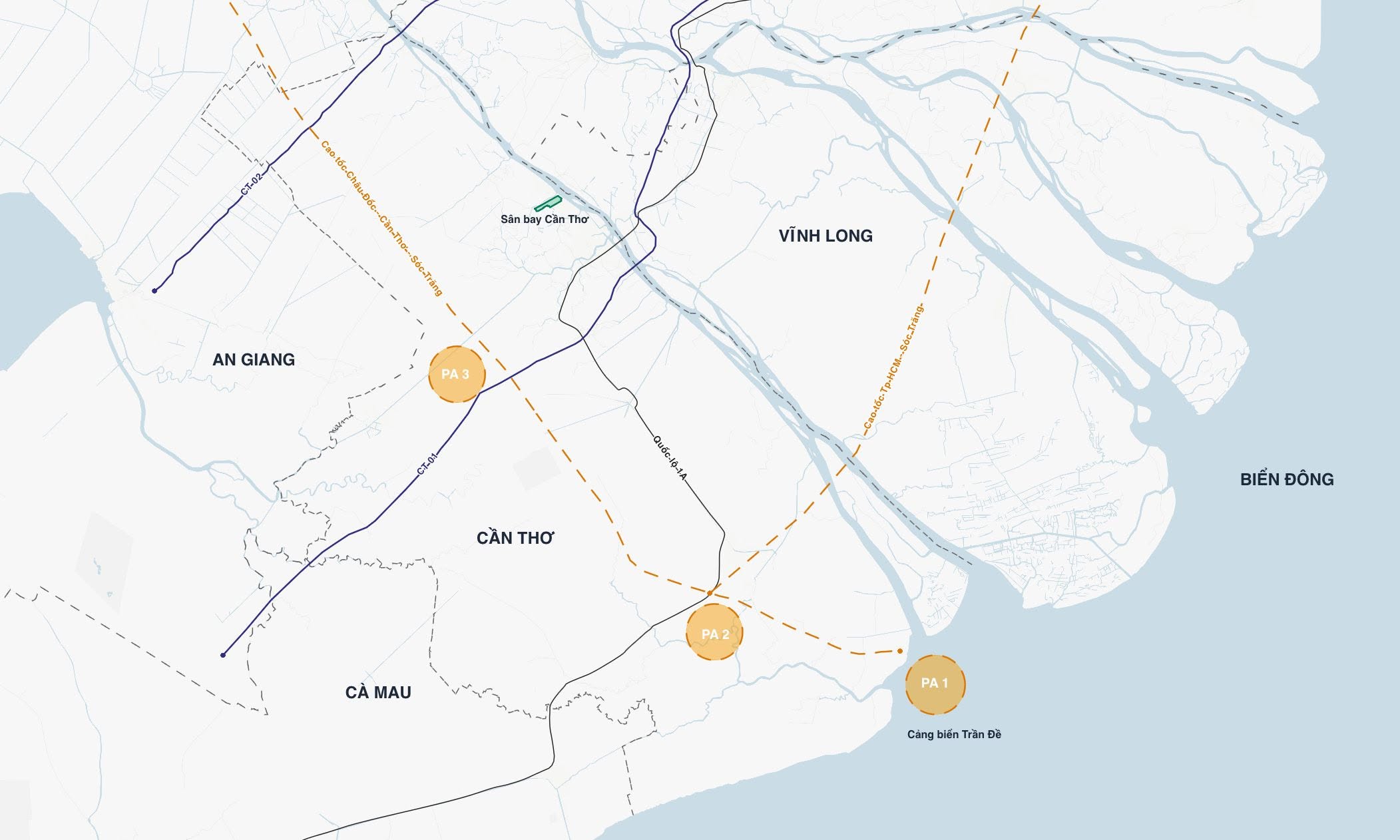
Locations of the seven proposed steel overpass intersections. *Graphic: Hoang Thanh* |
According to the Department of Construction, all these intersections experience high traffic density and frequent congestion, impacting both commuter travel and goods transport. The city plans to implement special mechanisms for these urgent projects to expedite the investment preparation process.
Ho Chi Minh City currently has nine steel overpasses at major intersections. The first two were put into use in 2013 at the Thu Duc and Hang Xanh intersections. Despite previous concerns regarding aesthetics, gradient, and lifespan, this type of bridge offers advantages such as rapid construction, low cost, easy disassembly, and minimal impact on surrounding structures.
By Giang Anh