Nguyen Xuan Thanh, Vice Chairman of An Dong Ward People's Committee, presented the proposal at a review conference held on the afternoon of 25/5. The conference focused on implementing solutions to enhance urban order management and foster disciplined, civilized communities.
An Dong ward, formerly District 5, pioneered an online system for temporary sidewalk and roadway use, launching an app and website on 15/5. Six categories of activities are eligible for permits: political, cultural, and sports events; disaster prevention and rescue; construction projects; waste and building material collection; funerals and weddings; and temporary parking. Commercial business is not currently permitted. In its first 10 days, the system processed 58 applications, generating over 900 million dong.
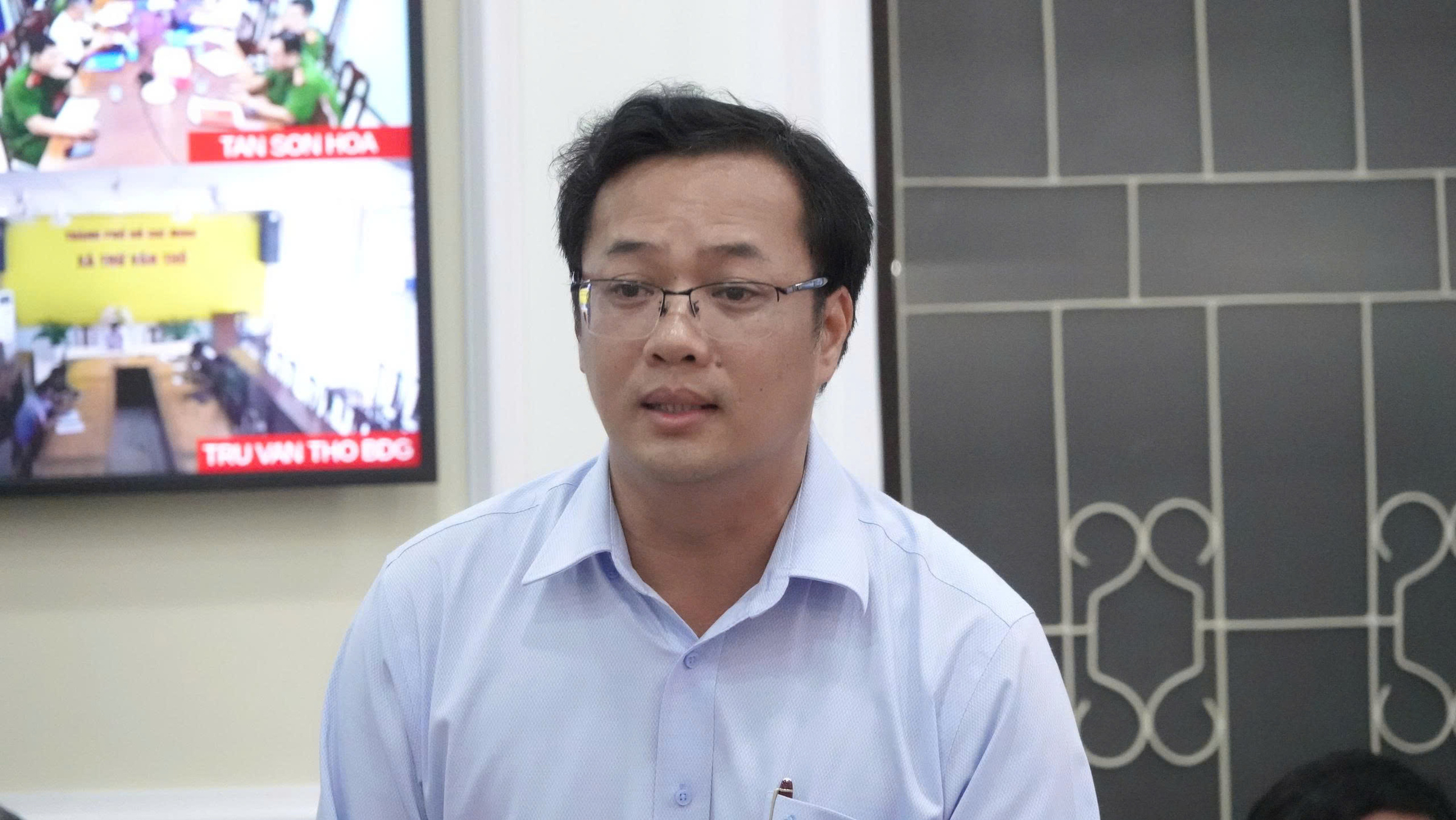 |
Nguyen Xuan Thanh, Vice Chairman of An Dong Ward People's Committee, speaking on the afternoon of 25/5. *Photo: An Phuong*
Thanh highlighted that the most significant demand involves using sidewalks for commercial purposes, particularly in central wards, where this is currently prohibited. Recognizing this, An Dong ward has urged Ho Chi Minh City to establish a suitable legal framework. This would enable residents to legally operate businesses on sidewalks, addressing livelihood needs and adapting to urban development.
An Dong ward also suggested greater decentralization of sidewalk management to local authorities and a review of temporary sidewalk usage fees. The ward noted that the current monthly parking fee, from 50,000 to 350,000 dong per square meter, is considered high, discouraging many residents from registering.
In early 2024, Ho Chi Minh City temporarily allowed fees for sidewalk and roadway use, including commercial activities. However, the city paused this initiative in early 2025 when the Road Law and the Road Traffic Order and Safety Law came into effect. This pause allows for a review of new operational models that comply with the updated legal framework.
Vo Khanh Hung, Deputy Director of the Ho Chi Minh City Department of Construction, acknowledged that sidewalk management and utilization pose a challenge for many localities, not solely Ho Chi Minh City.
Hung emphasized the city's intent behind temporary sidewalk use: "The goal is to restore urban order and discipline, not to maximize revenue or treat it as a primary income source." He observed that some areas are incorrectly prioritizing sidewalk exploitation for revenue generation, deviating from the intended management approach.
According to Bui Xuan Cuong, Vice Chairman of the Ho Chi Minh City People's Committee, a legal framework for commercial use of sidewalks does not yet exist. Current regulations restrict temporary roadway and sidewalk use to specific activities: organizing events, supporting construction, material transport, parking, funerals, and weddings. Any such use must prioritize pedestrians and ensure traffic safety.
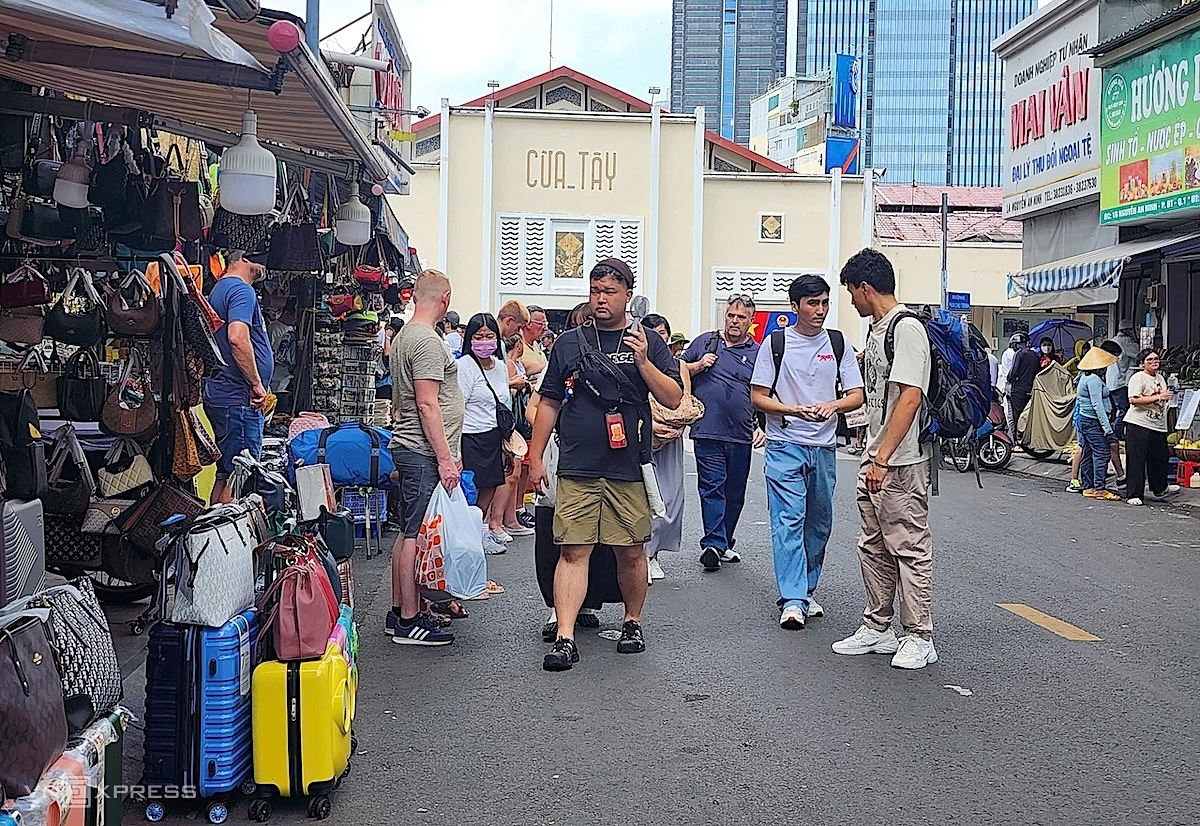 |
Encroaching on sidewalks and roadways in central Ho Chi Minh City for trade. *Photo: Quynh Tran*
City leaders recognize the substantial demand for sidewalk use for both livelihoods and parking. However, clear regulations are essential for implementation to prevent inconsistent practices or excessive, unregulated permits that could negatively impact urban aesthetics and order.
Ho Chi Minh City has tasked the Department of Construction with developing a comprehensive software system for sidewalk management and temporary use registration. This system will fully digitize the process, mirroring An Dong ward's successful model, and is expected to be operational from 1/6.
The Ho Chi Minh City Police reported that from 6/2 to 18/5, authorities addressed over 33,000 urban order violations, collecting nearly 29 billion dong in fines. They also dismantled over 2,200 encroaching signs and advertisements and dealt with 408 unlicensed parking areas.
The city currently faces over 1,700 public order hotspots, primarily near markets, schools, and hospitals, in addition to 202 informal markets. The city plans to continue addressing these encroachment issues. Concurrently, it will explore establishing night markets, food streets, and designated business zones to support residents' livelihoods while maintaining urban aesthetics.
Le Tuyet