In a document sent to the People's Committee of Ho Chi Minh City, the Department of Construction stated that demand-responsive transit (DRT) is a public passenger transport service with registered and publicized pick-up and drop-off points. However, unlike traditional buses that operate on fixed routes and schedules, this model allows flexible adjustments to routes, times, and locations based on passengers' actual needs.
The proposal suggests phase 1 will involve a small-scale DRT pilot in high-demand areas, including Vietnam National University Ho Chi Minh City, the city center, or along the Ben Thanh - Suoi Tien metro line. The pilot is anticipated to last no more than three years, after which authorities will assess its operational efficiency and demand to inform adjustments or expansion.
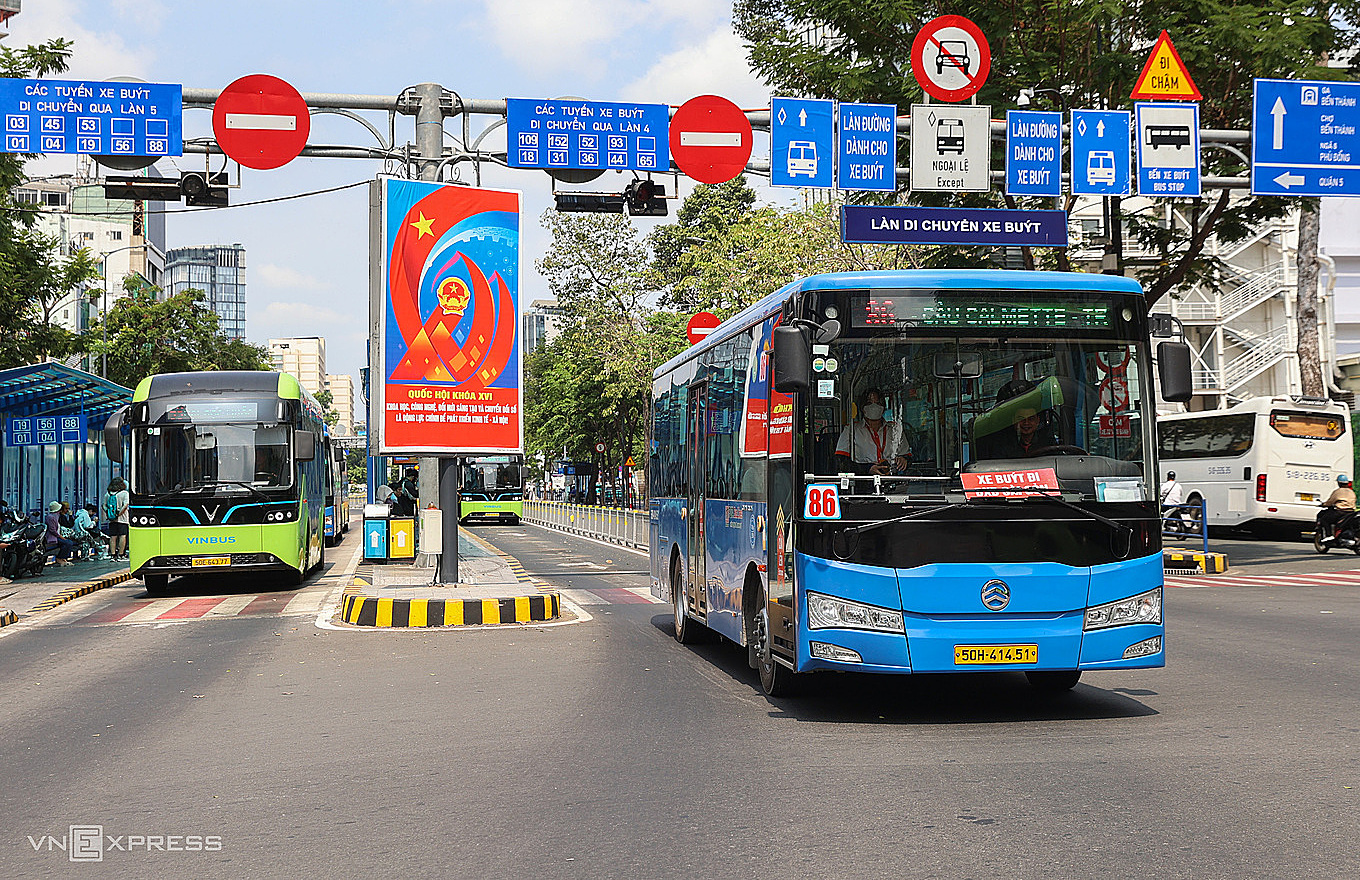 |
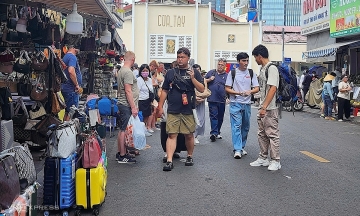
A bus carrying passengers in downtown Ho Chi Minh City, 4/2026. Photo: Quynh Tran |
The service will operate flexibly throughout the day. During peak hours, buses will follow fixed routes and stops, similar to traditional services. In off-peak hours, passengers can book trips via an application. The system will then coordinate vehicles based on demand, only picking up and dropping off at registered points. Passengers with similar destinations will be grouped at the closest common pick-up point to optimize travel.
Small-capacity vehicles are planned for use, allowing them to navigate narrow streets and residential areas while also reducing investment costs for operators. Fares are projected to be comparable to existing bus services.
The Department of Construction notes that while Ho Chi Minh City's bus network covers most of the urban transport system, accessibility remains limited for residents, particularly on small roads, in new residential areas, or in locations distant from bus stops. Additionally, fixed routes and schedules do not effectively address the need for flexible travel.
As no specific regulations currently exist for this service type, the Department of Construction recommends that the city request government approval for piloting in selected areas. This will provide a basis for evaluating the solution's effectiveness.
Ho Chi Minh City currently operates about 180 bus routes with over 2,400 vehicles, most seating between 20 and 60 passengers. This configuration means the network predominantly serves major roads, requiring residents in residential areas or small alleys to travel significant distances to reach a bus stop.
Beyond the DRT model, Ho Chi Minh City also plans to offer free bus tickets to boost public transport ridership. The city is also restructuring its bus network, exploring priority lanes, expanding connections to neighboring areas and Long Thanh airport, implementing integrated electronic ticketing, and transitioning to electric buses.
Giang Anh