On 20/7, the Prime Minister issued a directive calling for a nationwide reorganization of public preschools, general education schools, continuing education centers, and vocational education institutions. The primary objective is to reduce the number of independently operating schools by at least 30% compared to 1/7/2025, with localities having favorable conditions targeting a 50% reduction. This initiative seeks to streamline the public education system and enhance operational efficiency.
The term "reducing administrative units" refers to decreasing the number of schools with distinct legal status and separate management structures. Following a merger, multiple schools will share a single board of directors, an accounting department, a secretarial office, and administrative personnel. Importantly, existing facilities are not necessarily slated for closure; instead, they can be repurposed as satellite campuses or school points, ensuring continuous access to education for students in their immediate vicinity.
For instance, after two schools consolidate, they will operate under one principal and a unified administrative department. The allocation of one vice principal to oversee each satellite campus will depend on factors such as the number of classes, student enrollment, and geographical distance.
The Prime Minister emphasized that this reorganization must be tailored to the specific conditions of each locality, implemented flexibly, and follow a clear roadmap to guarantee educational access for all children. A key requirement is that every commune, ward, and special zone must maintain at least one preschool and one general education school capable of serving primary and lower secondary levels.
Schools are to be organized under one of two distinct models: one is a large-scale institution dedicated to a single educational level, encompassing multiple satellite campuses or school points; the other is a multi-level general education school, which may operate from one or more physical locations.
Isolated school points in remote, border, and ethnic minority areas that fail to meet minimum infrastructure standards will be considered for dissolution. Students from these facilities will be transferred to a main school point, where arrangements for boarding or semi-boarding will be provided. Localities with insufficient infrastructure must complete necessary improvements before proceeding with any dissolutions or transfers.
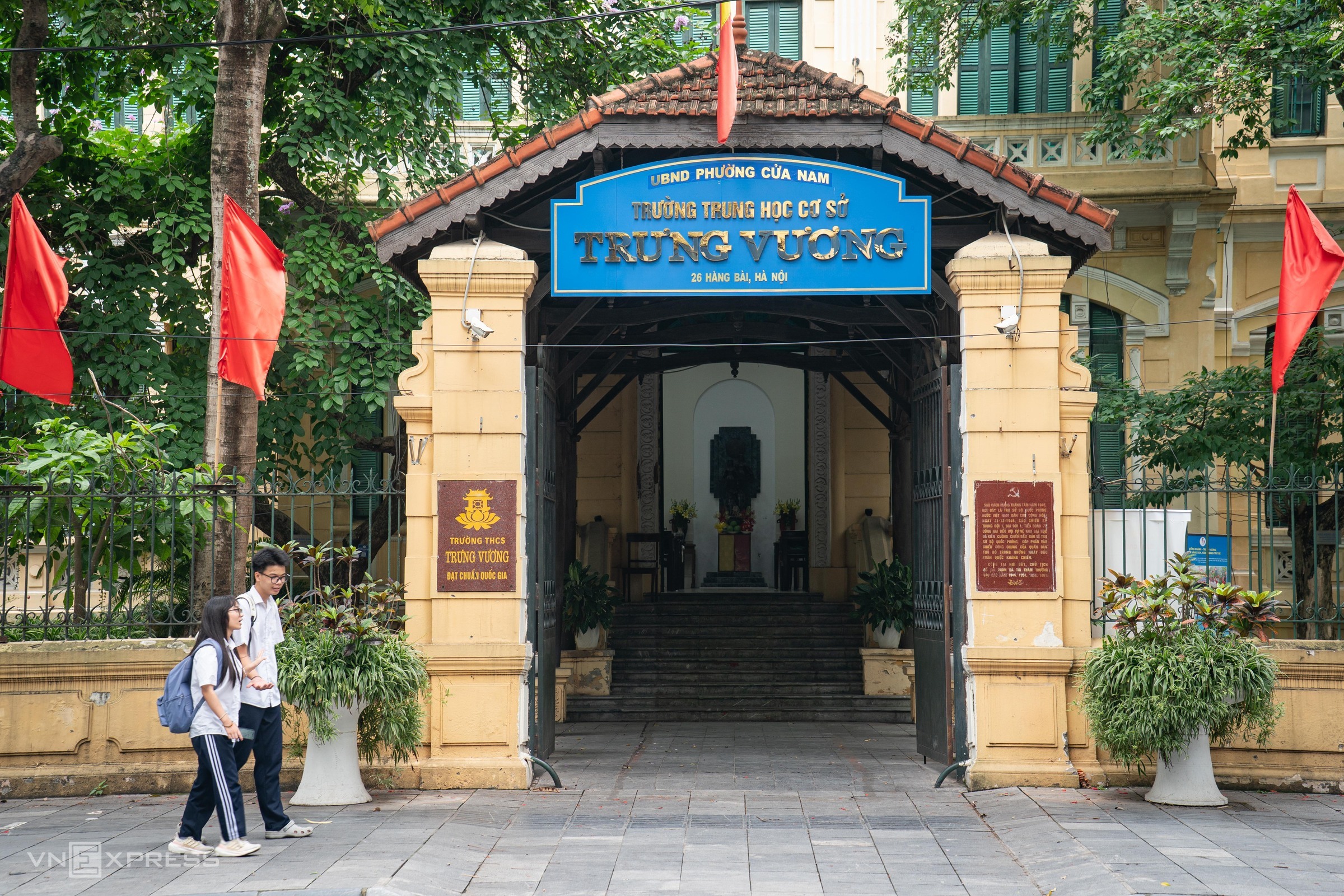 |
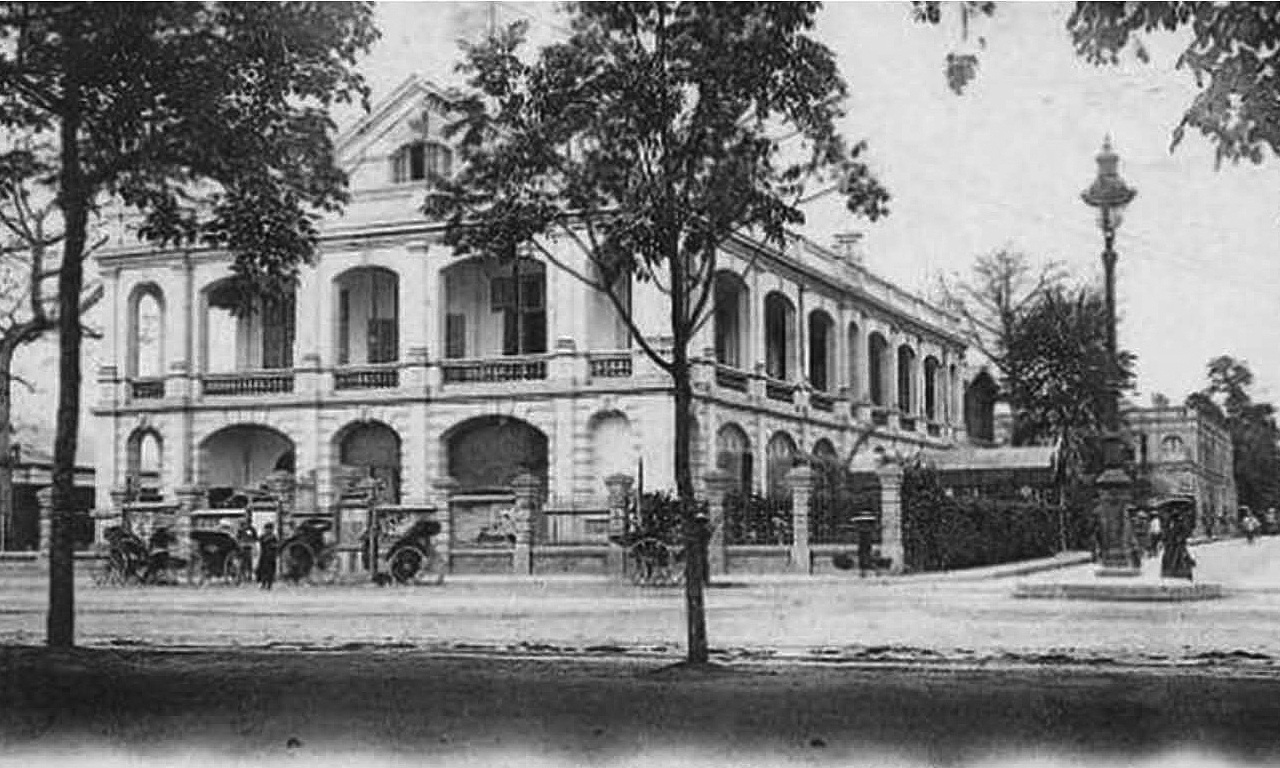
Trung Vuong secondary school, Cua Nam ward, Ha Noi. Photo: Hoang Giang |
The Prime Minister specifically cautioned against certain merger types: preschools should not be merged with general education schools; general education schools should not be combined with continuing education centers or vocational education - continuing education centers; and specialized education facilities must not be integrated with mainstream general education schools.
Vocational schools and continuing education centers will also undergo reorganization, aiming for each province and city to retain three vocational schools. Intermediate vocational schools that are self-sufficient in recurrent expenditures will be maintained. Inefficient facilities, however, may face dissolution, merger into colleges, or reorganization into vocational high schools.
Furthermore, vocational education centers, continuing education centers, and existing vocational education - continuing education centers will be consolidated into unified vocational education - continuing education centers.
Localities are required to complete these reorganization efforts by 30/8 and submit a report on the results to the Prime Minister by 6/9.
Vu Tuan