Vietnam's New Year holiday was recently swapped and adjusted to extend to four days, from 1/1/2026 to 4/1/2026, instead of the regulated one day. The Ministry of Home Affairs, the drafting agency, stated the goal was to stimulate tourism and economic growth. Many agree with longer holidays, but the last-minute adjustment caused considerable disruption.
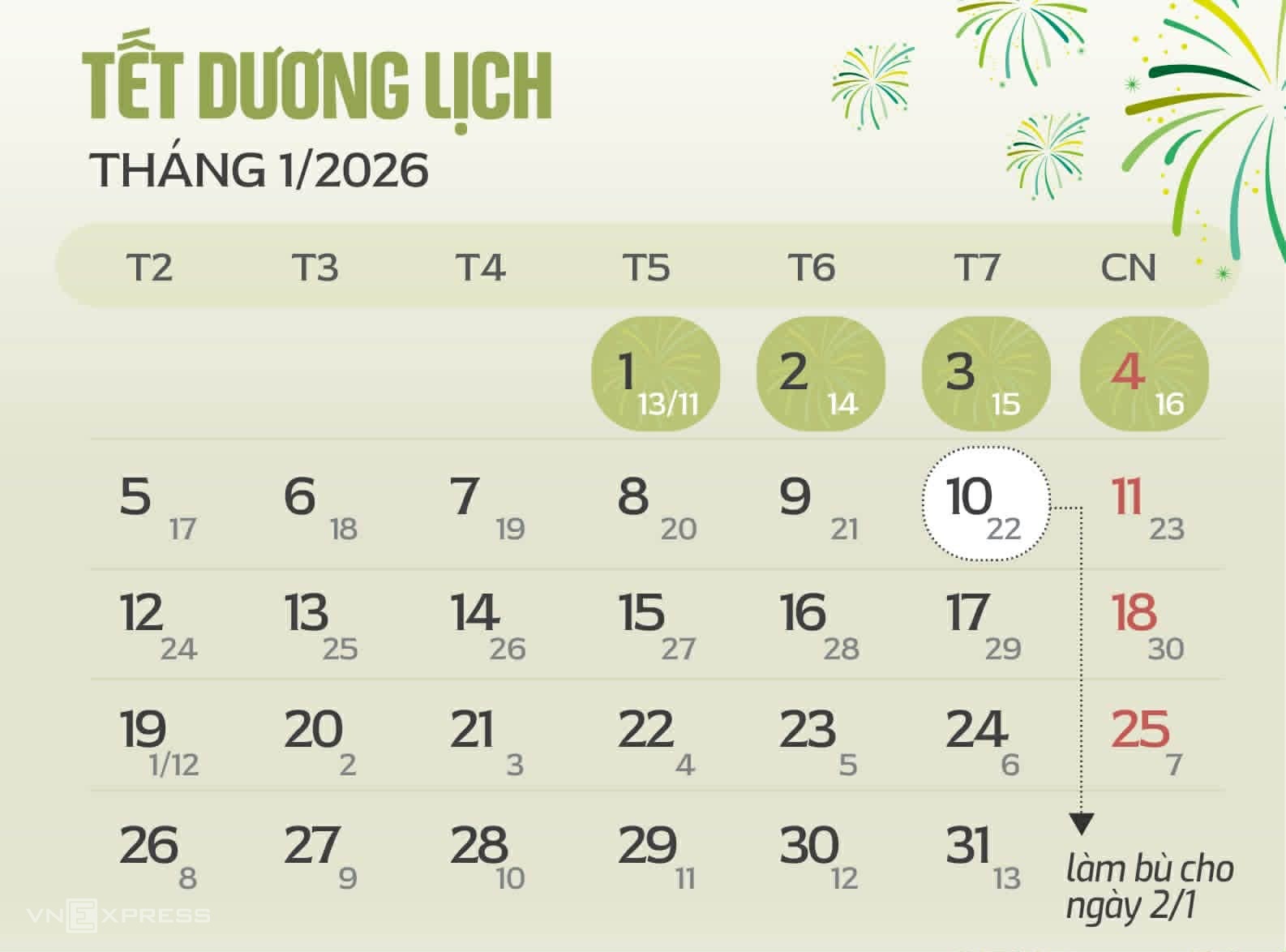 |
New Year holiday swap period for 2026. *Graphic: Ta Lu*
Associate Professor Bui Hoai Son, Standing Member of the National Assembly's Committee for Culture and Education, noted that swapping holiday dates for both the New Year and Lunar New Year is not merely an administrative or scheduling issue. Instead, it reflects how social life is organized. Requesting a holiday swap just one week before the break is too rushed, especially when decisions affecting tens of millions require early preparation and stability. Such last-minute adjustments disrupt all prior plans made by citizens and agencies.
In many countries, holiday schedules are announced a year, or even several years, in advance. This allows citizens to proactively plan work, studies, travel, commutes, and family gatherings. As Vietnam enters a new development phase and its citizens become increasingly integrated, the State needs to provide stability and predictability.
"What's important is not whether to swap or not, but to establish stable principles from the beginning of the year, even legislating or framing them for the long term," he said. He added that this would allow people to simply check the calendar to know their holidays, enable businesses to plan production and trade proactively, and prevent management agencies from repeating the 'request and approval' process every year.
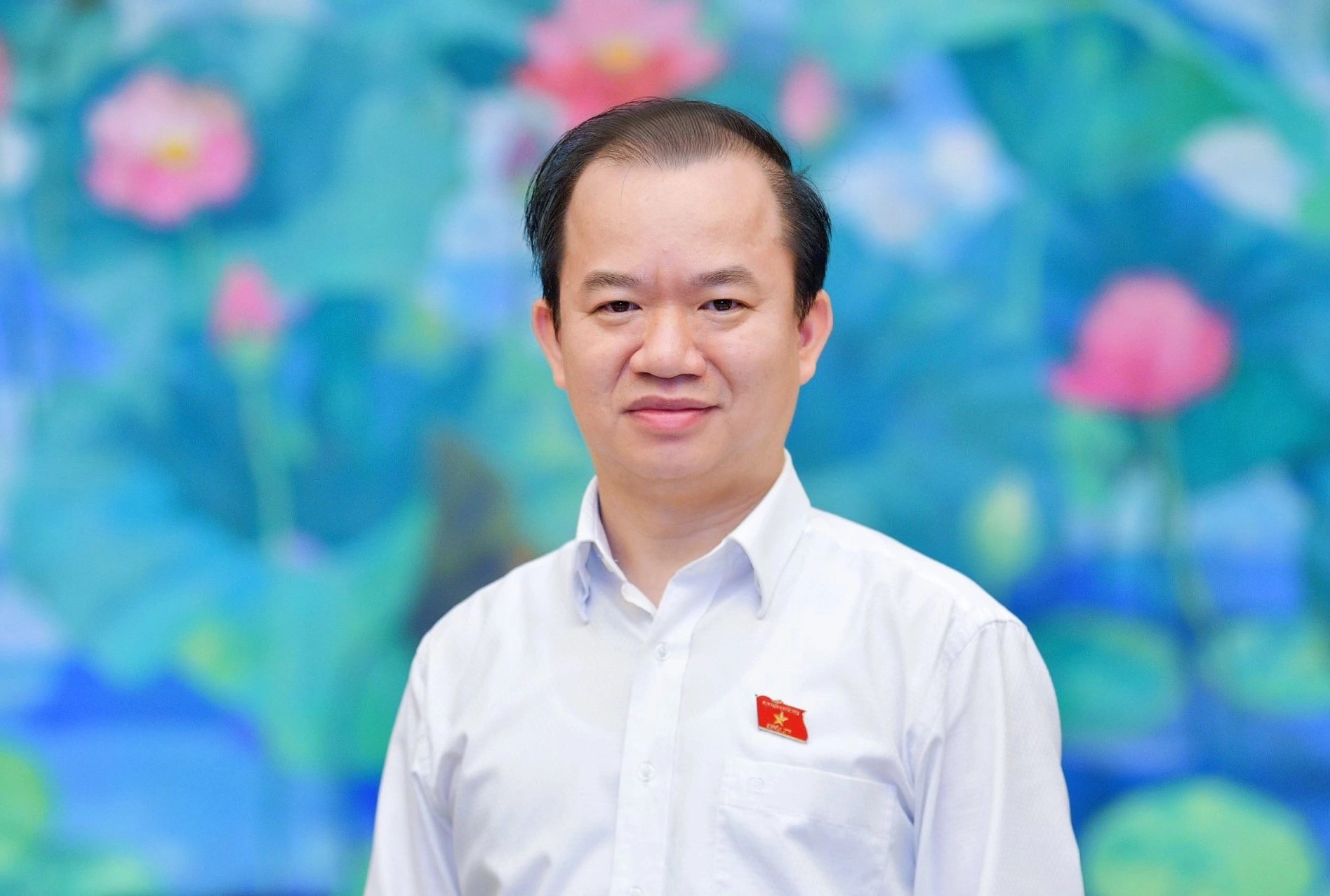 |
Associate Professor Bui Hoai Son, Member of the National Assembly's Committee for Culture and Education. *Photo: Quochoi.vn*
Holidays are not simply about the number of days, but also a cultural matter, according to Associate Professor Son. Both the New Year and Lunar New Year are special occasions for people to gather, rest, and rejuvenate. In the context of integration, individuals must balance traditional identity with modern life, the joy of reunion with the demands of an efficient economy. A stable, scientific, and people-centric holiday policy will empower workers to be more proactive with their jobs, finances, and families; give businesses greater confidence in their planning; and reduce sudden pressures on traffic, tourism, and services.
Broadly speaking, this is a matter of national governance. All policies must be prepared early, with thorough consultation, impact forecasts, and timely announcements. Last-minute adjustments reveal a management mindset that remains overly bureaucratic, failing to truly prioritize the interests, proactivity, and needs of citizens and the economy. Establishing a stable holiday swap mechanism or long-term principles is a small but significant step towards professionalizing national governance.
"What needs to change is not just the holidays, but the mindset towards social management: from passive to proactive, from situational handling to strategic governance, and from managing for the convenience of the apparatus to governing for the peace of mind and proactivity of the people," he stated.
 |
Fireworks by the Han River, Da Nang. *Photo: Phan Dau*
Sharing this view, Nguyen Phuoc Thang, a lecturer at Hoa Binh University, believes that last-minute requests for holiday swaps demonstrate an 'entrenched' issue in holiday management. He describes the annual process of soliciting feedback from ministries and sectors as "a waste of administrative resources and a cause of information delays."
Encouraging businesses to follow the holiday schedule of public servants easily creates societal misalignment. This poses difficulties for families where one parent works for the State and the other in the private sector, or where parents work for companies while children attend public schools, in coordinating schedules. Moreover, making up for lost work isn't necessarily beneficial; it can cause fatigue and reduce actual productivity, even if the official hours are met.
He suggests the need for long-term strategic planning. Immediately, management agencies could pre-calculate and approve holiday schedules for the next three to five years. This schedule would serve as a basis for citizens, state agencies, businesses, and international partners to plan proactively. In the medium term, there should be a shift from an 'annual administrative decision' mindset to 'legislating swap principles'. This would reduce the administrative burden of 'request-and-approval' procedures, bringing Vietnam closer to international operating standards and ensuring a balance between tourism stimulation and labor productivity.
In the long term, he believes the fundamental solution is to increase annual leave allowances or the number of public holidays, reducing administrative intervention. The root cause of people's expectation for the State to 'swap' holidays is that the current number of public holidays (11 days) and annual leave (12 days) are quite low compared to regional and global standards. Workers are "reluctant" to use their annual leave for intermittent days off. Therefore, when revising the Labor Code, a roadmap for increasing annual leave or adjusting the total number of public holidays should be considered. With a generous leave allowance, workers would plan their time off independently, without waiting for the State's decision to swap holidays.
Hong Chieu