From 7 am today, the courtyard of Tri Le village's cultural house in Dan Hoa commune was crowded with people, even though compensation payments were not scheduled to begin until after 8 am. Residents gathered early, holding their documents, their eyes fixed on the processing area.
Arriving early, many people took the opportunity to chat, recalling the day they received their rice fields in the early 1990s, their farming, harvests, and years of good yields where income was only enough to get by, with no savings. The conversation then shifted to the present, with people asking each other about their compensation amounts, sharing how they would divide the money among their children, and wondering what to do without their land.
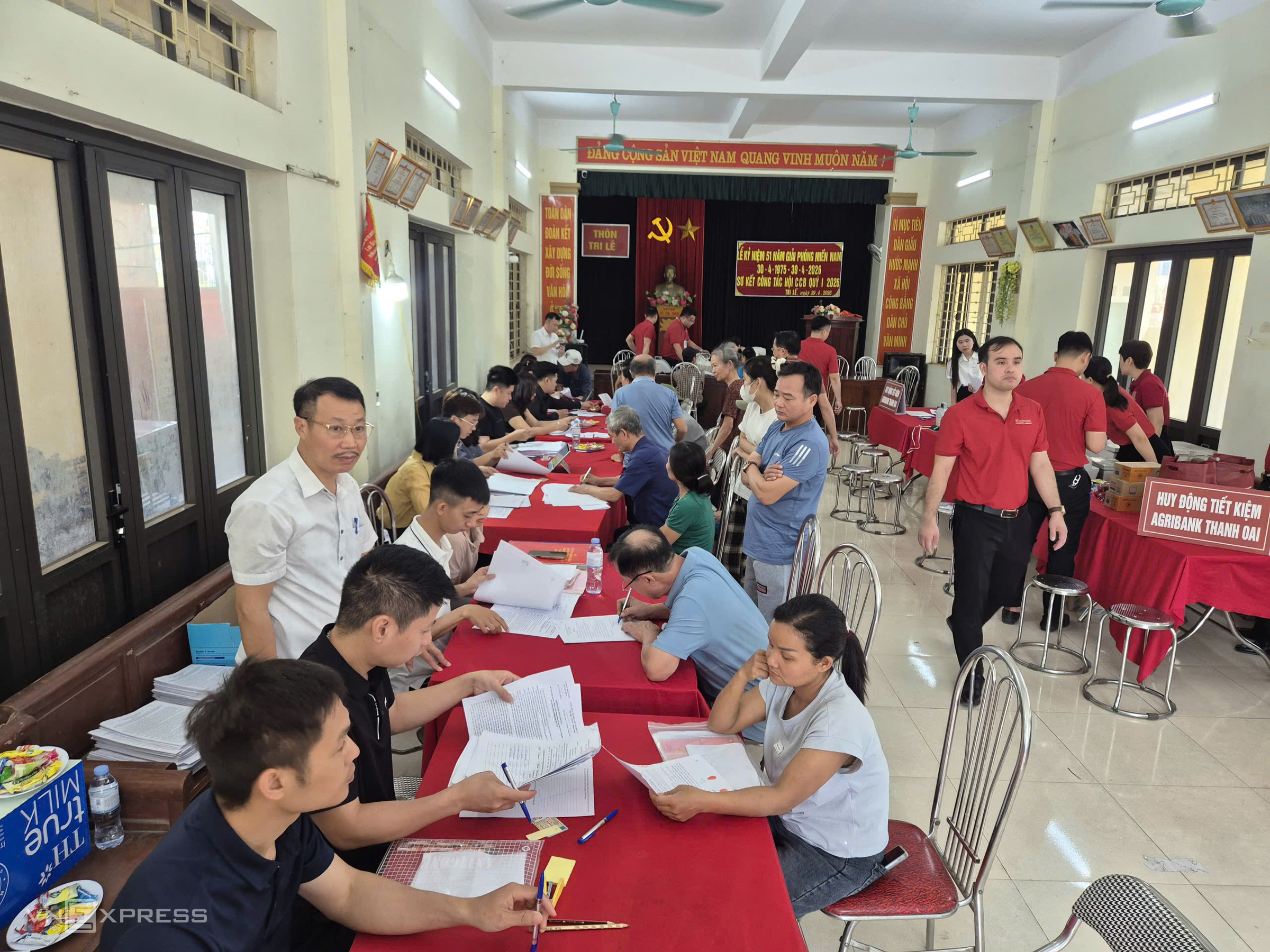 |
Residents receive compensation in Tri Le village, Dan Hoa commune. *Photo: Gia Chinh*
Inside the cultural house, about 15 officials from the Dan Hoa Commune Investment - Infrastructure Project Management Board were assigned to work. Rows of tables were arranged for residents to verify data before signing to receive their money. At the entrance, an official collected citizen identification cards, announcing that approximately 50 of the total 104 households would be processed in the morning, with the remainder handled in the afternoon.
Those who had completed their procedures and stepped out into the cultural house courtyard were immediately asked: "How much did you get?", "Have you decided what to do yet?". The questions were repeated, but most answers remained unclear.
Nguyen Thi Xuan, 46, received approximately 3 billion VND for over 2,700 square meters of agricultural land. With a family of 8, the money was divided among her children, leaving her and her husband with just over one billion VND. She stated that this amount was larger than any sum she had ever possessed, yet it also left her feeling bewildered.
"It's a lot of money, but I don't know what to do to make it grow. Land is too expensive to buy now, and gold fluctuates. Building a house might deplete our funds, but not building one leaves us uncertain what to do with the money", she said.
Previously, her family's livelihood depended primarily on a few sao of rice fields (a traditional Vietnamese land measure, approximately 360 square meters in the North) and various odd jobs. With the land expropriated, their livelihood was almost gone. Her husband works as a bricklayer, while she takes on any available work. The village has traditional crafts like hat-making and weaving, but daily earnings of only 50,000-100,000 VND are insufficient for stability.
"Now, I just hope the urban area development brings more job opportunities", she wished.
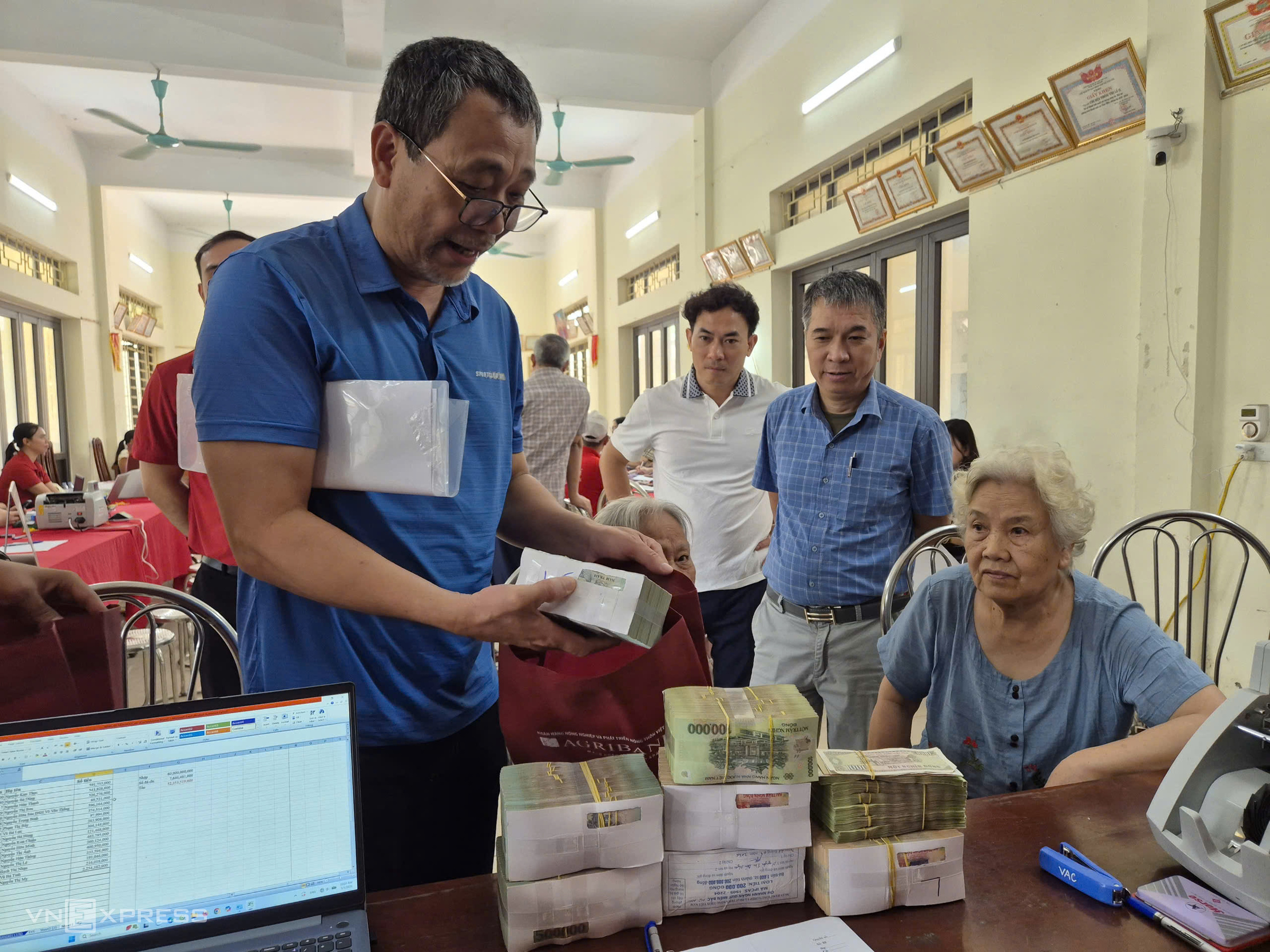 |
Residents receive site clearance compensation for the VinOlympic project. *Photo: Gia Chinh*
Not far away, Nghiem Thi Ngoan, 77, received 3,6 billion VND for 9 sao of rice fields (each Northern sao of rice field is 360 square meters). The money is expected to be divided among her four children. Having spent her entire life working the fields, she now has no land to cultivate and "doesn't know how to earn money, fearing it will gradually run out".
At nearly 80 years old, Nguyen Trong Binh has experienced land expropriation multiple times. From nearly one mau of initial rice fields (a traditional Vietnamese land measure, approximately 3,600 square meters), through various road construction and building projects, his family's cultivated land gradually diminished until nothing remained. Previously, his family primarily cultivated rice and raised livestock, which was just enough to eat. With the 2,5 billion VND he just received, he plans to divide it among his children and deposit the rest in the bank for gradual expenses.
"Before, with land, we never worried about hunger. Now that the land is gone, we have to buy rice, and it's disheartening to think about", he said.
About 10 km from Tri Le, in Tu Am village, Tam Hung commune, 98 households received over 200 billion VND in compensation and support for nearly 200,000 square meters of expropriated land this morning. The payments proceeded orderly and quickly, with most families having plans to divide the money among their children as capital or to deposit it as savings.
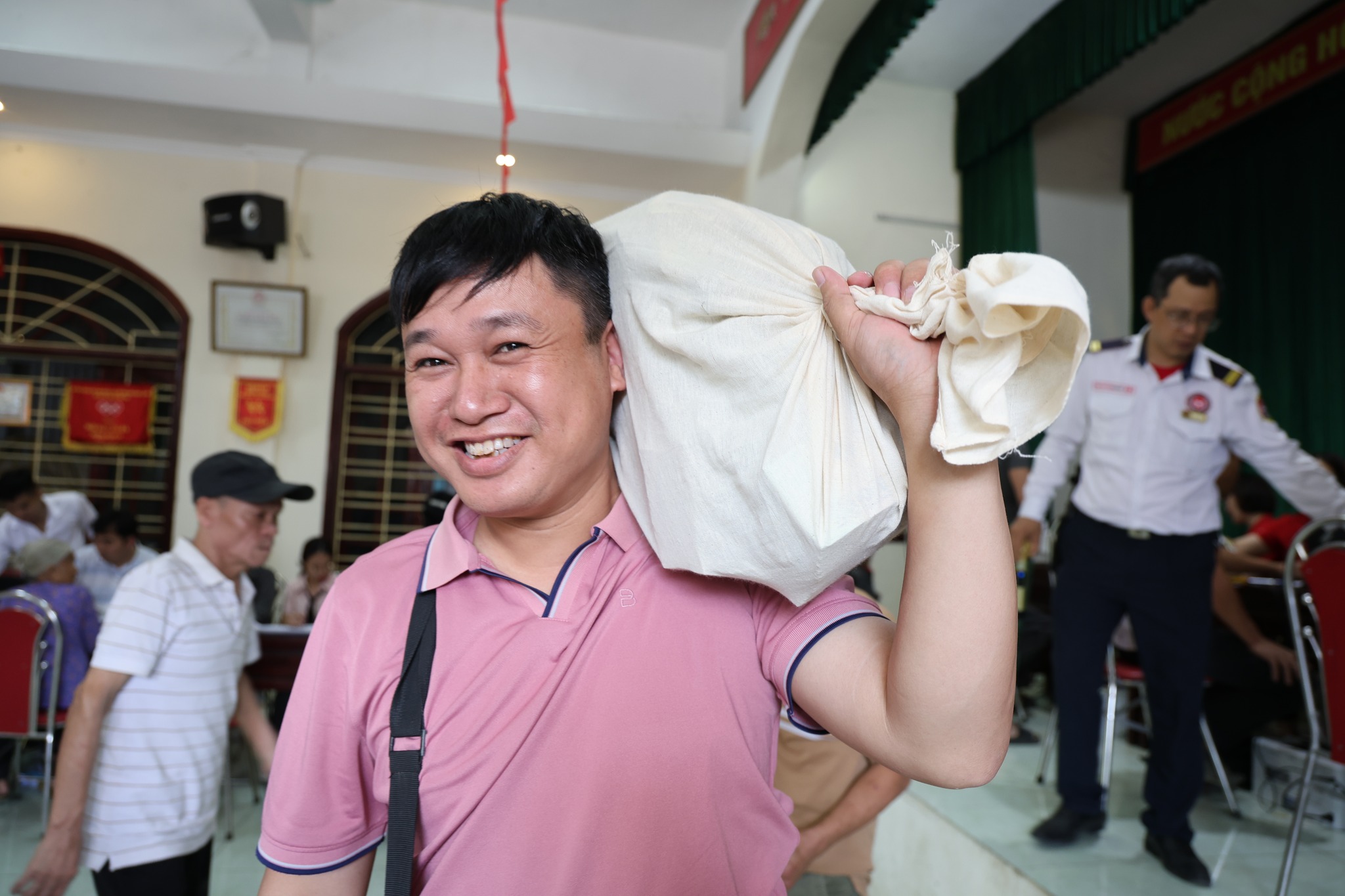 |
Residents of Tu Am village happily receive compensation. *Photo: Tam Hung Commune People's Committee*
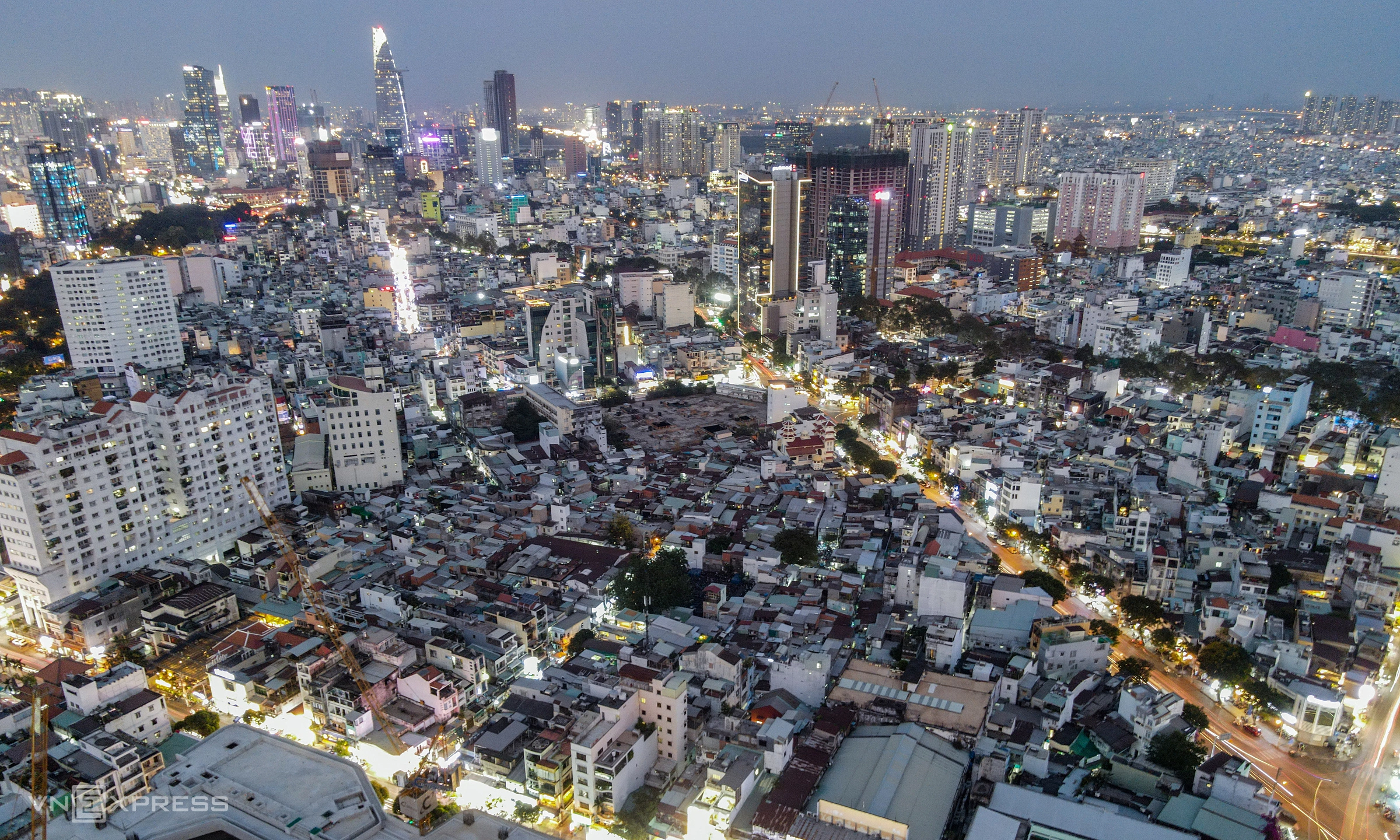
The events in Dan Hoa and Tam Hung are only part of a larger transformation in southern Hanoi. The Olympic Sports Urban Area project, which began construction in late 2025, spans over 9,100 hectares with a total investment of approximately 925,000 billion VND, extending across 11 communes and expected to serve over one million residents.
In Thanh Oai commune alone, approximately 845 hectares are being expropriated, affecting nearly 15,000 land plots, with total compensation costs reaching thousands of billion VND. Local authorities aim to complete site clearance by June 2026 to keep pace with the project schedule.
For residents in both Tri Le and Tu Am, the common concern remains how to secure a stable income after losing their productive land, especially for middle-aged workers with limited opportunities for career change.
The World Bank recommends that land expropriation compensation be viewed as capital for livelihood reconstruction rather than merely short-term income. Without a proper utilization plan, many households risk a decrease in income over time, having lost their means of production without establishing new sustainable revenue streams.
The organization also recommends accompanying policies to support career transitions, skill training, and financial counseling, while encouraging residents to allocate funds for long-term goals, such as investing in small-scale production, business, or safe savings.
Gia Chinh