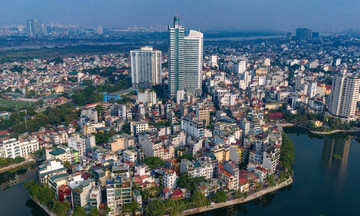
Gia Binh International Airport is located in Gia Binh, Luong Tai, Nhan Thang, and Lam Thao communes in Bac Ninh province. The airport will be built to International Civil Aviation Organization (ICAO) 4F standards, handling approximately 30 million passengers and 1.6 million tons of cargo annually by 2030. Capacity is expected to expand to about 50 million passengers and 2.5 million tons of cargo by 2050.
The total investment is approximately 196,370 billion VND, with 141,230 billion VND for giai doan 1 and 55,140 billion VND for giai doan 2. Funding will come from investor capital, comprising: equity and legally mobilized funds. This project is expected to drive growth in the eastern region of Ha Noi and meet the air transport needs of the Northern key economic zone.
The airport's master plan includes two parallel runways, spaced 1,800 meters apart, ensuring independent take-offs and landings. By 2030, the project will feature a VIP terminal apron, passenger terminal, cargo terminal, and a maintenance area with approximately 83 parking positions. This will expand to about 123 positions by 2050.
The passenger terminal is designed to a 5-star standard, optimizing space and functionality. It will integrate with national, regional, and provincial transport networks. Ha Noi will connect directly via expressways, urban railways, and national railways. The project requires nearly 1,900 hectares of land, affecting approximately 7,100 households.
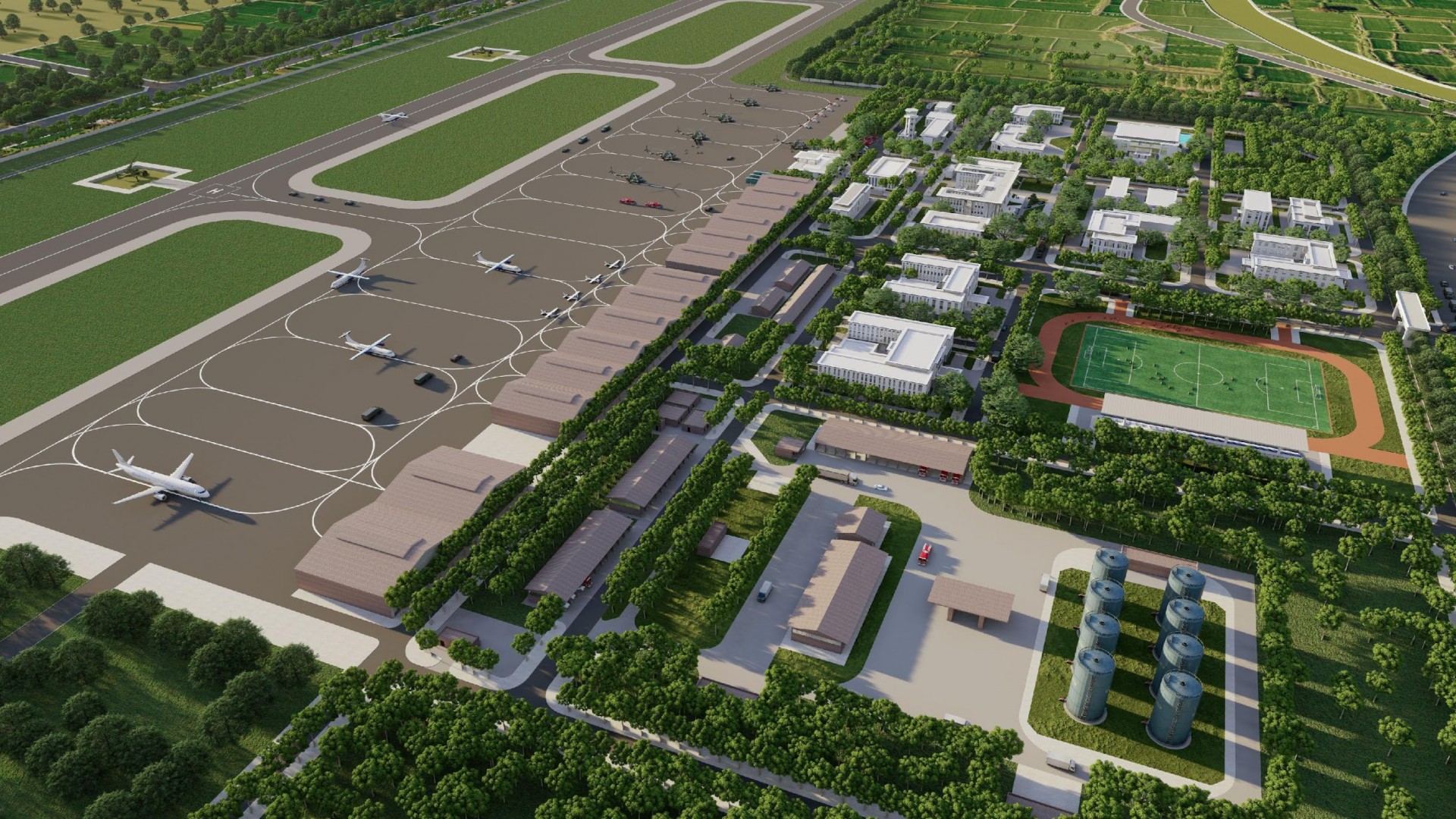 |
Rendered image of Gia Binh International Airport. Photo: VGP |
The government envisions Gia Binh becoming an international, smart, green, and sustainable airport, serving dual-use operations. It aims to be among the top 10 5-star airports globally, as rated by Skytrax, and achieve excellent passenger experience recognition from Airports Council International (ACI). The airport is positioned as a Northern air gateway, a hub for passenger and cargo transit, and an aircraft maintenance center for the Asia-Pacific region.
Immediately following the resolution on Gia Binh airport, the National Assembly also approved the investment policy for the Vinh - Thanh Thuy expressway, which will connect with Laos. This route begins at the Eastern North-South expressway in Nghe An and concludes at the Thanh Thuy border gate economic zone. It will feature 4 lanes with a design speed of 80-100 km/h.
According to the government, the Ha Noi - Vientiane expressway spans approximately 370 km within Vietnamese territory. The 310 km section that overlaps with the North-South expressway is expected to be completed in 2025. However, the 60 km Vinh - Thanh Thuy section has not yet received investment, and its implementation is considered essential to complete connectivity between the two countries.
The Vinh - Thanh Thuy expressway project has a total investment of nearly 23,940 billion VND. It will be funded by the central budget from the 2024 revenue surplus and budget allocations for the 2026-2030 period. Construction is anticipated to commence in 2026, with operations beginning in 2029.
Son Ha