In a recent report to the Government regarding the review and upgrade of expressways with phased investment, the Ministry of Construction urged the Government to prioritize the immediate expansion of two-lane expressways to their full scale. This expansion aims to mitigate congestion, enhance traffic safety, and support local socio-economic development.
Calculations indicate that expanding two-lane expressways alone requires over 80 trillion dong. Currently, five routes, totaling 329 km, are being upgraded to four lanes. These include Cam Lo - La Son, La Son - Hoa Lien, Yen Bai - Lao Cai, the Tuyen Quang - Ha Giang section through Ha Giang, and the Coc Nam border gate - Huu Nghi border gate route. The total investment for these projects is nearly 17.7 trillion dong, and funds are largely secured.
Additionally, the 26 km Hoa Lac - Hoa Binh route has received Prime Minister approval for public-private partnership (PPP) investment. The Phu Tho Provincial People's Committee is preparing a feasibility study for this project, with an estimated total investment of nearly 8 trillion dong.
The Ministry of Construction also noted that six routes, spanning 298 km, are being studied by local authorities for expansion to a full four lanes. These include Thai Nguyen - Cho Moi, Ha Noi - Thai Nguyen, Dong Dang - Tra Linh, Tuyen Quang - Ha Giang, Hoa Binh - Moc Chau, and the Ninh Binh - Hai Phong section through Hai Phong. The central budget capital requirement for these projects is approximately 30.5 trillion dong.
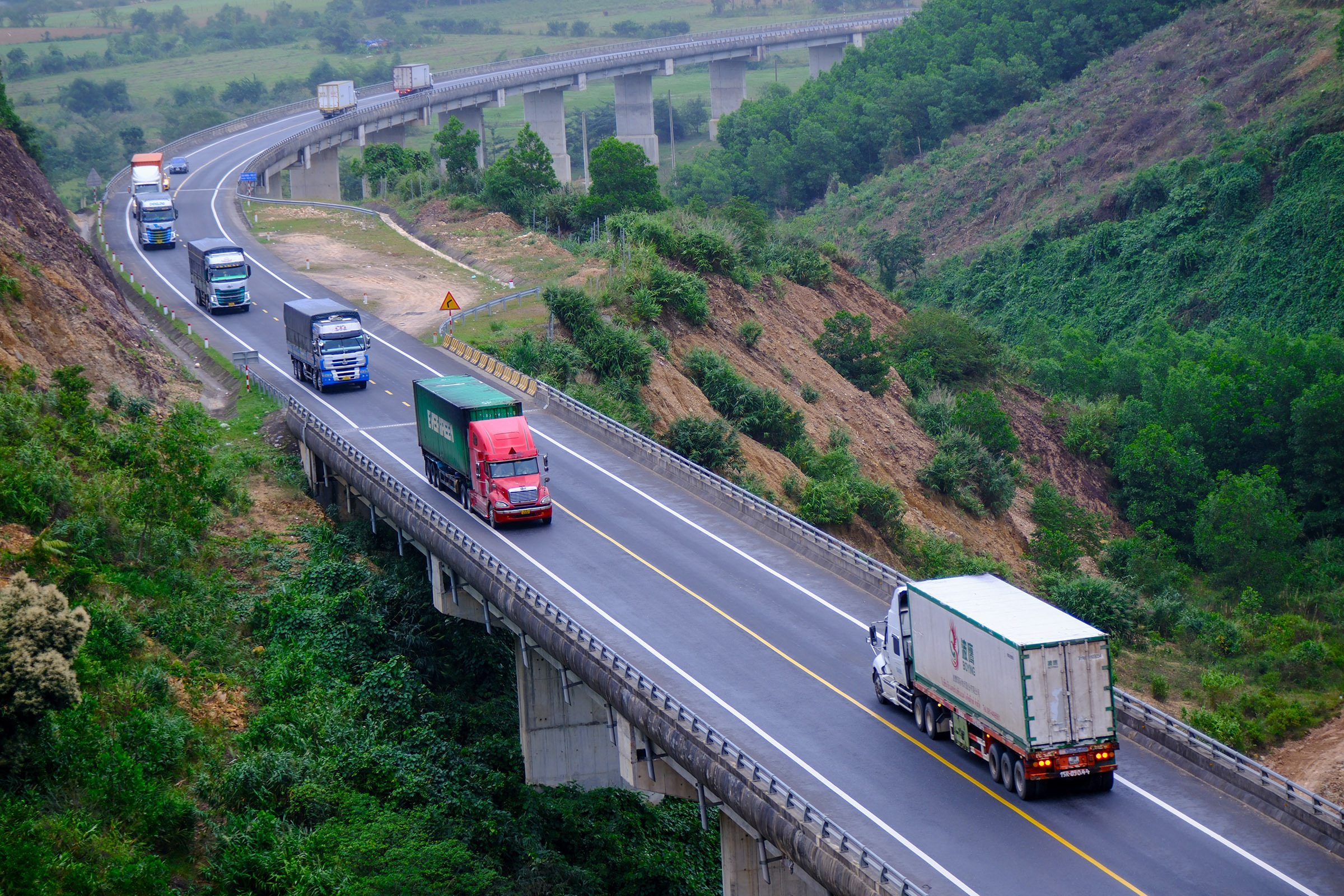 |
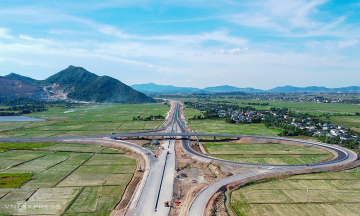
The La Son - Tuy Loan expressway, connecting Da Nang City and Hue City, with two lanes, is currently being expanded to four lanes. *Photo: Nguyen Dong* |
Two options for North-South Expressway expansion
For the four-lane limited expressways (lacking emergency stopping lanes), such as the North-South Expressway (eastern section), expansion to a full four to eight lanes is planned. The Ministry of Construction estimates a capital need of approximately 414.58 trillion dong, encompassing both state budget and non-budgetary sources.
Currently, two sections, totaling 66 km, are undergoing expansion: Cao Bo - Mai Son (public investment, expected to be completed in 2026) and Trung Luong - My Thuan (PPP model, expected to be completed in 2028).
Regarding the North-South Expressway (eastern section), the Ministry of Construction is exploring investment options through public investment or PPP. Due to challenges in mobilizing non-budgetary resources, the Ministry proposed two scenarios for utilizing the 2026-2030 medium-term central budget.
The first scenario involves expanding only the radial sections leading into Ha Noi and Ho Chi Minh City, areas with high transport demand. This covers approximately 534 km, with a preliminary total investment of over 64 trillion dong. The central budget requirement for the 2026-2030 period under this scenario is about 30.5 trillion dong.
The second scenario proposes expanding the entire 1,144 km route, with a total investment of nearly 155 trillion dong. The central budget would need to allocate approximately 103 trillion dong for this option.
On the Ho Chi Minh City - Ca Mau section, the Ministry of Construction noted that the Trung Luong - My Thuan section is being expanded via PPP. The My Thuan - Can Tho section has attracted investor interest. However, the Can Tho - Ca Mau section currently has low traffic volume, difficult construction conditions, and a lack of material sources, necessitating consideration as a separate project.
For other expressway sections, totaling approximately 860 km, including Tuyen Quang - Phu Tho, Cao Lanh - Lo Te - Rach Soi, Khanh Hoa - Buon Ma Thuot, My An - Cao Lanh - An Huu, Ho Chi Minh City Ring Road 3, and Chau Doc - Can Tho - Soc Trang, the expansion capital need is approximately 140.394 trillion dong.
The Ministry of Construction recognized that for four-lane limited expressways, current data is preliminary, primarily used for identifying capital needs, and insufficient for evaluating investment efficiency. Therefore, the Ministry recommended that managing agencies continue detailed studies for each project, thoroughly calculating socio-economic and financial effectiveness, and only decide on investment when efficient accounting is ensured.
According to the road network master plan, the country has 43 expressways with a total length of 8,923 km. To date, 3,345 km are operational or technically completed; 1,252 km are under construction; and approximately 1,721 km are in investment preparation. Of these, about 2,801 km have undergone phased investment, comprising over 2,107 km already in operation and 694 km under construction. The operational sections include 548 km of two-lane expressways and 1,559 km of four-lane limited expressways. The sections currently under construction include 105 km of two-lane expressways and 589 km of four-lane limited expressways.
Anh Duy