The Ho Chi Minh City People's Committee recently approved the Deo Ca - Tri Tin consortium to prepare an investment policy proposal for the project under a public-private partnership (PPP) model.
The proposed plan outlines an elevated viaduct built on the median strip of Nguyen Van Linh Boulevard. It would begin near the connection to Thu Thiem 4 Bridge (Huynh Tan Phat Street) and conclude at National Highway 1. The entire route spans approximately 17.8 km and will feature six lanes.
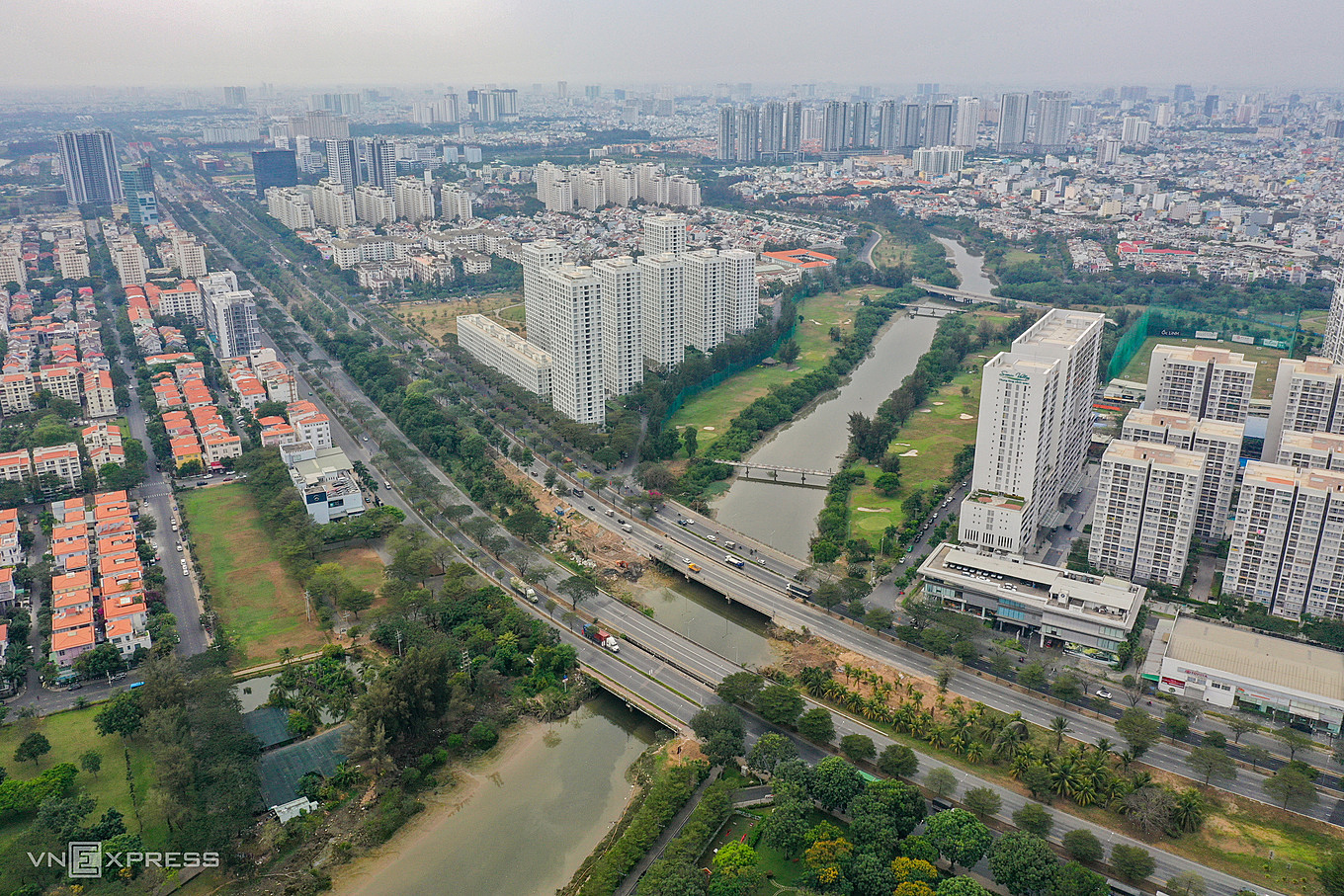 |
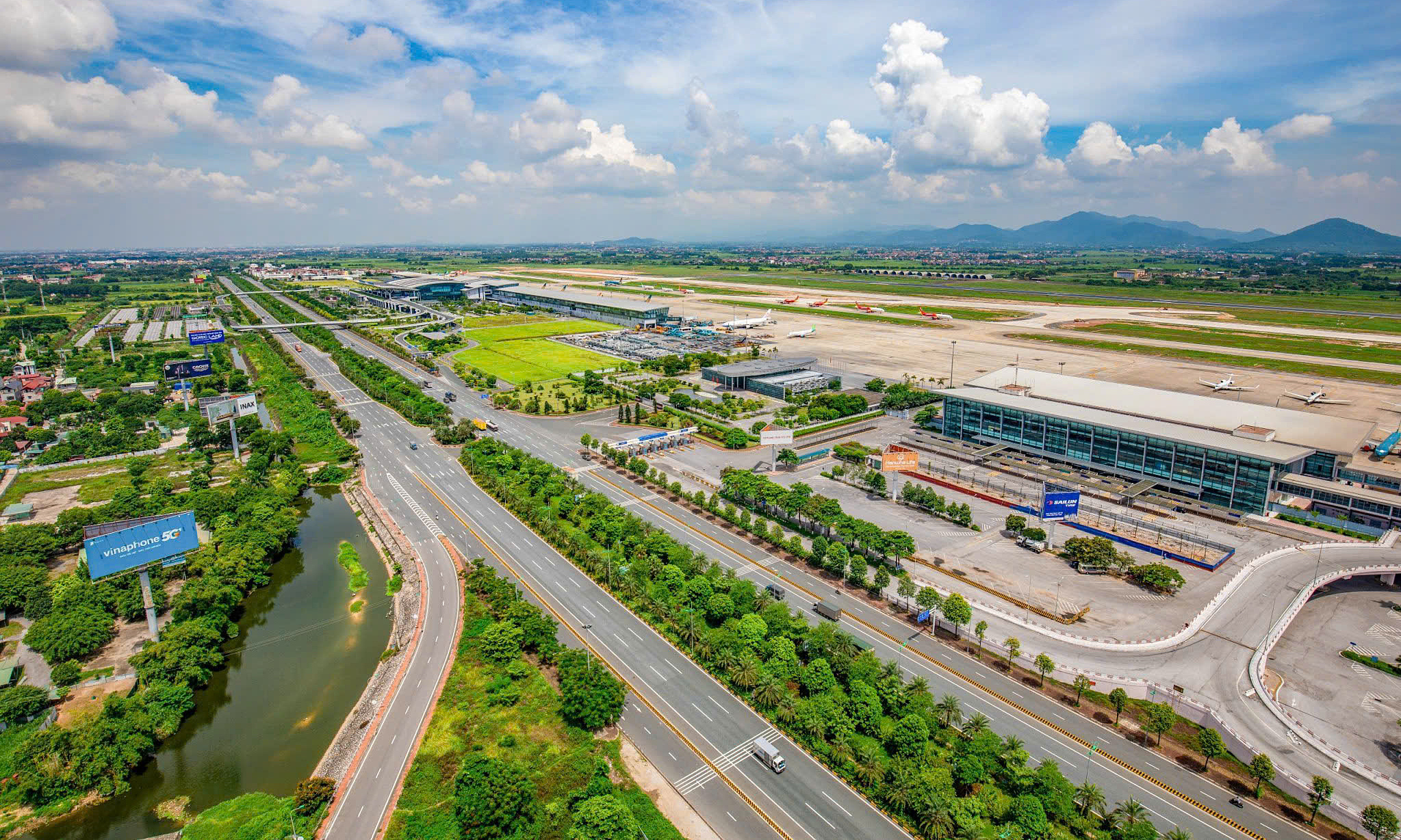
Nguyen Van Linh Boulevard from above. Photo: Quynh Tran. |
The project will also include the construction of interchanges with Ring Road 2, the inner ring road, Pham Hung, Nguyen Luong Bang, Nguyen Huu Tho, National Highway 50, and National Highway 1.
The consortium anticipates implementing the project between now and 2029. The total investment capital has not yet been announced.
According to the Department of Construction, Nguyen Van Linh Boulevard is part of Ring Road 2, serving as a strategic transport axis connecting the western and eastern parts of TP HCM. Although the road currently features 10 to 14 lanes, traffic pressure is expected to rise sharply as several major infrastructure projects are completed, increasing the risk of congestion at interchanges.
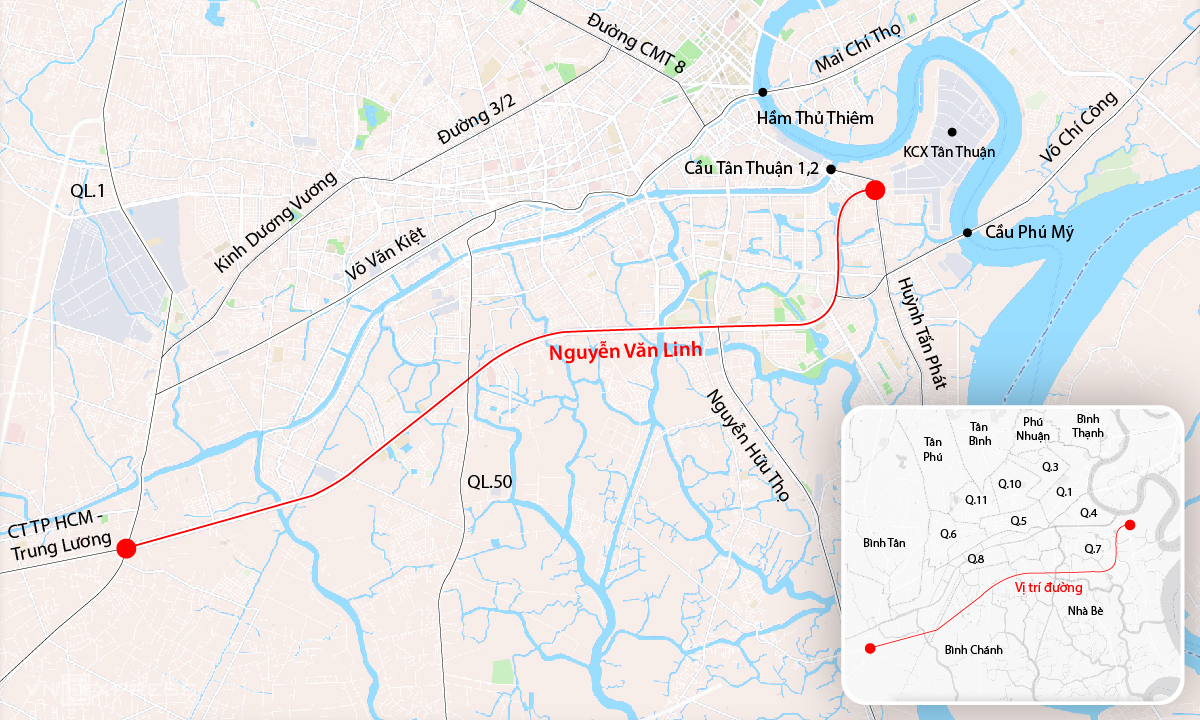 |
Route direction of Nguyen Van Linh Boulevard. Graphics: Khanh Hoang. |
The department evaluated the elevated road proposal, finding it generally consistent with planning orientations. It is expected to enhance traffic flow and reduce traffic conflicts along this vital southern corridor.
TP HCM noted that allowing this study does not imply approval of the PPP contract form, financial plan, or payment mechanism. These aspects will undergo further assessment.
Initiated in 1996 and fully completed in 2007, Nguyen Van Linh Boulevard stands as one of the city's largest roads. It acts as a driving force for development in the southern area, linking Phu My Hung, South Saigon, and the Hiep Phuoc Port area.
Giang Anh