The plant, located at the Nghi Yen Solid Waste Treatment Area in Hai Loc commune (formerly Nghi Loc district), is the largest waste-to-energy project in Central Vietnam. It ranks among the largest facilities of its kind nationwide, with Galax Joint Stock Company, part of AMACCAO Group, as the investor.
With an investment exceeding 4,000 billion VND, the plant will utilize German Martin grate incinerator technology for power generation. Upon completion, it will process 1,500 tons of domestic waste daily and generate 30 MW of electricity.
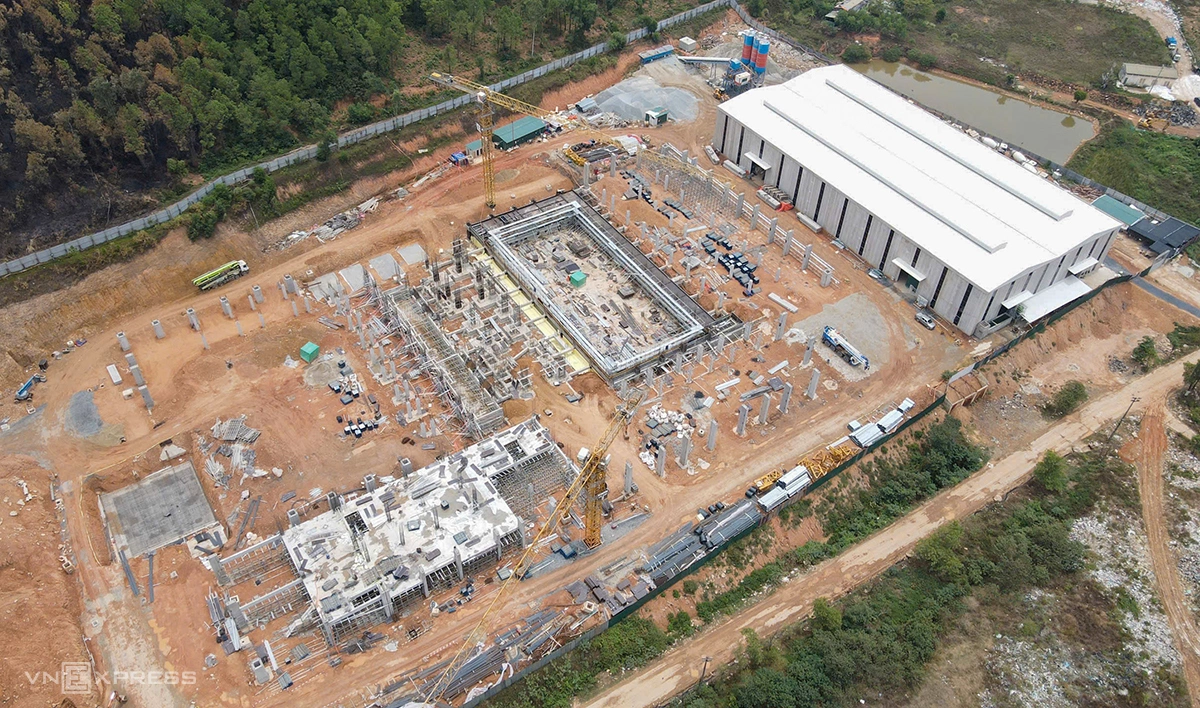 |
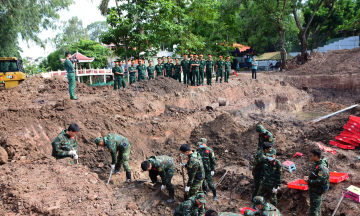
The construction site of the Nghe An waste-to-energy plant. *Photo: Duc Hung*. |
The project is divided into two phases. Phase one includes a domestic waste treatment line with a capacity of 1,000 tons daily, generating 20 MW of electricity, and a medical waste treatment line with a capacity of 3 tons daily. This phase is expected to be completed, undergo trial operation, and become officially operational from late 2028.
Phase two will increase the treatment capacity by an additional 500 tons of waste daily, generating an extra 10 MW of electricity. It will also include the construction of PE plastic and DO oil recycling lines, with operations projected to begin in QIV/2030.
Once operational, the project is expected to reduce landfilling needs and utilize waste for power generation. This will contribute to solving the domestic waste problem and improving the environment in Nghe An.
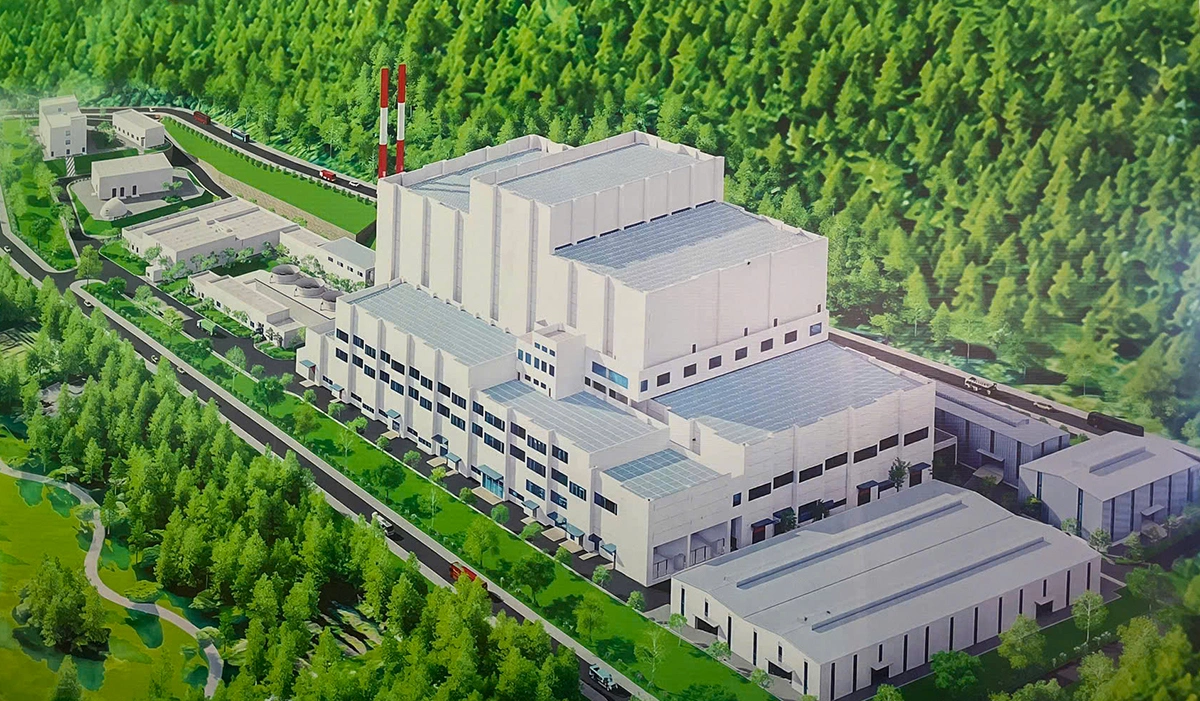 |
Rendering of the Nghe An waste-to-energy plant. *Photo: Duc Hung*. |
A representative from AMACCAO Group stated that the company views this not just as an investment project, but also as a responsibility towards the environment and the people of Nghe An.
The investor committed to mobilizing resources, striving to shorten the approved timeline by 12 months, aiming for the plant to begin operation in QIV/2027. They also pledged strict control over environmental standards and minimizing impact on surrounding communities during construction.
Nghe An provincial leaders expect the project to quickly become effective, serving as crucial local environmental infrastructure. It is anticipated to enhance the quality of life and lay the groundwork for green, sustainable development. The province pledged continued support, resolving difficulties to ensure smooth project implementation, early operation, and effective performance.
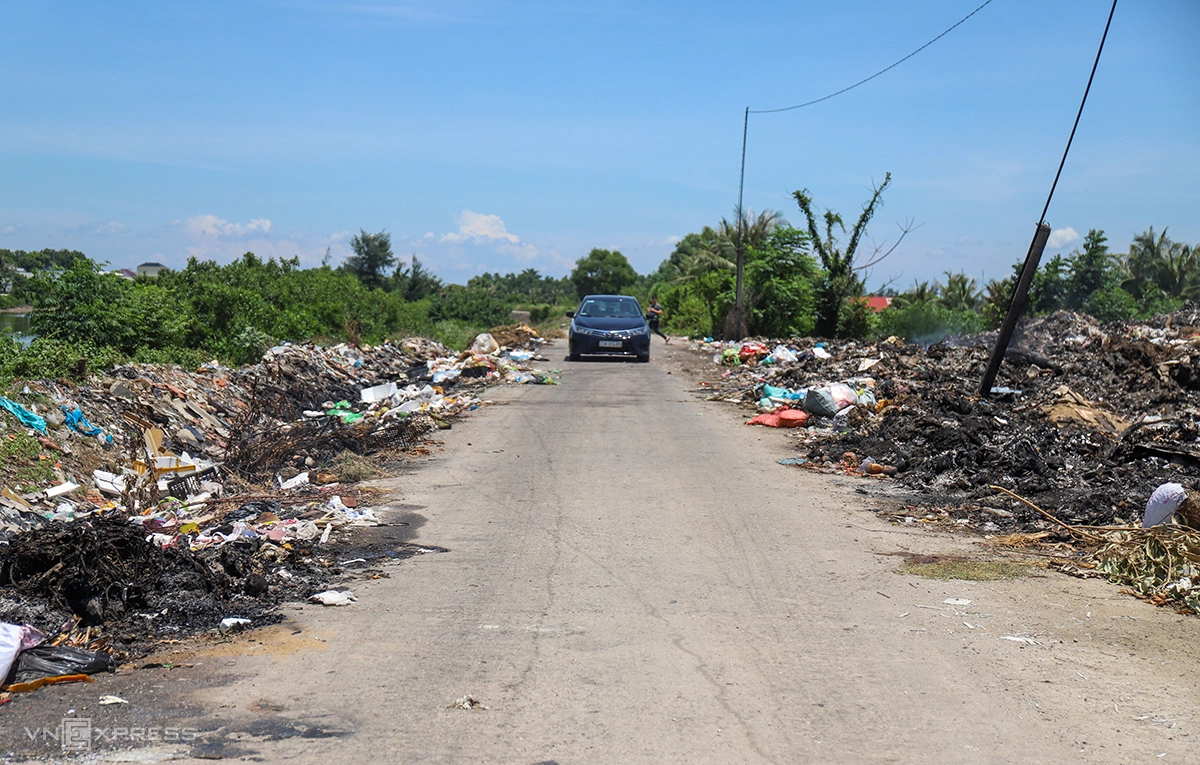 |
Some communes in Nghe An are consistently overloaded with waste, with refuse accumulating on both sides of roads. *Photo: Duc Hung*. |
Before the project broke ground in Hai Loc commune, Nghe An did not have a waste-to-energy plant. Environmental monitoring results from 2025 indicated that the total amount of domestic solid waste generated in the province was nearly 1,918 tons daily, with approximately 65% originating from rural areas. Waste collection rates in urban areas reached 95-98.7%, while rural areas stood at about 89.1%. Many areas are currently experiencing waste overload, such as: Quy Hop, Que Phong, Con Cuong, Dien Chau, Vinh.
Vietnam has 15 waste-to-energy plants either built or under construction. The largest among these is the Soc Son Waste-to-Energy Plant in Ha Noi, with a capacity of 4,000 tons daily, a total investment of 7,000 billion VND, and operational since 7/2022.
Duc Hung