A new anti-corruption law, approved by the National Assembly on the afternoon of 10/12, mandates that officials must account for significant changes in their assets and income.
Under the revised law, the value of assets and income requiring additional declaration due to annual fluctuations has been adjusted to an increase of 700 million dong compared to the previous regulation. This means officials must declare and explain any changes totaling 1 billion dong or more. The declaration must be completed before 31/12 of the year in which the asset and income fluctuations occur.
The law also stipulates that if asset or income fluctuations of 1 billion dong or more within a year are discovered and the obligated individual fails to declare them, the asset and income control agency has the right to request relevant information. If assets or income increase, the source must be explained.
The types of assets that officials must declare, including precious metals, gemstones, cash, valuable papers, and other assets, now have a higher threshold. The minimum value for declaring these specific assets has been raised from 50 million to 150 million dong.
The declaration and explanation of the origin of increased assets and income are considered important criteria for evaluating and ranking the performance of officials, public servants, and public employees. Individuals obligated to declare and explain the origin of assets and income who are dishonest will be handled according to laws governing officials and public servants, and disciplined by the Party if they are Party members.
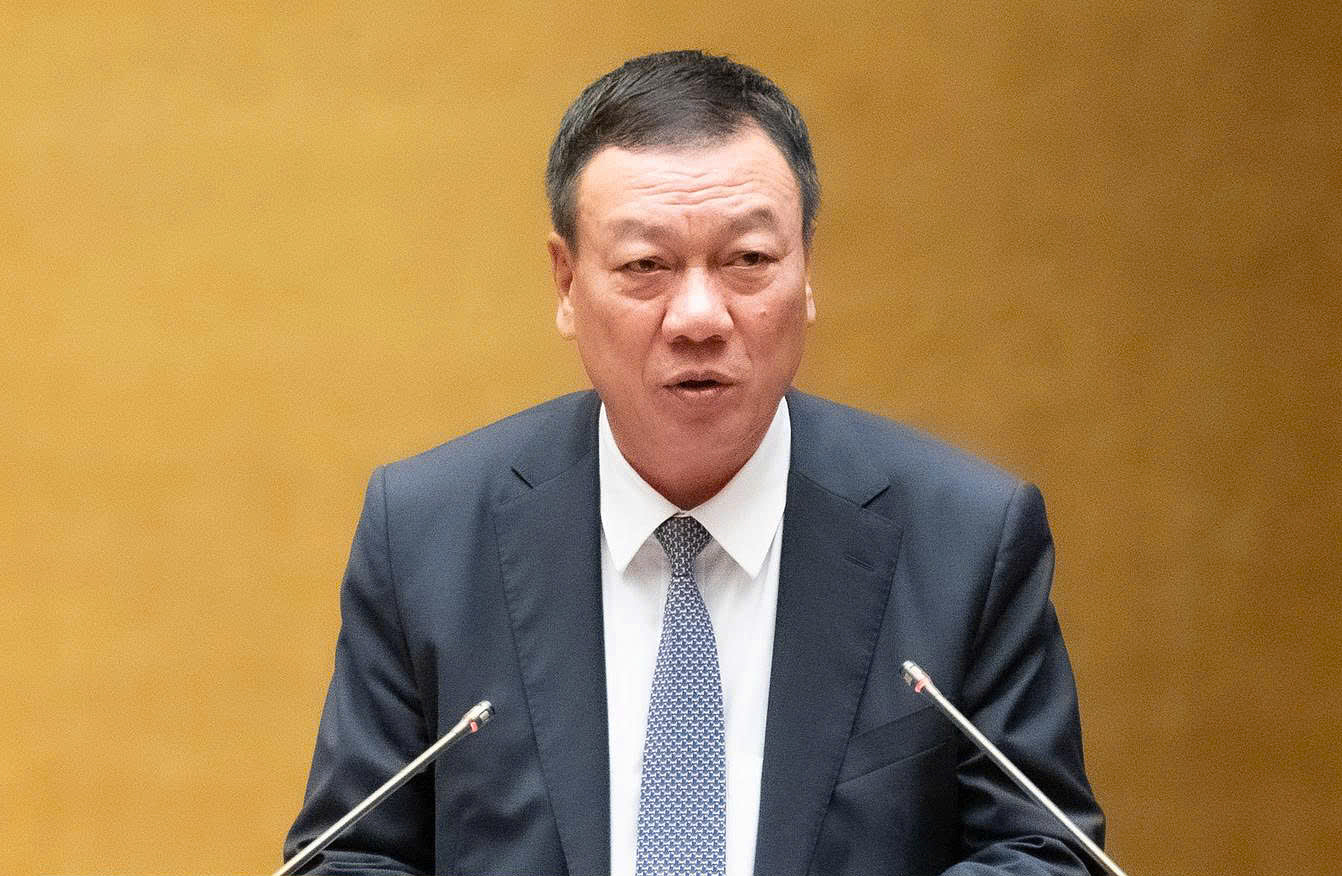 |
Inspector General of the Government Doan Hong Phong presented a report explaining and incorporating delegates' opinions on the draft law on the afternoon of 10/12. *Photo: National Assembly Media* |
The new law clearly defines the responsibilities of various agencies in controlling asset and income declarations. Party inspection committees at the direct grassroots level and above will oversee the assets and income of Party members, individuals managed by the same-level Party committee, and Party members specialized in Party work or holding positions in advisory and assisting bodies of the Party committee.
The Government Inspectorate controls the assets and income of obligated declarants. This includes individuals holding positions from Deputy Director-General and equivalent or higher, working at ministries, ministerial-level agencies, government agencies, and other entities established by the Government or Prime Minister. It also covers heads and deputy heads of organizations established or approved by the Government or Prime Minister. Additionally, the Inspectorate oversees the Chairman or Deputy Chairman of the Board of Directors, Chairman or Deputy Chairman of the Members' Council, General Director or Deputy General Director, members of the Board of Directors, members of the Members' Council, Head of the Supervisory Board, Chief Accountant of state-owned enterprises, and representatives of state capital in enterprises managed by ministries and ministerial-level agencies.
Ministries, ministerial-level agencies, and government agencies control the assets and income of obligated declarants working at entities under their management, including agencies, organizations, units, and state-owned enterprises.
The National Assembly Office controls the assets and income of obligated declarants under its management and that of National Assembly agencies.
The Supreme People's Court, Supreme People's Procuracy, State Audit Office, and the Presidential Office control the assets and income of obligated declarants under their management.
The Central Committee of the Vietnam Fatherland Front controls the assets and income of obligated declarants under its management and that of central socio-political organizations.
Vu Tuan