Decree 27/2026, issued on 19/1, concerning the National Database on Cadres, Public Servants, and Public Employees, mandates that each individual will possess a unique electronic file, linked to an identification code, for digital management and retrieval.
This file will contain an electronic curriculum vitae and other components, documenting the individual's entire career, from election or recruitment through resignation or retirement. Each electronic file will be assigned an identification code identical to the public servant's personal identification number.
The electronic curriculum vitae is generated during the file creation process, using data from cadres, public servants, and public employees. Public servants must regularly update their personal information and data as changes occur, bearing legal responsibility for the accuracy of these updates.
The employing agency will also update operational management data into the electronic file. This information must be synchronized with the National Database on Cadres, Public Servants, and Public Employees within three working days of its generation.
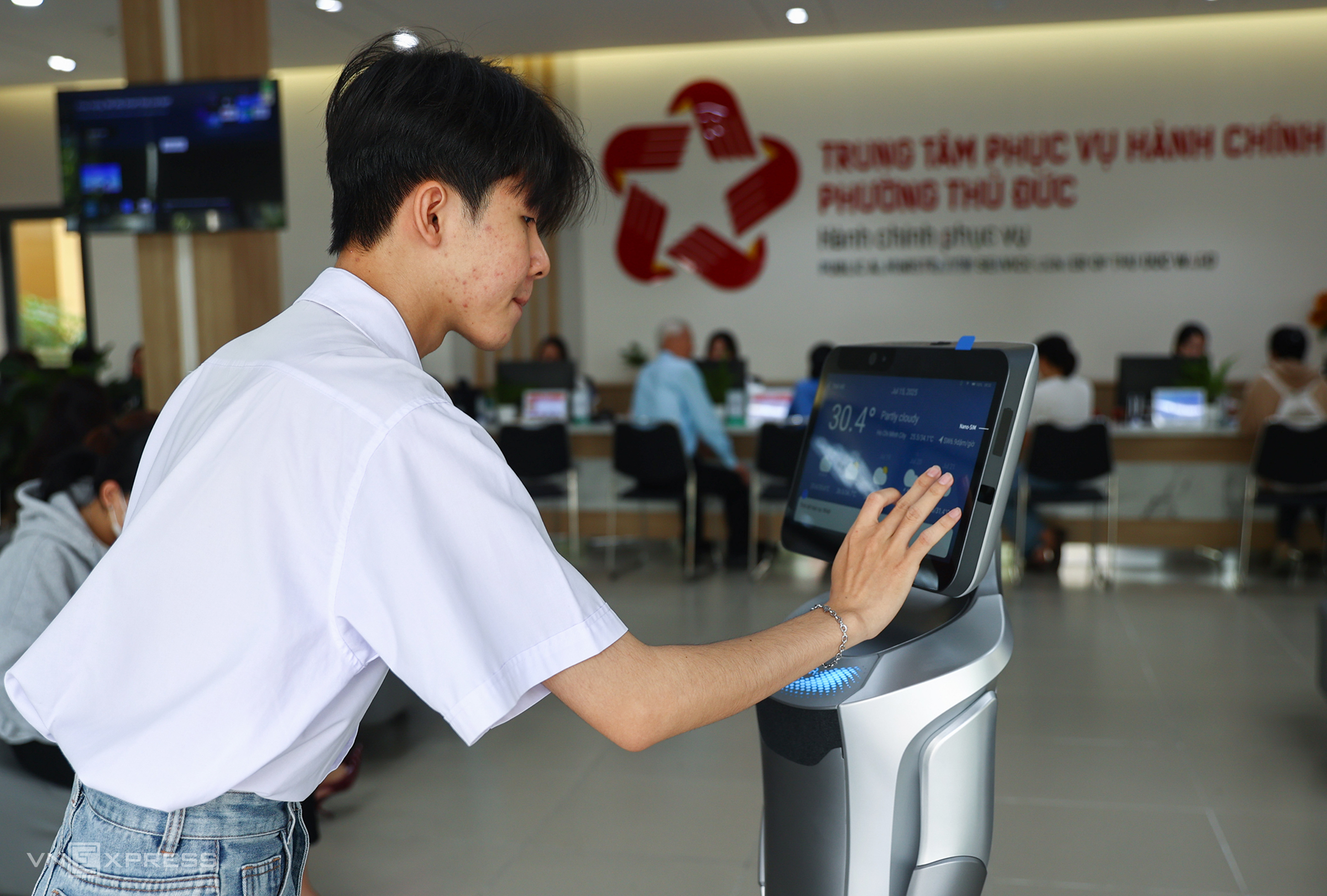 |
Working hours at Thu Duc Ward Public Administration Service Center, TP HCM, 7/2025. Photo: Nhu Quynh. |
The National Database on Cadres, Public Servants, and Public Employees contains various categories of essential information: details for identity verification, background, and identification; family relationships; recruitment, election, appointment, assignment, or planning data; educational qualifications and professional skills; job position, basic salary, salary allowances, performance evaluations, commendations, and disciplinary actions; and data concerning assets, income, and health. The Ministry of Home Affairs manages this Database, overseeing its development, operation, and utilization.
Electronic files will be stored and will replace paper versions in the management of public servants. Should operational needs require paper files, the managing agency or employing unit can access the electronic file from the National Database and convert it to a paper format for use.
Public servants are not required to re-prepare any file components already existing in the electronic version. Employing agencies are also prohibited from requesting public servants to resubmit information or file components already within the National Database, unless it is essential to protect the legitimate rights and interests of individuals or organizations.
Authorized organizations and individuals may only access and view a public servant's electronic file in accordance with legal regulations and with the public servant's electronic consent. Public servants retain the right to withdraw their consent. If access to an electronic file is granted, the information must be kept confidential, and the public servant's personal data protected.
For files of cadres and public servants classified as state secrets, all relevant parties must implement measures to ensure secrecy during digital management, storage, transmission, and use. The backup and extraction of these files must comply with legal regulations on state secret protection and cryptography.
Hong Chieu