 |
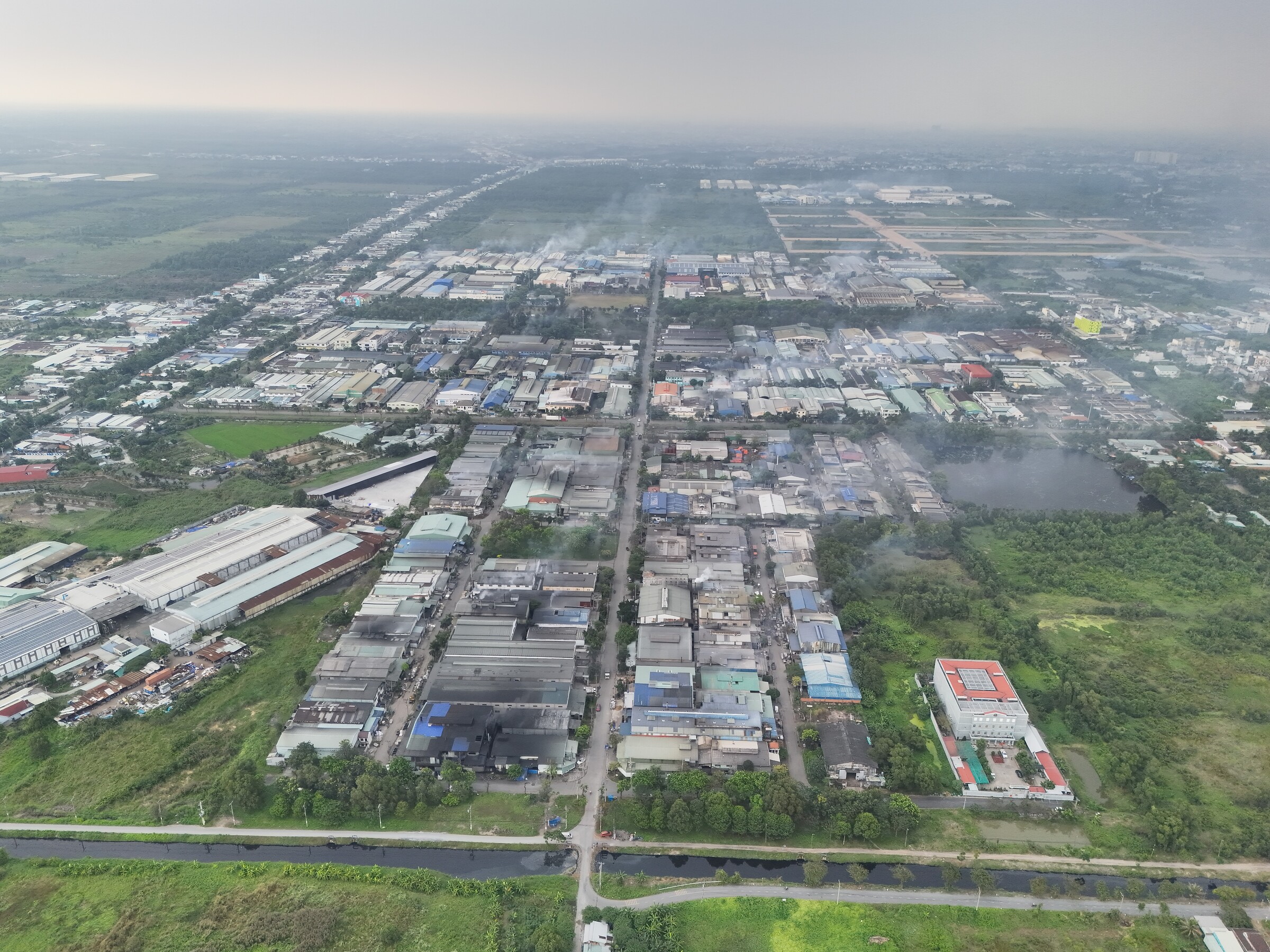
Le Minh Xuan Industrial Park (IP) was established in 1997 to relocate production facilities from Ho Chi Minh City's inner districts. In 2005, the Le Minh Xuan Small-Scale Industrial Cluster (SSIC) was built to consolidate polluting or potentially polluting production facilities intermingled within residential areas.
Currently, the IP and SSIC have a total area of 115,32 hectares, a 100% occupancy rate, with 274 establishments and approximately 8,500 workers.
{"caption_all":"Canal C12, the section adjacent to Le Minh Xuan Industrial Park and Small-Scale Industrial Cluster. This has been identified as the area with the most severe surface water pollution among the surveyed points. Surface water in canal C12 showed BOD₅ exceeding standards by 61 times, COD by 47 times, iron by 25 times, and E. coli by 22 times. The Vietnam Environment Administration assessed this as the most heavily polluted area around the hotspot.","caption_items":"["",""]"}
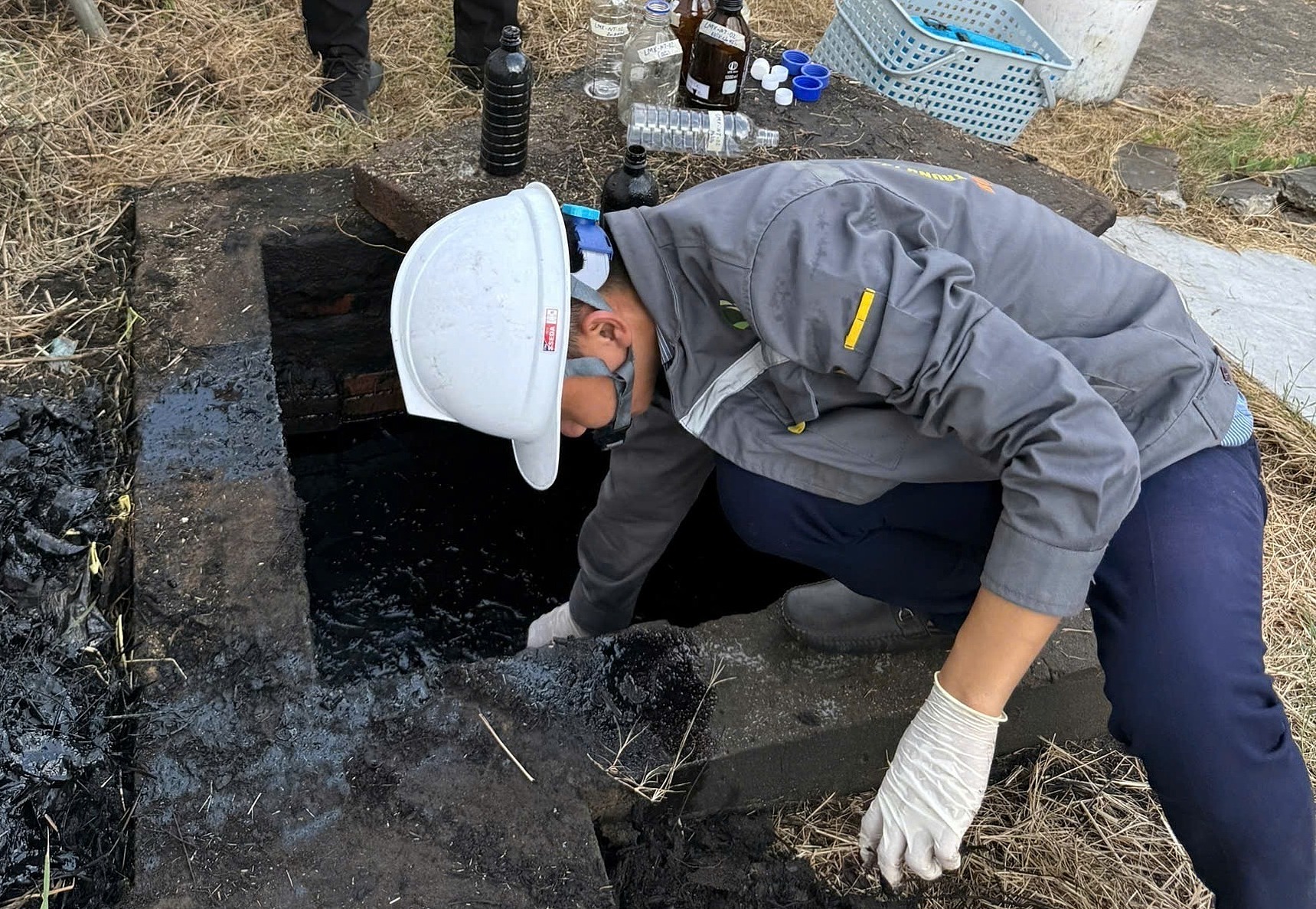 |
Environmental forces collected samples at Le Minh Xuan Industrial Park. The inspection began on may 19 under a decision by the Minister of Agriculture and Environment. The Vietnam Environment Administration led the effort, coordinating with the Department of Environmental Crime Prevention and Control Police (C05), Ho Chi Minh City Department of Agriculture and Environment, Ho Chi Minh City Export Processing Zones and Industrial Parks Authority, and other relevant units.
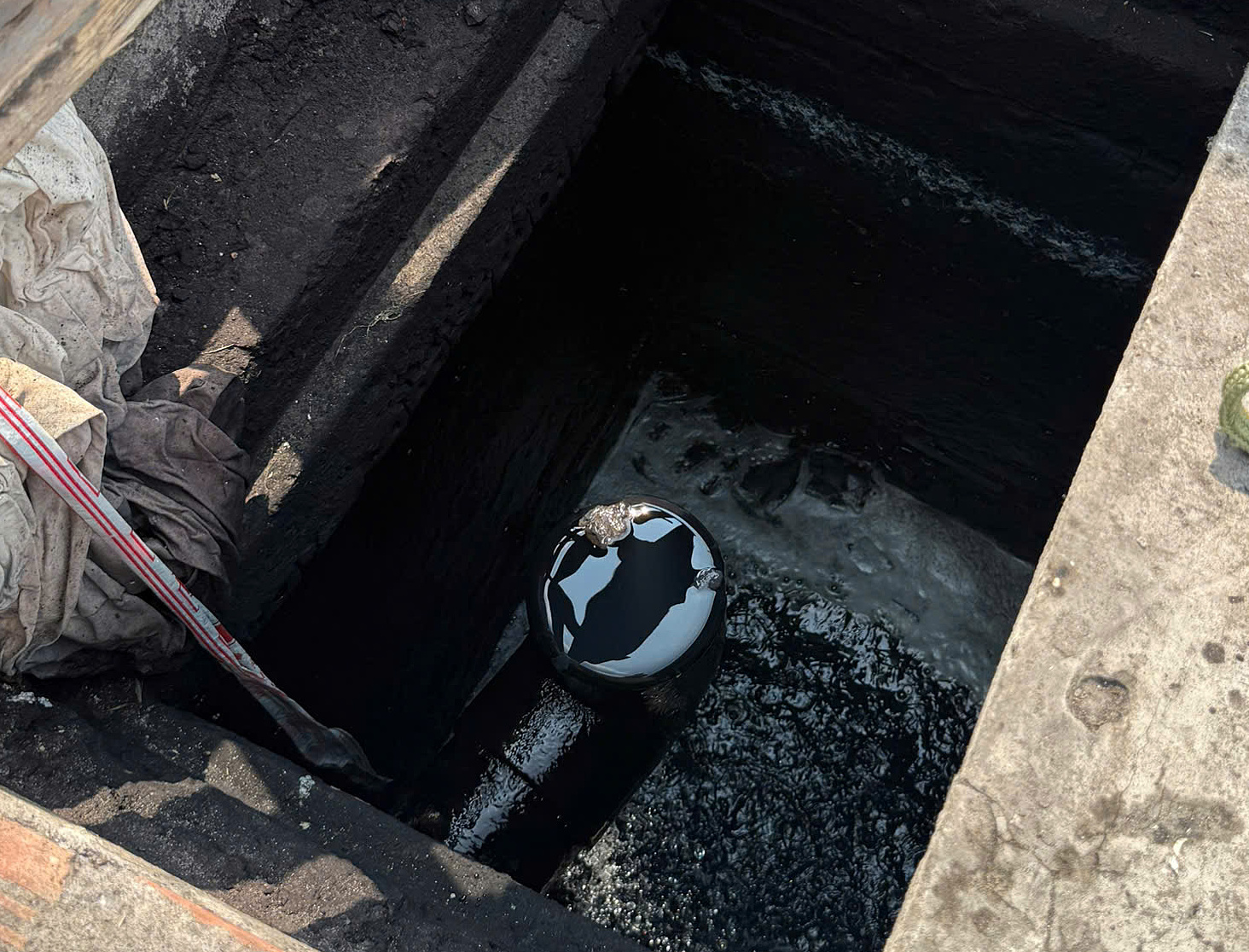 |
A manhole on street 8, where a wastewater sample with particularly high pollution levels was collected. BOD₅ in this sample exceeded connection standards by 2,797 times, COD by 1,041 times, and total mineral oil and grease by 1,348 times. Analysis results showed many parameters, including heavy metals, exceeded connection standards at very high levels, with nickel exceeding by 197 times and iron by 72 times.
{"caption_all":"Monitoring results showed that air quality in the hotspot area was polluted by dust and NH₃ gas. Suspended dust exceeded standards by 2,5 times, while NH₃ exceeded by 4,8 times. The highest pollution levels were recorded in areas with many emission sources and a distribution consistent with wind direction.","caption_items":"["",""]"}
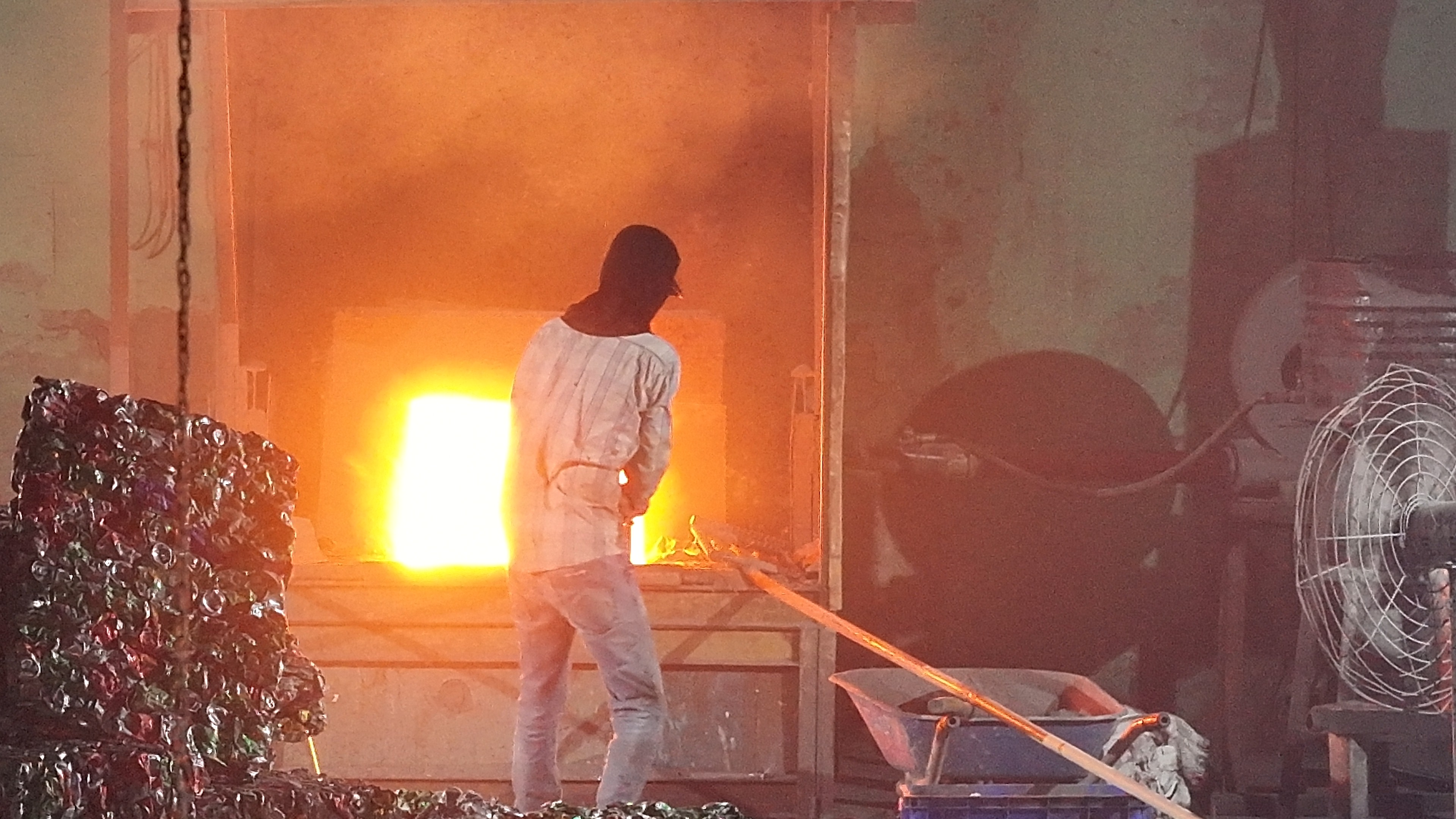 |
Workers operated a furnace at a production facility in Le Minh Xuan. After inspecting 100 facilities, the Vietnam Environment Administration identified 87 establishments with violations, totaling 286 infractions, and imposed fines of nearly 16 billion Vietnamese dong. Key violations included environmental procedures, waste management, improper wastewater discharge, transferring waste to unauthorized units, and illegal dumping of industrial solid waste. In addition to administrative penalties, authorities transferred five cases with criminal signs to Ho Chi Minh City Police for investigation.
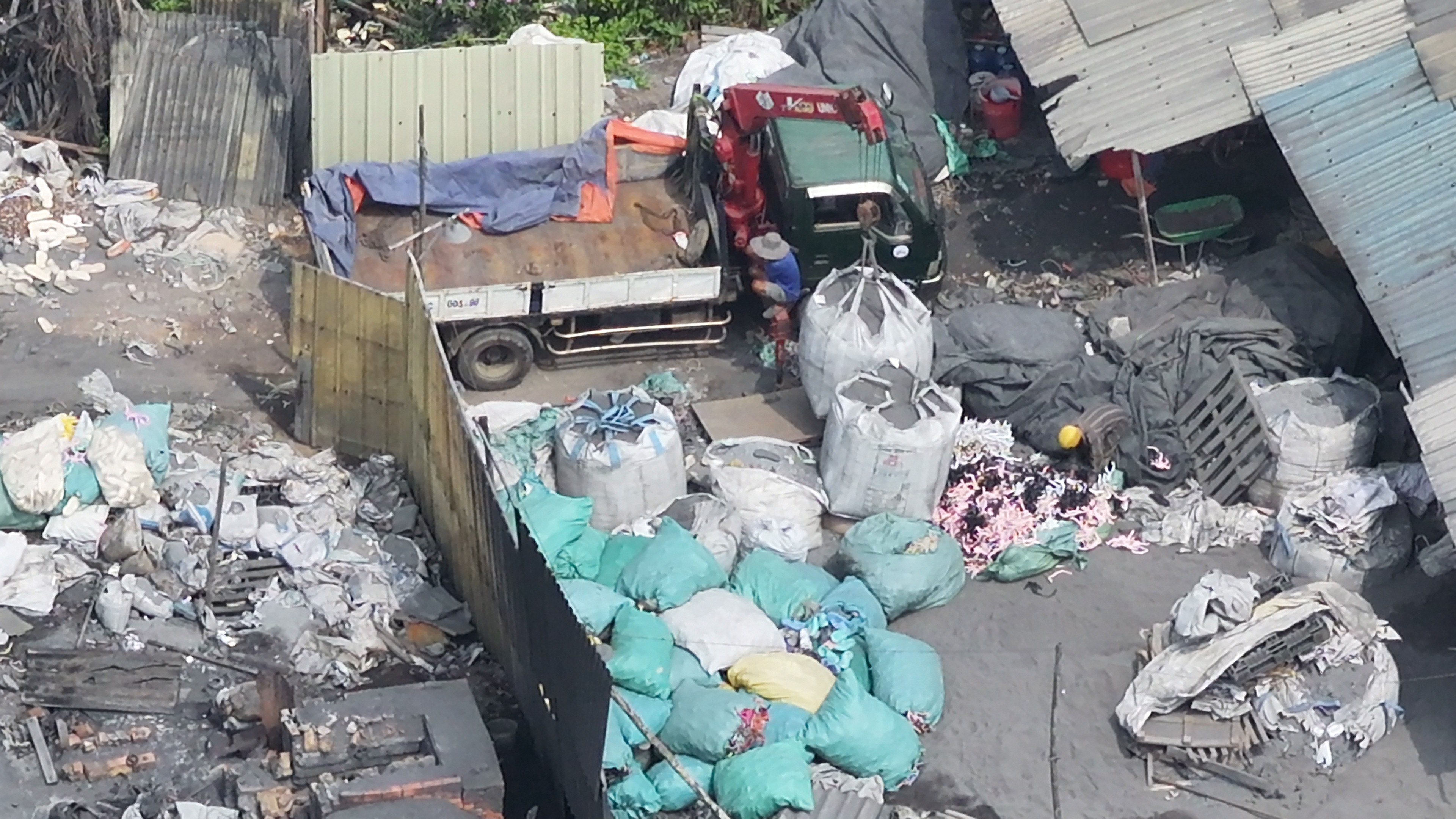 |
Solid waste was collected at a production area.
Inspection results indicated inadequate waste management at many facilities, from storage and classification to transfer for treatment. Following the inspection, illegal dumping ceased, and businesses collected and treated accumulated waste, restoring affected areas.
{"caption_all":"An area for waste collection and dumping within and around the Le Minh Xuan hotspot. Records from the Vietnam Environment Administration noted illegal burial, concealment, dumping, and discharge of general solid waste and hazardous waste at many locations, including agricultural land and encroached land.","caption_items":"["",""]"}
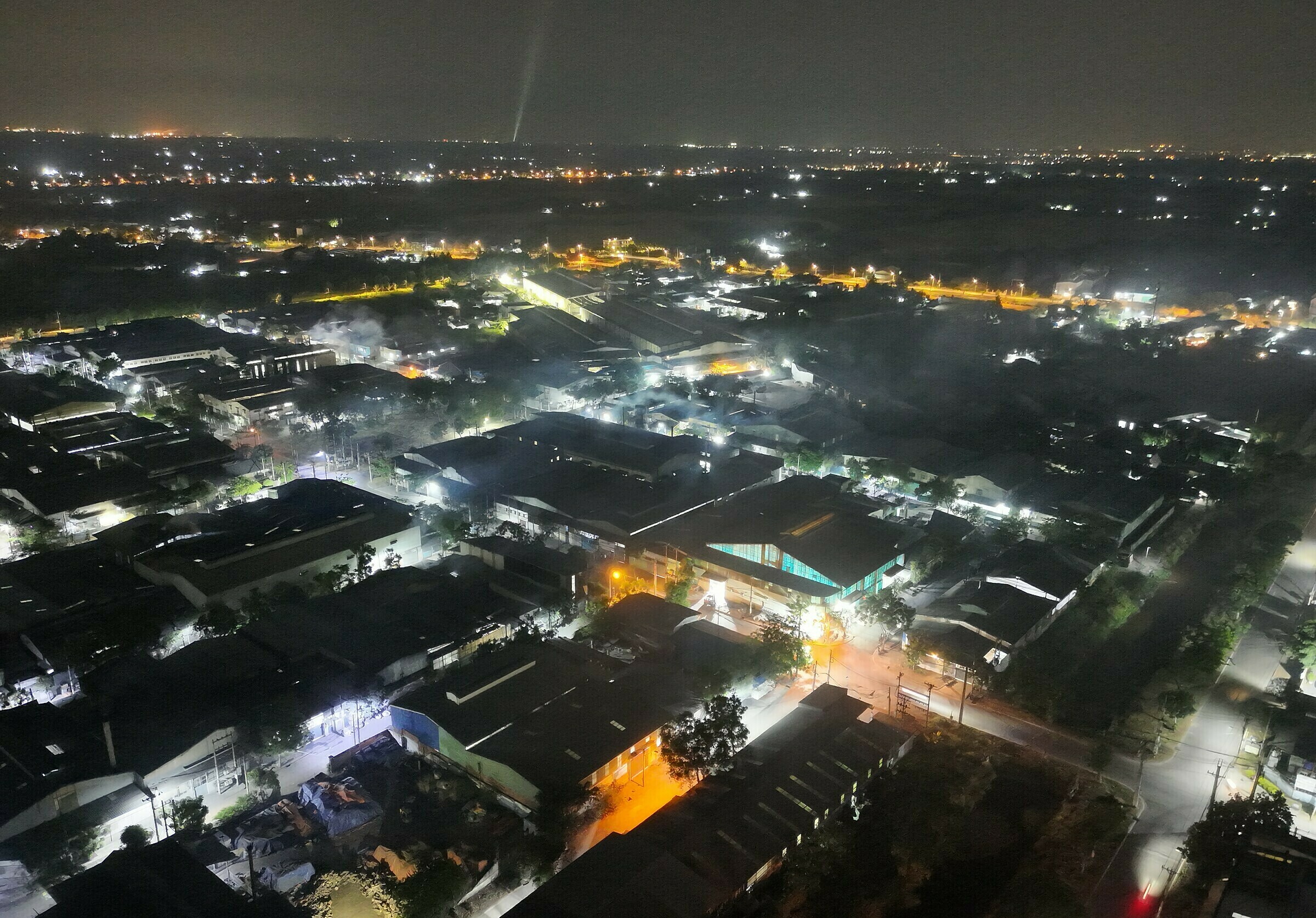 |
An aerial view of the area at night shows many workshops still lit and continuous production activity. According to the Vietnam Environment Administration, emission sources in the area were the primary cause of water and air pollution. Uncontrolled discharge of wastewater, dust, and emissions over a prolonged period made the area an pollution hotspot.
After the inspection, environmental violations in the area largely stopped. The Vietnam Environment Administration stated that strict control of discharge sources, monitoring of wastewater quality before connection to the centralized system, definitive treatment of dumping sites, and remediation of canal pollution are necessary for the future.
Authorities require violating facilities to fully implement corrective measures. Functional agencies will continue inspections and monitoring to prevent pollution from recurring.
Gia Chinh
Photos: Vietnam Environment Administration