On the morning of 7/3, during a site inspection of the Gia Binh airport construction project, Prime Minister Pham Minh Chinh directly checked the progress of the connecting road from Hanoi to the airport and other important components such as the VIP terminal, air traffic control tower, and resettlement area.
The government leader emphasized the need to adhere to the goal of building a dual-use Gia Binh airport, serving socio-economic development and ensuring national defense and security, while being civilized and modern. A modern, deeply internationally integrated second-generation free trade zone will be developed as part of the aviation economic zone.
Gia Binh airport will open a new, modern development space for Hanoi, Bac Ninh, and the Red River Delta, connecting important growth poles such as Hanoi, Hai Phong, and Quang Ninh. The project will also enhance regional, capital, and international transportation links within the Red River Delta, improving the material and spiritual lives of the people.
"The motto is not to waste a day, not to delay a week, not to miss an opportunity in a month, and not to be passive throughout the year," the prime minister stressed.
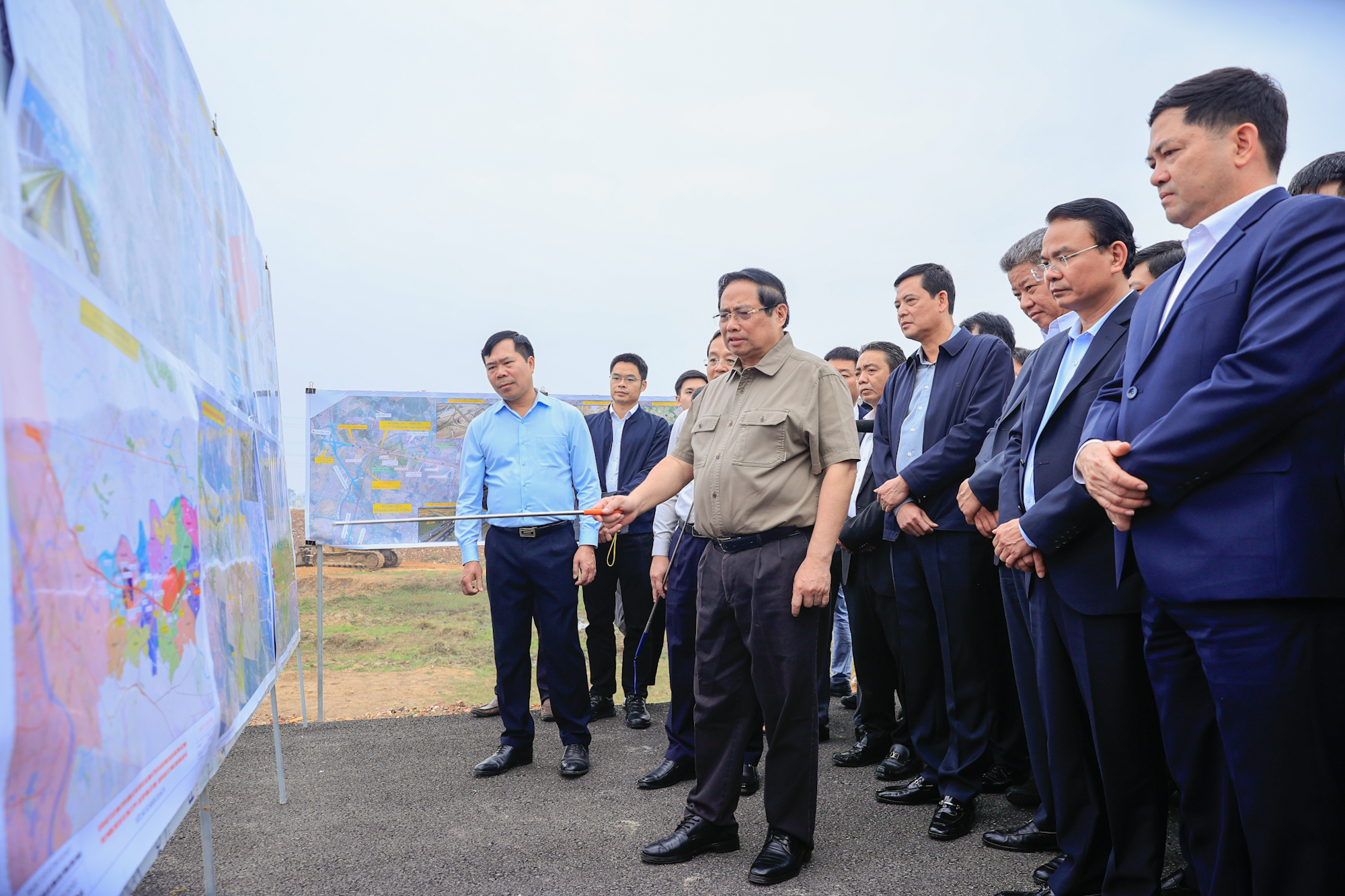 |
The prime minister inspecting the site of the connecting road project from Gia Binh airport to Hanoi, on the morning of 7/3. Photo: Nhat Bac |
The prime minister inspecting the site of the connecting road project from Gia Binh airport to Hanoi, on the morning of 7/3. Photo: Nhat Bac
The prime minister agreed with Hanoi's and Bac Ninh's proposals for specific mechanisms to construct urgent facilities for Gia Binh airport. He requested that site clearance for the first phase of the project's ecosystem components be completed by 30/4, and the second phase by 30/6.
The Ministry of Public Security and Bac Ninh province proposed establishing a second-generation free trade zone at Gia Binh airport. The Ministry of Finance is balancing increased revenue sources to provide support, as this is an urgent national defense and security project, serving the APEC High-Level Week in 2027.
Bac Ninh province is responsible for construction materials, and will also support Hanoi by directly allocating quarries to contractors.
Visiting workers at the construction site, the prime minister encouraged them to mobilize their workforce, machinery, and equipment, striving to overcome difficulties by working three shifts, four teams, eating quickly, sleeping urgently, conquering sun and rain, and not being defeated by storms, to ensure the progress of the components.
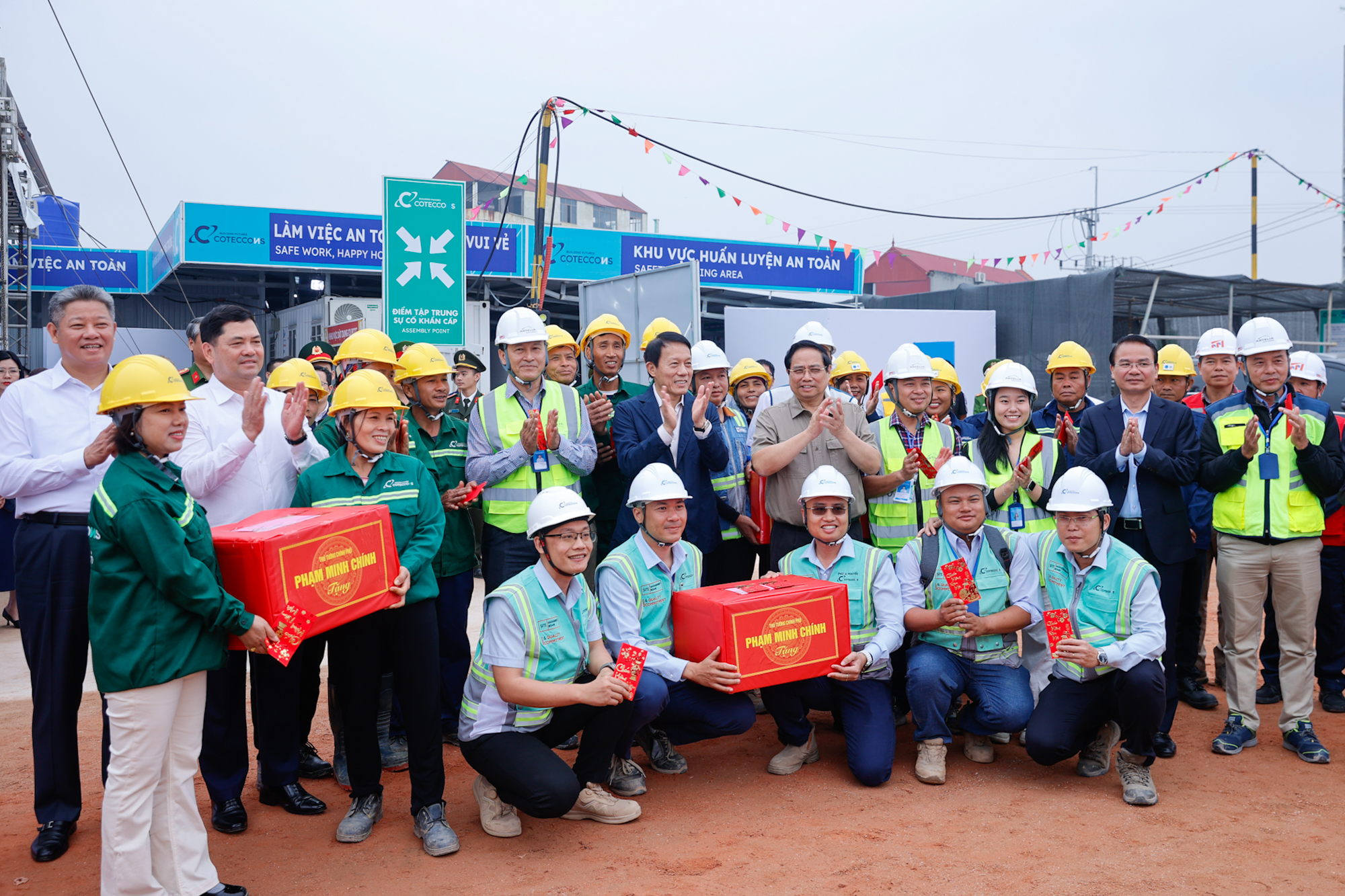 |
The prime minister encouraging workers constructing the VIP terminal at Gia Binh airport project, on the morning of 7/3. Photo: Nhat Bac |
The prime minister encouraging workers constructing the VIP terminal at Gia Binh airport project, on the morning of 7/3. Photo: Nhat Bac
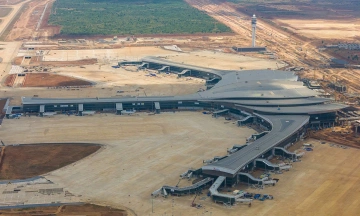
The Gia Binh airport project is a key national undertaking, with its investment policy approved by the National Assembly in 12/2025. The project has a total capital of VND 196 trillion and covers an area of 1,884 hectares, aiming to be a smart, green, sustainable, international-class, 5-star airport.
In the initial phase, by 2030, the project will complete two runways, a passenger terminal, a VIP terminal, and other technical and logistics components. This includes completing the necessary structures to serve the APEC Conference in 2027.
Upon completion of the first phase, Gia Binh airport will have the capacity to handle 30 million passengers and 1.6 million tons of cargo annually. By 2050, the airport will be expanded to four runways, increasing its capacity to 50 million passengers and 2.5 million tons of cargo per year.
To date, site clearance for the project has reached 66.8%, and the air traffic control tower has achieved 15% of its construction volume. At the VIP terminal, pile driving is 100% complete. Contractors are currently focusing on ground treatment for the runways, taxiways, and aprons, preparing for construction to begin in 4.
Connecting transportation to Gia Binh includes the Hanoi - Gia Binh expressway, Gia Binh - Hai Phong expressway, and Ring Road 4 of the Capital Region, all currently under development and expected to be operational in 2027.
Vu Tuan