Speaking at the Ministry of Construction's 2025 year-end review conference on the morning of 21/12, the Prime Minister emphasized that in the new context, the construction sector must strongly innovate its development mindset and vision, viewing infrastructure as a key driver of growth. Alongside this mindset, the approach to mobilizing and utilizing resources also needs breakthroughs, completing mechanisms to effectively combine state capital with the private sector in implementing key national projects.
The head of government noted that breakthroughs in science and technology, digital transformation, and green transformation must be central. The construction sector needs to consider data a vital resource, gradually forming a synchronous data system on housing, urban areas, infrastructure, climate, and environment, interconnected with ministries and sectors, to serve management, administration, and sustainable development.
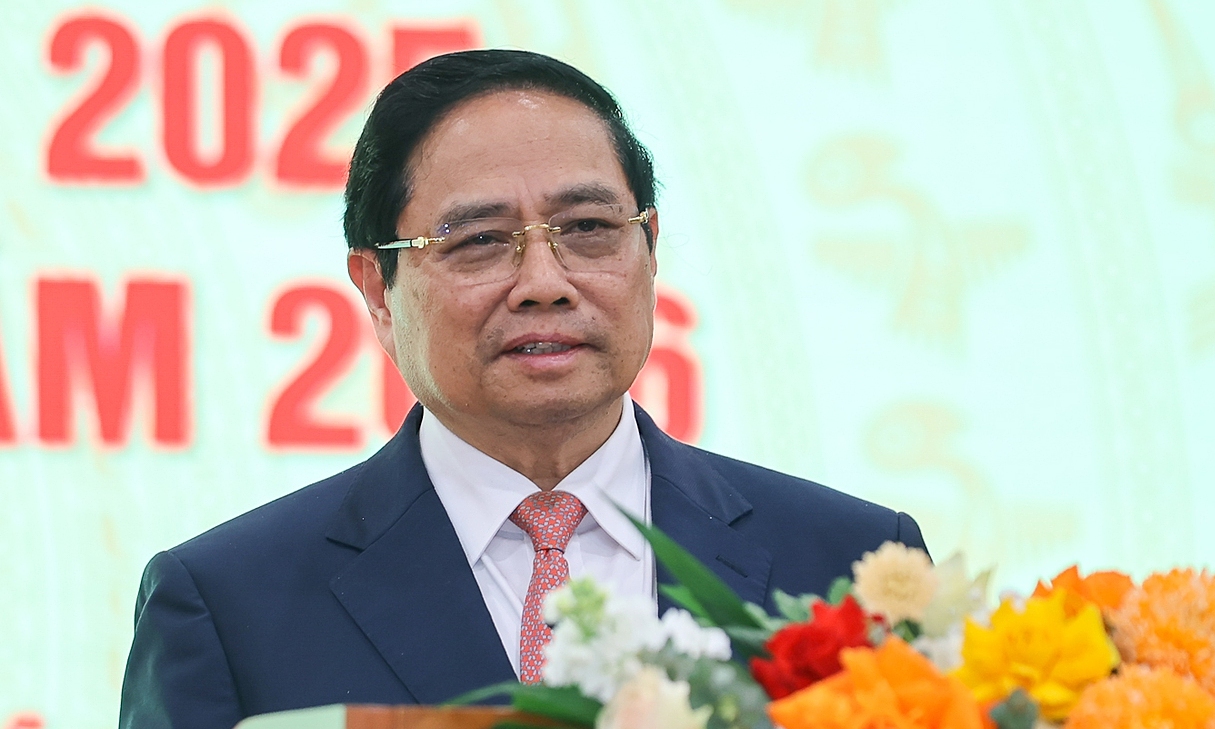 |
Prime Minister Pham Minh Chinh speaks at the conference. Photo: VGP |
Another point the Prime Minister particularly highlighted was creating clear changes in social housing development. He stated that this is a fundamental solution to meet the housing needs of citizens, while also helping regulate the real estate market, aiming to complete one million social homes by 2028. When this segment develops soundly, the commercial housing market will have more stable conditions.
In the transport sector, the government leader requested innovation in long-term development methods, ensuring century-long planning and promoting the efficiency of various transport types. Effective exploitation of the inland waterway system, especially in the Mekong Delta, was emphasized as a solution to reduce site clearance costs, alleviate pressure on roads, and boost tourism and logistics.
Alongside the breakthroughs, the Prime Minister clearly outlined the need to definitively resolve persistent issues, particularly the disbursement of public investment capital. The Ministry of Construction must implement key projects and works decisively from early 2026; strengthen discipline, order, and transparency in construction investment, prevent corruption and malfeasance, and enhance state management effectiveness.
In parallel, the head of government requested the construction sector to implement five assurances: clear institutions to remove bottlenecks; smooth, synchronous infrastructure; smart governance in administration; practical, effective approaches; and ensured mutual understanding and cooperation among management agencies, localities, businesses, and investors.
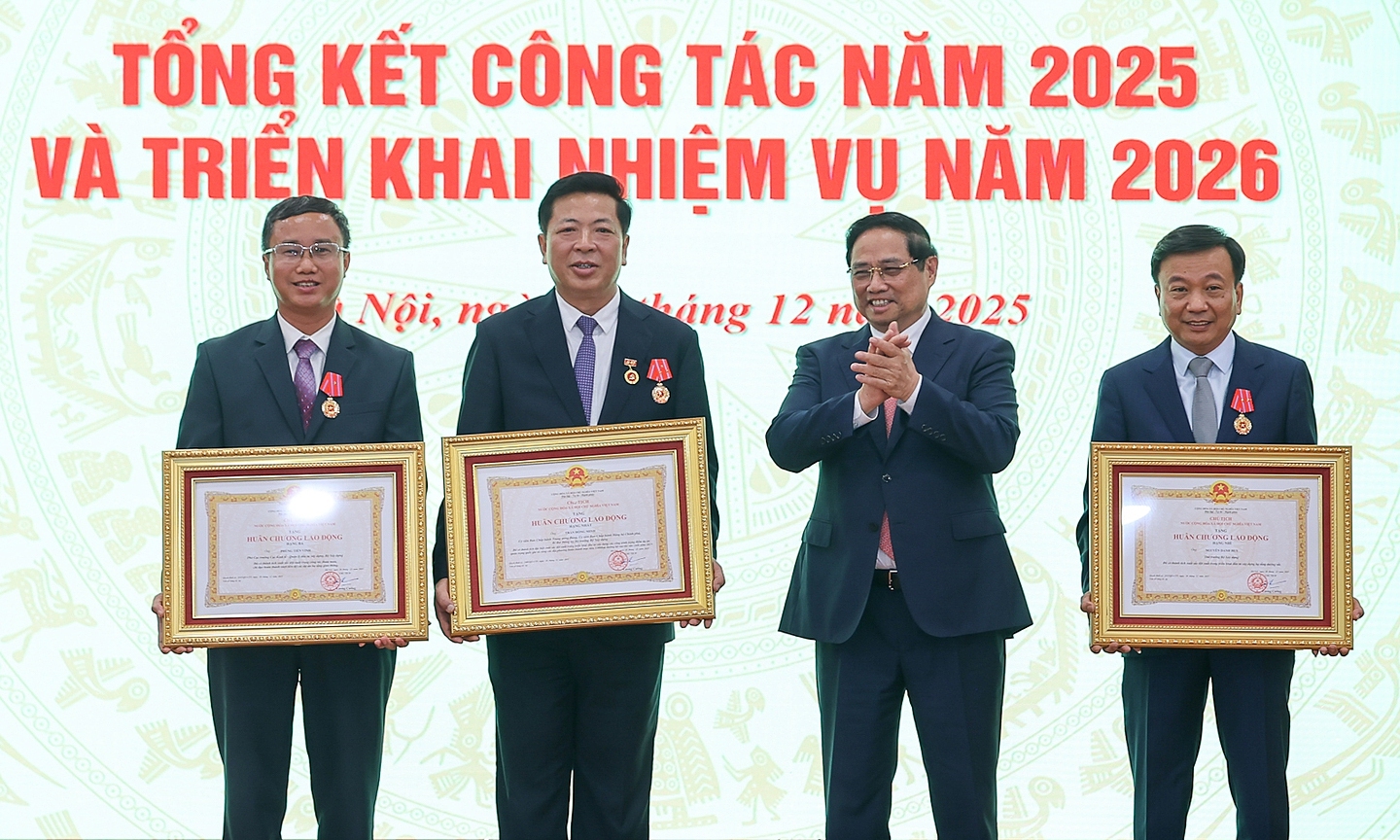 |
Prime Minister Pham Minh Chinh presents the Labor Order to leaders of the Ministry of Construction. Photo: VGP |
Assessing the results of 2025, the Prime Minister acknowledged that infrastructure continued to be a bright spot for the construction sector, as the country completed the target of 3,000 km of expressways. After five years, the total expressway length increased by approximately 2,000 km, more than two times the total achieved in the preceding 20 years.
The head of government also praised the Ministry of Construction's role in organizing many groundbreaking, inauguration, and technical opening ceremonies for key national projects with large total investment capital, in which private capital accounted for a high proportion, demonstrating the leading role of public investment and the increasingly strong participation of economic sectors.
According to the Ministry of Construction, by the end of 2025, the country expects to complete over 3,300 km of main expressway routes and over 1,700 km of coastal roads; in 2025 alone, nearly 1,500 km of expressways were completed. The entire North-South Expressway from Cao Bang to Ca Mau was opened to traffic, and many other important projects continued to be implemented as scheduled.
Doan Loan