According to Decree 259, issued on 30/6, concerning the recruitment, use, and management of public employees, the government encourages public employees to voluntarily step down or resign if they fail to meet job requirements, lose sufficient credibility, or commit violations that do not yet warrant dismissal.
Public employees who have stepped down, resigned, or been dismissed, and who wish to quit or retire, will receive benefits and policies as regulated.
Managerial public employees will be removed from their positions if there is evidence that their unit or managed area fails to meet targets or plans. They will also be removed if important decisions, regulations, schemes, programs, or projects initiated by their responsible agency are deemed ineffective or pose a risk of adverse consequences, except in cases of force majeure.
Managerial public employees will also be removed if they fail to promptly address complaints and denunciations within their authority, causing public discontent and negatively impacting the agency. This also applies if they, as a leader, are irresponsible and do not timely address serious violations of Party regulations or state law by public employees under their direct management.
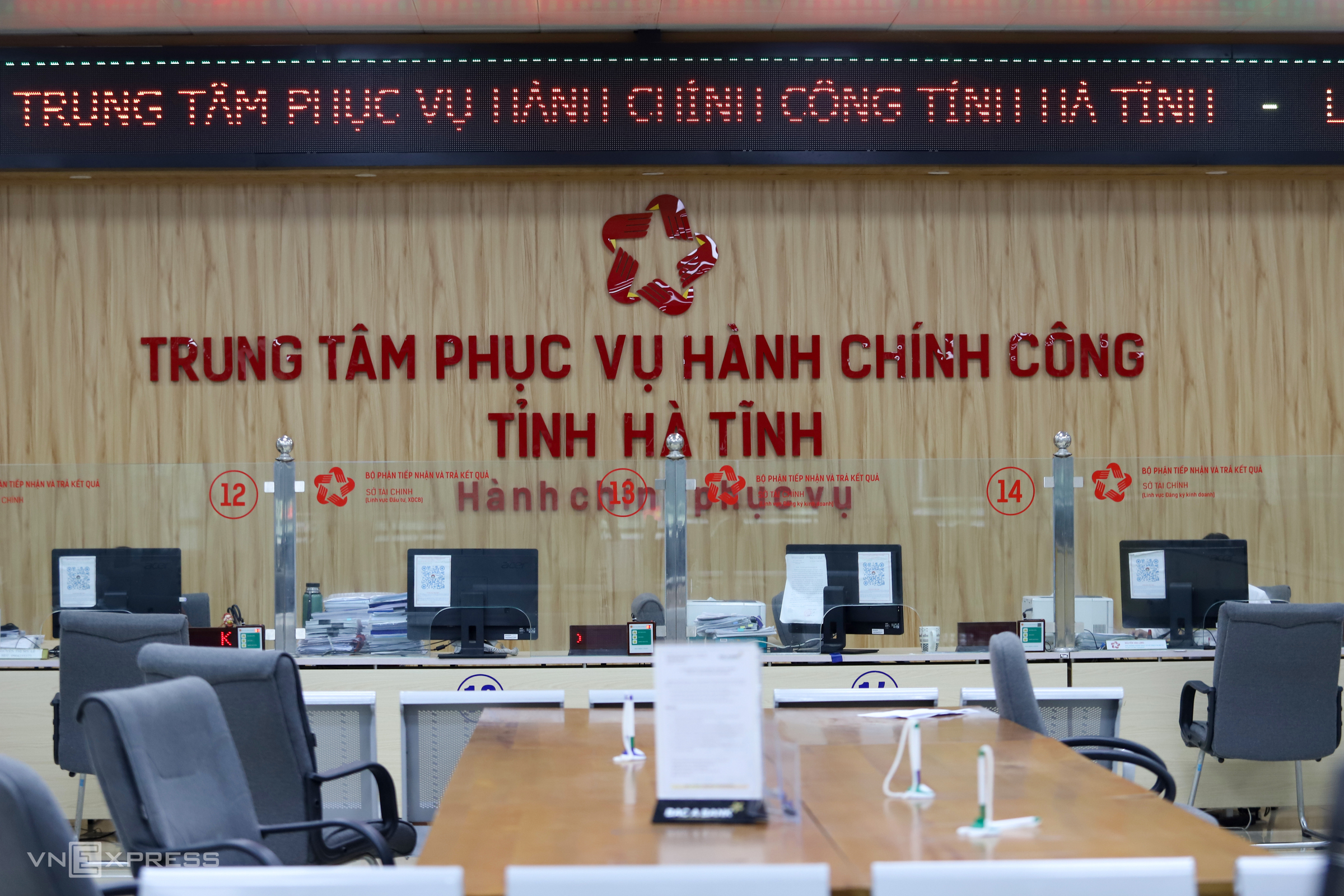 |
Officials and public employees working at the Ha Tinh Province Public Administration Service Center, 11/2025. *Photo: Duc Hung*
Managerial public employees may voluntarily resign or be considered for resignation if they recognize limitations in their leadership and management capabilities, or if they no longer have sufficient credibility to fulfill their assigned responsibilities. This also applies if they receive more than 50% low confidence votes in a poll, have other legitimate personal reasons, or if, as a leader, they allow serious corruption, waste, or negativity to occur within their managed unit, department, or among subordinates, but not to an extent requiring disciplinary action.
Public employees who fail to complete their duties for two consecutive years; violate political qualities, ethics, or lifestyle; allow others to exploit their position and authority for personal gain, resulting in serious consequences as determined by competent authorities (unless unaware); or who are unwilling to act, shirk responsibility, or fail to perform duties within their authority, causing very serious consequences, may also voluntarily resign or be considered for resignation.
Managerial public employees whose immediate family members—spouses or children—violate laws or become involved in social ills, and whose actions are deemed by competent authorities to cause public outrage and negatively impact their own and the agency's reputation, are also subject to the aforementioned forms of resignation.
Specifically, if a public employee receives more than 50% low confidence votes in a poll and does not submit a resignation letter, the competent authority will still consider removing them from their position.
Public employees currently undertaking national defense, national security, critical, or confidential duties who have not yet completed their assignments, and whose resignation would seriously impact those duties, will not be considered for removal or resignation. The same applies to those currently undergoing inspection, examination, audit, or investigation.
Managerial public employees will be considered for dismissal if they receive a warning and are assessed by a competent authority as having limited capacity, diminished credibility, and being unable to continue in their assigned position. Dismissal also applies if they are reprimanded two or more times during their appointment term; receive two-thirds low confidence votes; fail to complete duties for two consecutive years; show political ideology, ethics, or lifestyle degradation, self-evolution, or self-transformation; violate prohibitions for Party members; breach exemplary responsibility; or violate political standards as per Party internal political protection regulations to the extent requiring dismissal.
Furthermore, public employees who, as leaders, allow their directly managed unit, department, or direct subordinates to engage in corruption, waste, or negativity causing very serious consequences; or allow serious conflicts and disunity to occur, will also be considered for dismissal.
These regulations apply from 1/7.
Vu Tuan