


The Ministry of Health has finalized the draft Food Safety Law (amended), which is expected to be submitted to the National Assembly at its year-end session. This legislative effort aims to consolidate the food safety management apparatus into a centralized, unified system across the nation. The drafting agency argues that the current system is fragmented, hindering clear direction and efficient resolution of incidents. This fragmentation stems from personnel being distributed across many agencies, lacking specialized focus, particularly at the commune level where most roles are part-time.
Data from 2021 highlights the scale of this issue. At the provincial level, 3,536 individuals work in food safety, averaging fewer than 57 people per locality across three sectors. At the commune level, there are 24,062 people, but a majority hold part-time positions. The Ministry of Health further notes that some sectors, such as Industry and Trade, do not yet have dedicated specialized units for food safety.
Currently, food safety management is divided among three ministries. The health sector oversees 6/33 product groups, primarily addressing poisoning cases and offering general guidance. The agriculture and environment sector manages 19/33 product groups, with a focus on chemical control and supply chains. The industry and trade sector handles 8/33 product groups, linked to combating smuggling and trade fraud. This multi-ministerial involvement leads to overlaps, making it difficult to assign primary responsibility and resulting in untimely responses to food safety issues. Even with data interconnection, the process of resolution still takes a long time.
To address these challenges, the drafting agency proposes a comprehensive reorganization. At the central level, a food safety management agency would be established directly under the Ministry of Health. Locally, food safety departments would be created in provinces and cities by merging the functions, duties, personnel, and related facilities from units within the Department of Health, the Department of Agriculture and Environment, and the Department of Industry and Trade.
At the commune level, food safety teams would be organized as public service units directly under the People's Committee. Their duties include inspecting, supervising, addressing violations, and coordinating with units such as the Department of Culture and Society, the Department of Economy, and the Health Station to implement their work. Under this proposal, provincial People's Committees would be responsible for state management of food safety in their areas.
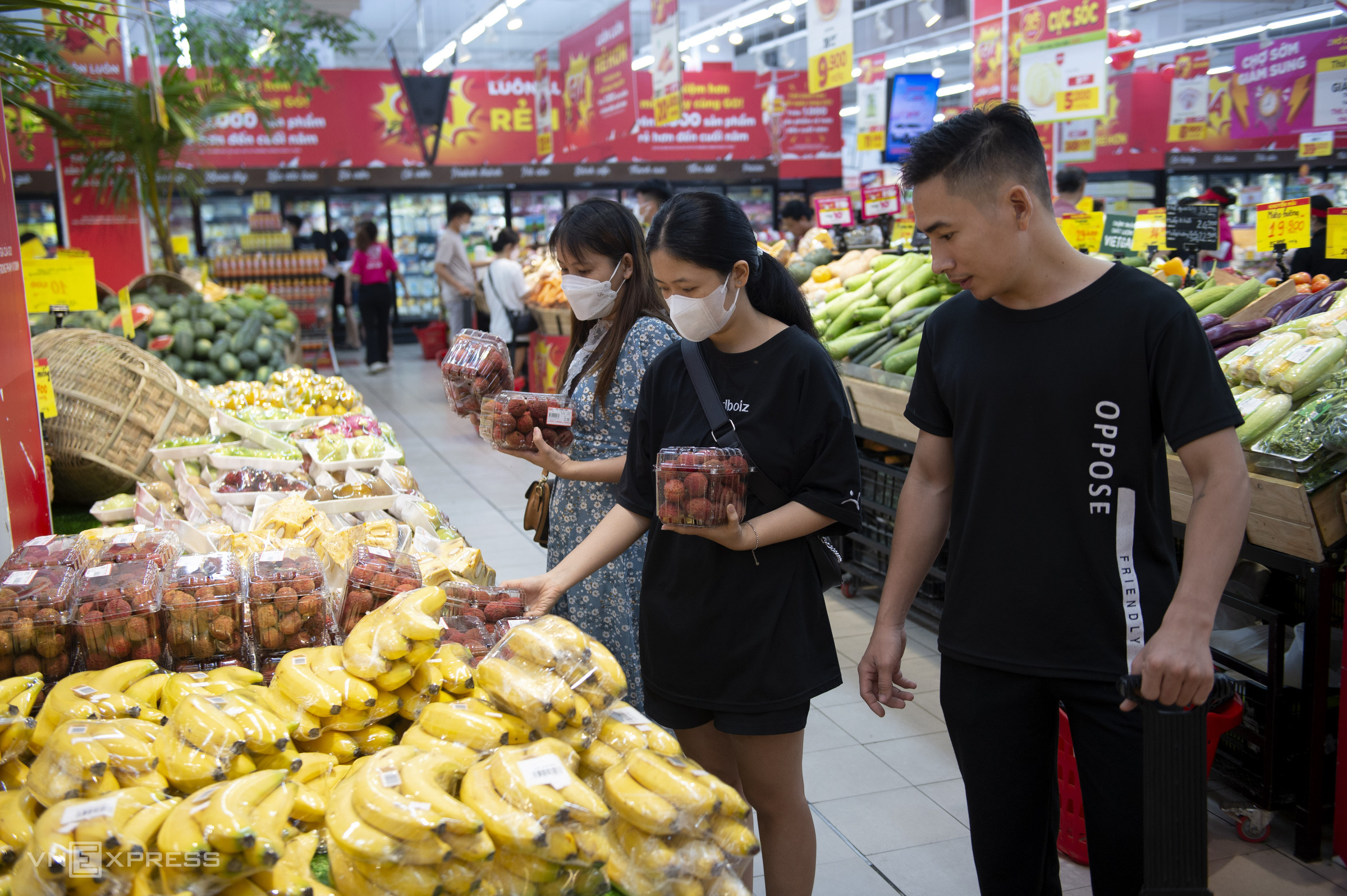 |
People shop at a supermarket in TP HCM. Photo: Thanh Tung
The reorganization into a single focal point model aims to overcome the current fragmented system. Unifying management under one authority will ensure consistency, clearly separate risk assessment and management, and efficiently utilize existing resources without causing major disruption to the apparatus.
Son Ha


