Commenting on the draft revised Law on Food Safety, the Ministry of Public Security states that after more than 10 years of implementation, crime in the food safety sector has become complex, with many incidents causing serious, long-term consequences for public health.
According to the ministry, offenders exploit post-inspection mechanisms, overlapping management between ministries and sectors, and loopholes in e-commerce management to violate laws. Therefore, amending the law should not only facilitate businesses but also address these exploited gaps, especially in product self-declaration and control of input materials.
The Ministry of Public Security proposes that the law clearly define the enforcement agencies' powers for inspection, enforcement, warehouse sealing, and product recall within 24 hours of detecting a hazard. Authorities would also be authorized to conduct unannounced inspections and establish a reward mechanism for citizens who report violations.
The Ministry of Public Security notes that this proposal aligns with the US food and drug administration (FDA) management model, where regulatory bodies can conduct unannounced inspections, demand immediate product recalls, and suspend operations of non-compliant facilities. However, a strict power control mechanism is necessary to prevent abuse of authority and limit negative impacts on production and business activities.
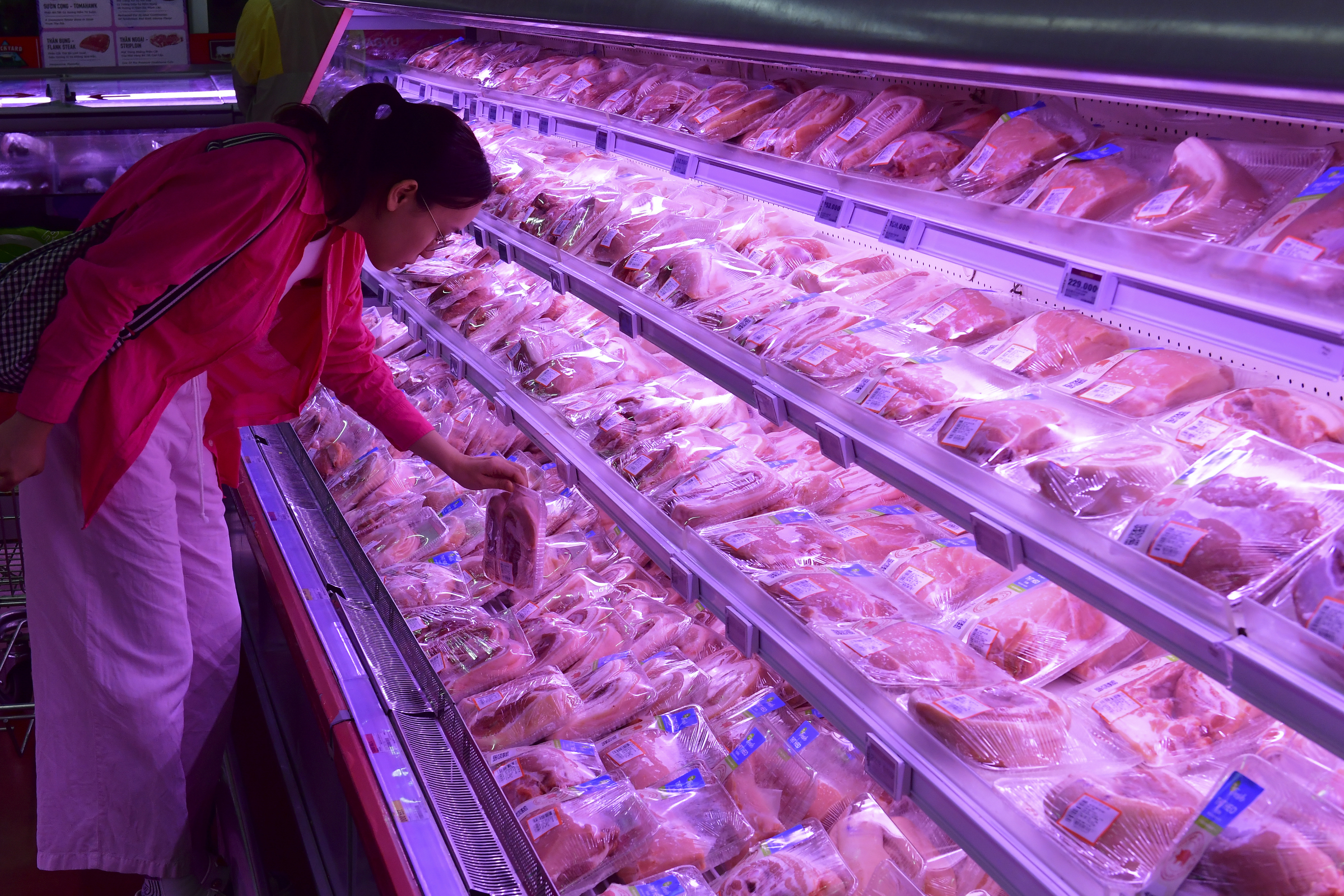 |
People shopping in the produce section of a supermarket. Photo: Thanh Tung |
Beyond food safety, the Ministry of Public Security suggests that food could be exploited as a method to compromise security, such as attacks on mass catering facilities to cause social panic. Therefore, the draft law should adopt an approach that ensures food supply chain security, rather than solely focusing on food safety as it currently does.
The ministry also proposes adding criteria to define dangerous food safety violations as a basis for criminal prosecution. Intentional use of banned or toxic substances should be penalized even if no consequences have yet occurred.
Additionally, every link in the food supply chain should have a digital data storage system and the ability to connect to a national data center for traceability and monitoring.
Previously, many National Assembly delegates also highlighted shortcomings in food safety inspection and control. Delegate Pham Khanh Phong Lan, Director of the Ho Chi Minh City Food Safety Department, stated that the shift from specialized inspections to routine checks has reduced the effectiveness of detecting violations.
According to her, current inspections are primarily planned and announced to businesses in advance, making it difficult to uncover wrongdoings. Meanwhile, many establishments producing and trading unsafe food operate outside regulatory scope or without licenses, posing challenges for authorities to address without police cooperation.
Son Ha