Nguyen Hoang Ha, Director of the Da Nang Institute for Socio-Economic Development Studies, stated that sidewalks are not only the face of urban areas but also a source of livelihood for tens of thousands of informal workers. If the city only enforces order through penalties without offering alternative solutions, many low-income households will lose their income. Conversely, if management is lax, the urban landscape will become unsightly, traffic will be chaotic, and pedestrian rights will be infringed.
Citing studies indicating that the street economy generates 30% of global GDP, exceeding the GDP of the United States, Ha argued that instead of imposing rigid bans, authorities need to organize and rearrange sidewalk use rationally. The city should conduct detailed field surveys, pilot business activities on suitable streets, and consult the community before expanding. Clearly defining the roadmap, classifying affected groups, and prioritizing routes based on specific criteria are crucial for sustainable policies.
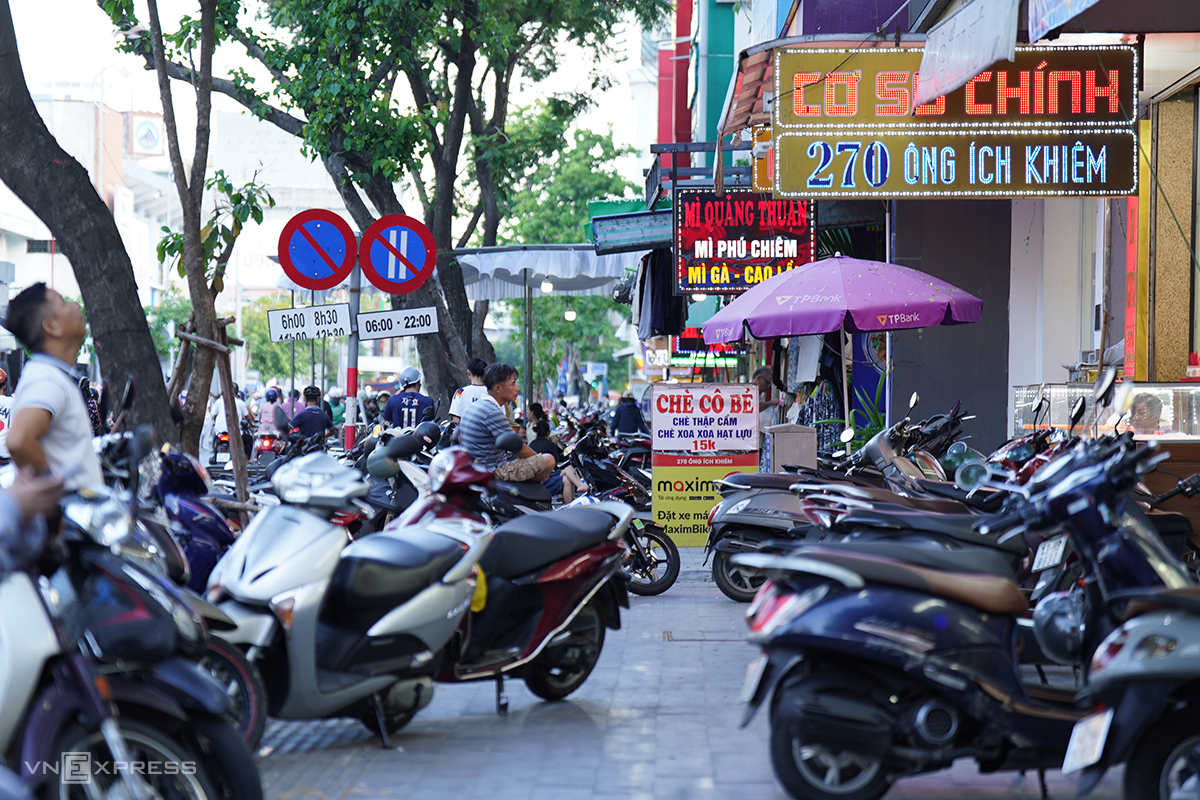 |
A chaotic scene on Ong Ich Khiem street sidewalk. Photo: Nguyen Dong
From a management perspective, Nguyen Van Duy, Chairman of Hai Chau Ward, believes that to thoroughly resolve sidewalk encroachment, authorities must shift their mindset from imposing administrative orders to creating harmonious urban spaces. Before penalizing residents for doing business on sidewalks, authorities need to honestly acknowledge their responsibility for allowing the pace of urbanization to outstrip infrastructure capacity.
"People can only comply with the law if they have adequate infrastructure," Duy said, noting that in central areas, parking facilities currently meet only about 21,5% of the required standards, forcing residents into situations where they must violate regulations. He immediately recommended that the city urgently utilize and auction undeveloped vacant land to create temporary parking lots, thereby alleviating static traffic pressure.
Instead of an absolute mechanical ban, Duy proposed a "three-strip" sidewalk model. Specifically, the outermost strip would be for neatly arranged motorbikes and bicycles; the middle strip would be kept clear for pedestrians; and the innermost strip, adjacent to houses, would allow for small businesses. This solution ensures both aesthetic appeal and safe pathways while preserving minimal livelihood space for small-scale businesses.
At a macro level, Duy recommended that the central government and ministries urgently amend current legal regulations, especially the Road Traffic Law and Decree 165/2024. These documents currently adopt a purely technical safety perspective, viewing sidewalks solely for traffic and overlooking their economic development function.
"Legitimizing and recognizing the sidewalk economy is a fundamental step to definitively resolve the sidewalk conflict," Duy stated.
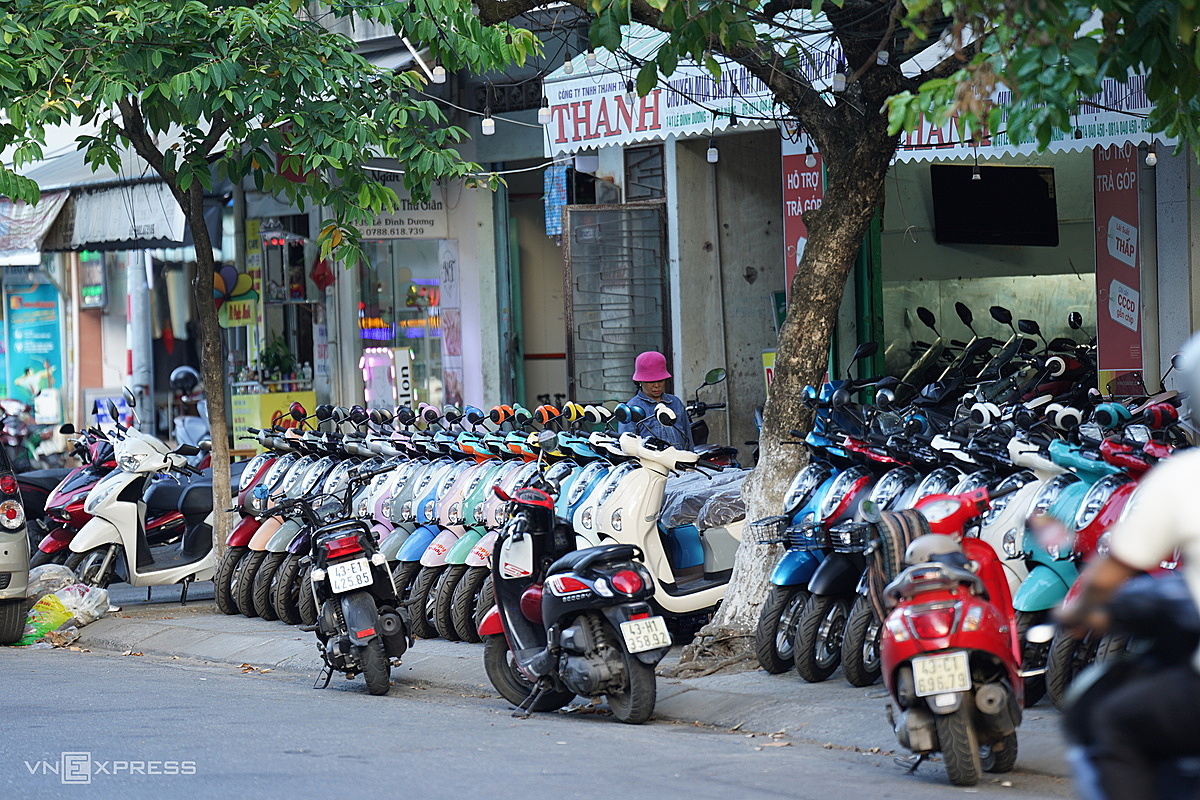 |
The sidewalk on Le Dinh Duong street, Hai Chau ward, has become a parking area. Photo: Nguyen Dong
**Proactive livelihood support and decentralized management**
In Hoa Khanh Ward, Dang Ngoc Tuan, Vice Chairman of the Ward People's Committee, outlined a comprehensive system of solutions, ranging from public awareness campaigns and enforcement actions to livelihood support and infrastructure development. The local authority disseminated new regulations to every residential group, mobilizing associations and the Fatherland Front Committee to go door-to-door, distribute leaflets, and guide residents to sign commitments against encroachment.
On the ground, the ward collaborates with local police and security forces for regular operations, categorizing roads for phased and repeated enforcement. For hotspots like Nguyen Huy Tuong street, the ward established a security and order task force to coordinate daily patrols with residential areas. Authorities also inspect encroachment by businesses and large eateries, combining these efforts with fire safety checks, resolutely penalizing deliberate violations, and deploying personnel to help residents dismantle and install signs flush with building walls.
Hoa Khanh Ward assigned residential groups to coordinate with the Fatherland Front to review the actual circumstances of each low-income household, proposing livelihood support plans or guiding them in changing occupations. For itinerant vendors and street hawkers, the authorities guide them to register for business in available spaces within local public markets, rather than simply displacing them temporarily.
The local authority has tasked the Ward Project Management Board with implementing a plan to mark pedestrian and parking lanes on main roads, currently piloting on about 30 routes. Simultaneously, smaller roads are being handed over to residential areas for self-management, Tuan added.
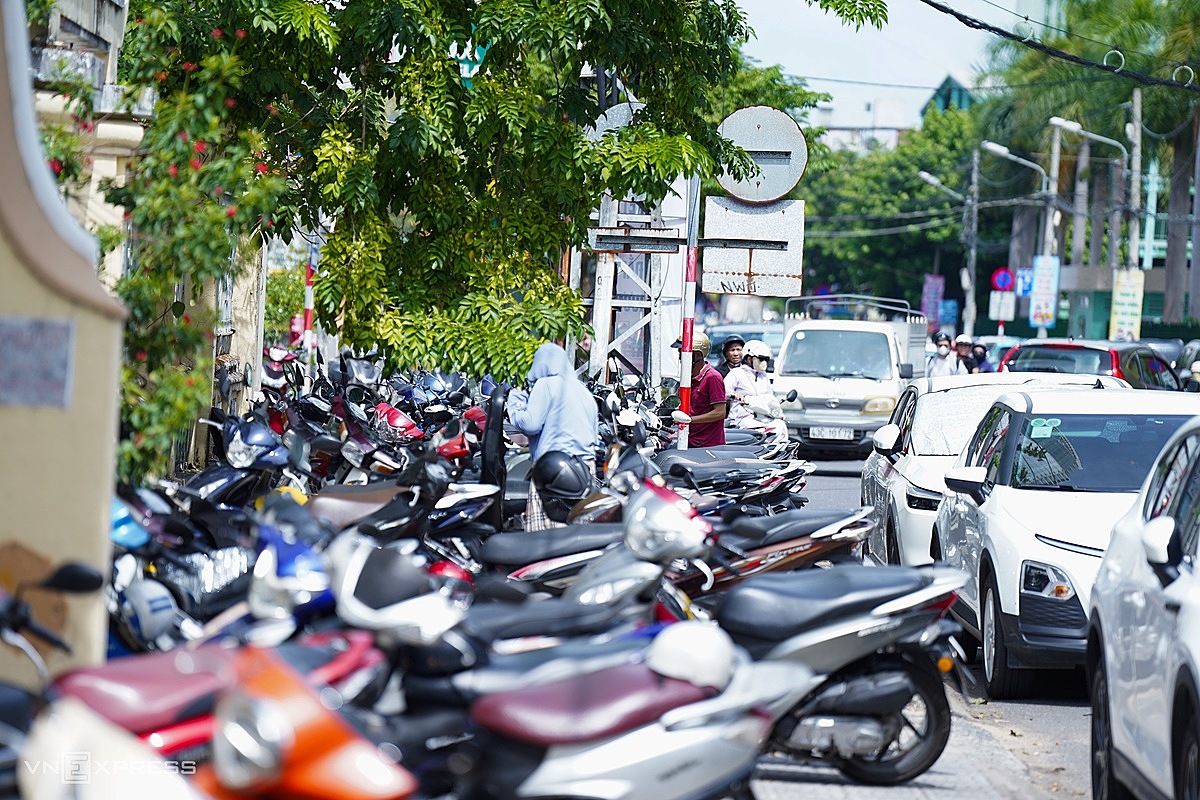 |
Many central streets in Da Nang face sidewalks crowded with parked motorbikes, with the roadway becoming a parking area for oto. Photo taken on Hai Phong street, in front of C Hospital. Photo: Nguyen Dong
Ho Dung, Vice Chairman of Thanh Khe Ward People's Committee, proposed clearly categorizing roads to apply appropriate management mechanisms. For major, key roads serving tourism and experiencing high traffic volume, the local authority is resolute in decisive enforcement, prioritizing strict penalties for households with fixed premises who deliberately encroach on sidewalks with goods, serving as an example. For smaller roads with fewer pedestrians, the ward authority leans towards arrangement and guidance for residents.
Thanh Khe Ward compiles a detailed classification list of non-fixed vendors based on their place of residence, occupation, and operating hours. From this list, the ward coordinates with associations to help them find premises or arrange temporary spaces for short-term sales within specific time frames. The ward implements a sidewalk marking solution, allowing low-income households to use sidewalks for business during certain hours, but absolutely not for all-day occupation.
After police restore order on a street, Thanh Khe Ward's monitoring team conducts post-inspections, records confirmation, and directly hands over management to the residential area. If re-encroachment is detected, the residential area notifies the police to issue a penalty notice.
Dung recommended that the city research and issue regulations similar to the former Decision 55, clearly stating absolutely prohibited roads and roads where sidewalk use is conditionally permitted, to both ensure urban aesthetics and address social welfare issues.
Nguyen Dong