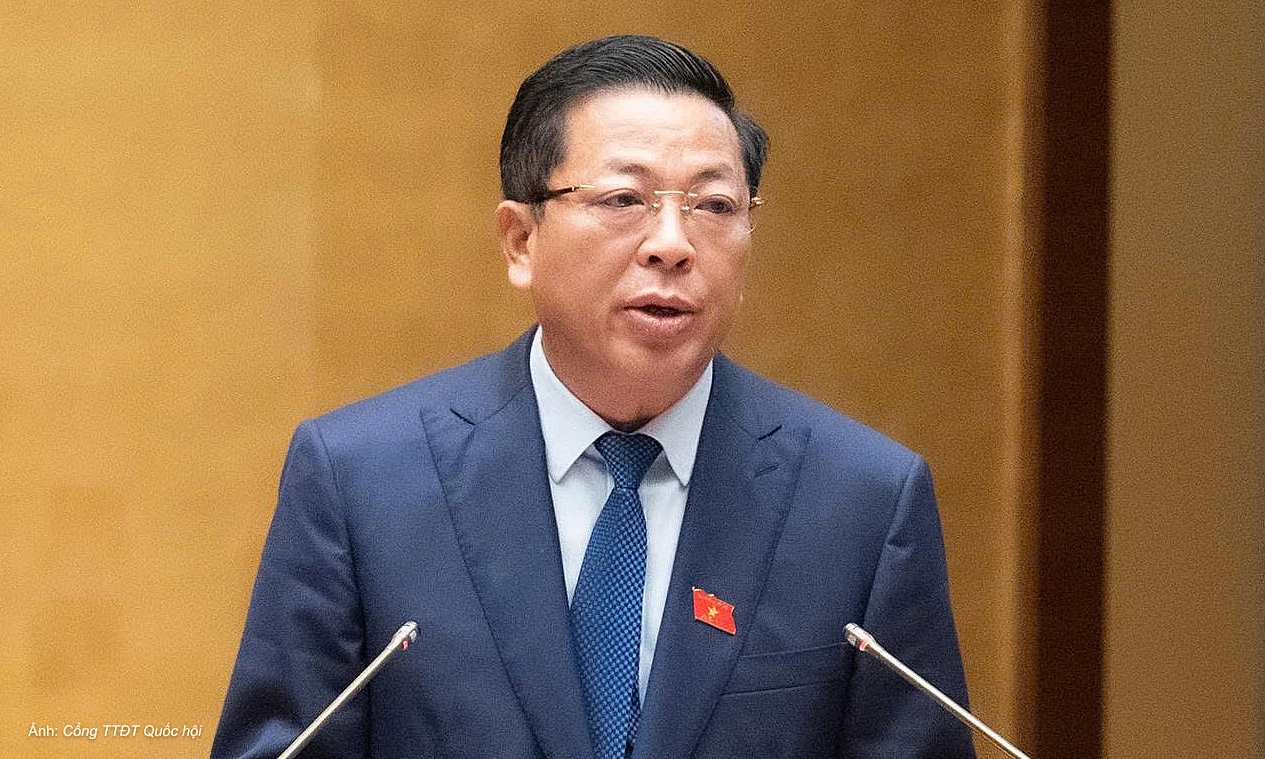
On the morning of 6/8, authorized by the prime minister, Minister of Home Affairs Nguyen Tien Hai presented to the National Assembly the draft resolution on the establishment of Quang Ninh city and Bac Ninh city.
According to the government's proposal, Quang Ninh city will be established based on the existing natural area, population, and number of commune-level administrative units of the province. The city will have an area of 6,231 square kilometers, a population of 1.52 million, comprising 30 wards, 22 communes, and two special zones. The resolution is expected to take effect from 1/9/2026.
Bac Ninh city will also be established on the existing basis, with an area of 4,713 square kilometers, a population of 3.99 million, comprising 45 wards and 54 communes. The resolution is expected to take effect from 20/9/2026.
Reviewing the proposal, the National Assembly's Law and Justice Committee agreed with the establishment of the two cities and the timelines proposed by the government. Comparing with existing regulations, this committee determined that both Quang Ninh and Bac Ninh meet all seven standards and all five conditions for establishing a centrally-run city.
The committee requested the two provinces to urgently prepare, consolidate their apparatus, change seals, and complete required conditions for the urban administration to operate synchronously immediately after the resolution is passed.
The two localities were also asked to focus resources to become economic growth drivers, while improving living quality so that residents can enjoy the fruits of development.
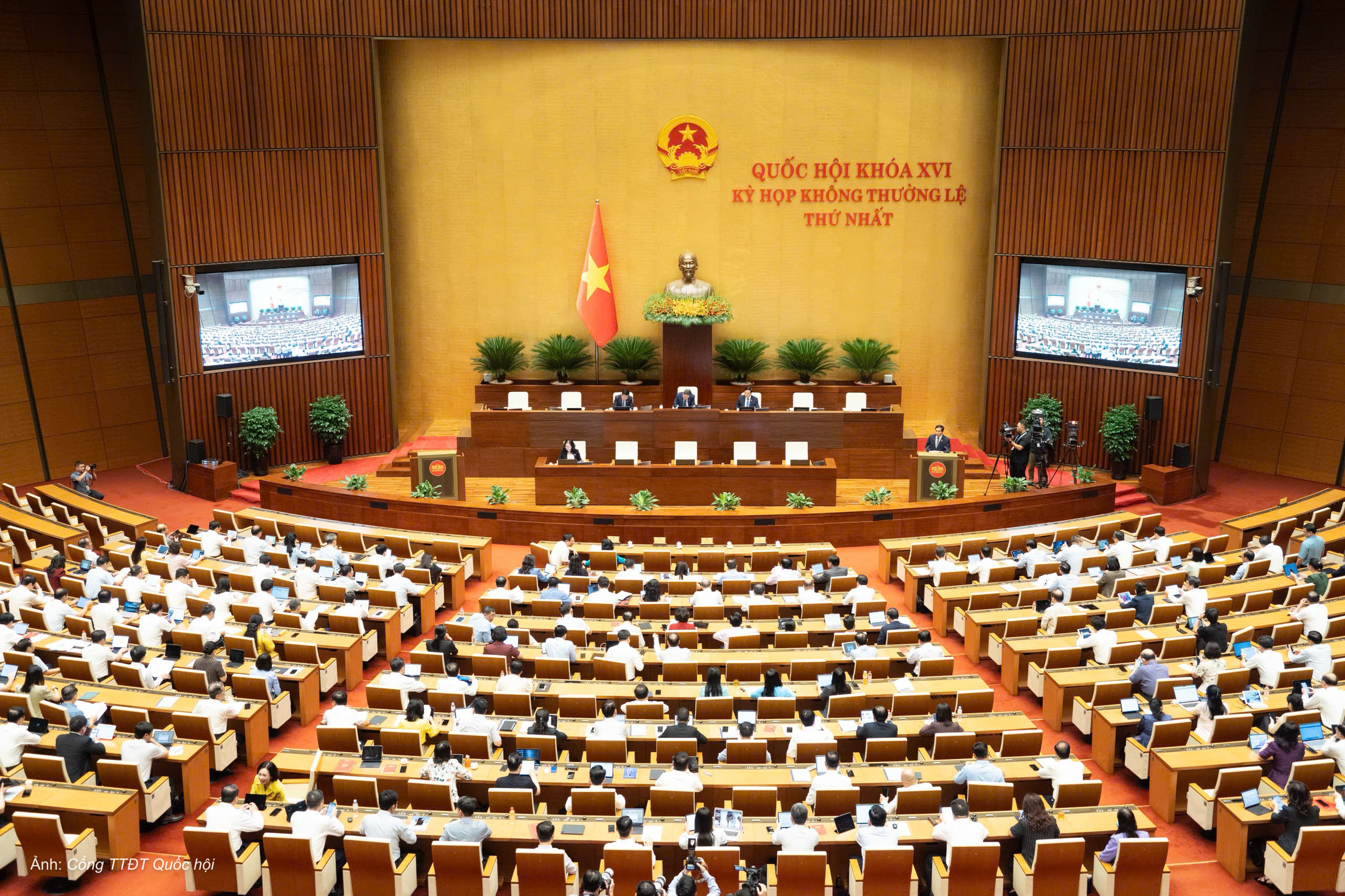 |
The National Assembly listens to presentations in the hall on the morning of 6/8. *Photo: National Assembly E-portal* |
According to the government's assessment, the establishment of the two cities aligns with the national master plan, urban and rural system plans, the Red River Delta regional plan, and local plans.
Quang Ninh holds a strategic economic, defense, and security position in the Northern Key Economic Region; it is the only province with both land and sea borders with China. The locality has an integrated transport system including roads, air, and sea routes.
In 2025, Quang Ninh contributed 2.87% to the national GRDP and 9.4% to the Red River Delta's GRDP; it contributed 4.1% to the national growth rate and 11.3% to the region's growth. The province has 247 active FDI projects, with a registered capital of 17.05 billion USD, ranking 7th nationwide.
Bac Ninh is located at the northern gateway to Hanoi, conveniently connected with Noi Bai airport, Hai Phong seaport, and Gia Binh international airport, which is under construction. The locality belongs to the Hanoi - Hai Phong - Quang Ninh growth triangle.
In 2025, Bac Ninh's economic scale ranked 5th nationwide and third in the Red River Delta; GRDP increased by 10.27%; FDI attraction ranked second nationwide; and budget revenue exceeded 123.6 trillion VND.
After the two cities are established, the organizational structure and personnel will initially remain unchanged. The localities will then arrange organization and personnel to suit the urban governance model.
Son Ha