Ho Chi Minh City aims to expand its urban railway network to 255 km by 2030, a significant increase from previous targets. This information was detailed in a report by the Department of Construction, the standing agency for the Ho Chi Minh City Urban Railway Network Development Steering Committee, outlining investment priorities for metro lines until 2030. The new target adds 55 km to the approximately 200 km plan established under Resolution 09 of the Politburo.
Following a comprehensive network review and assessment of implementation conditions, the city proposed adding two lines to the priority list by 2030: Thu Dau Mot - Tao Dan and Metro Line 2, Tham Luong - An Ha - Northwest Urban Area section.
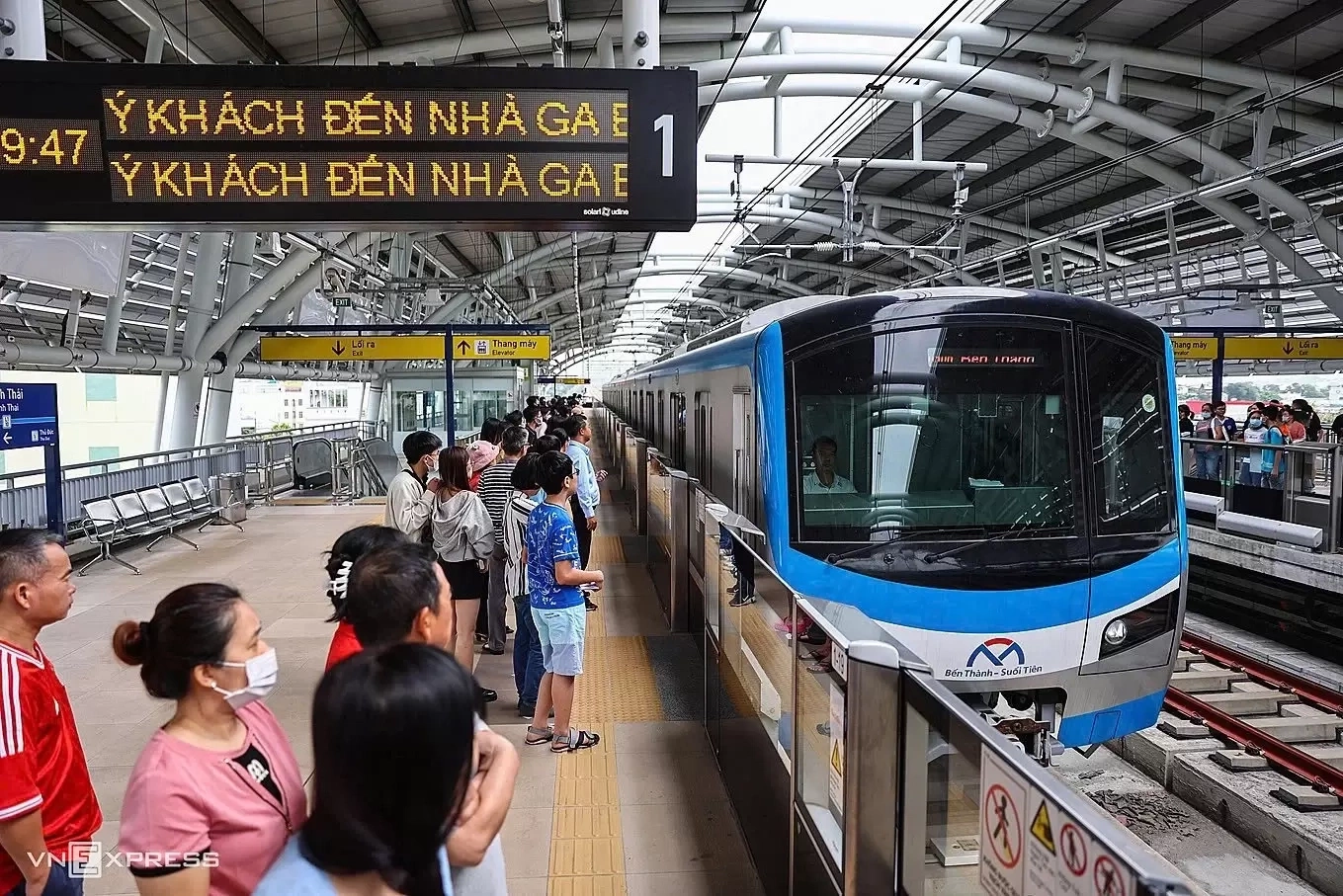 |
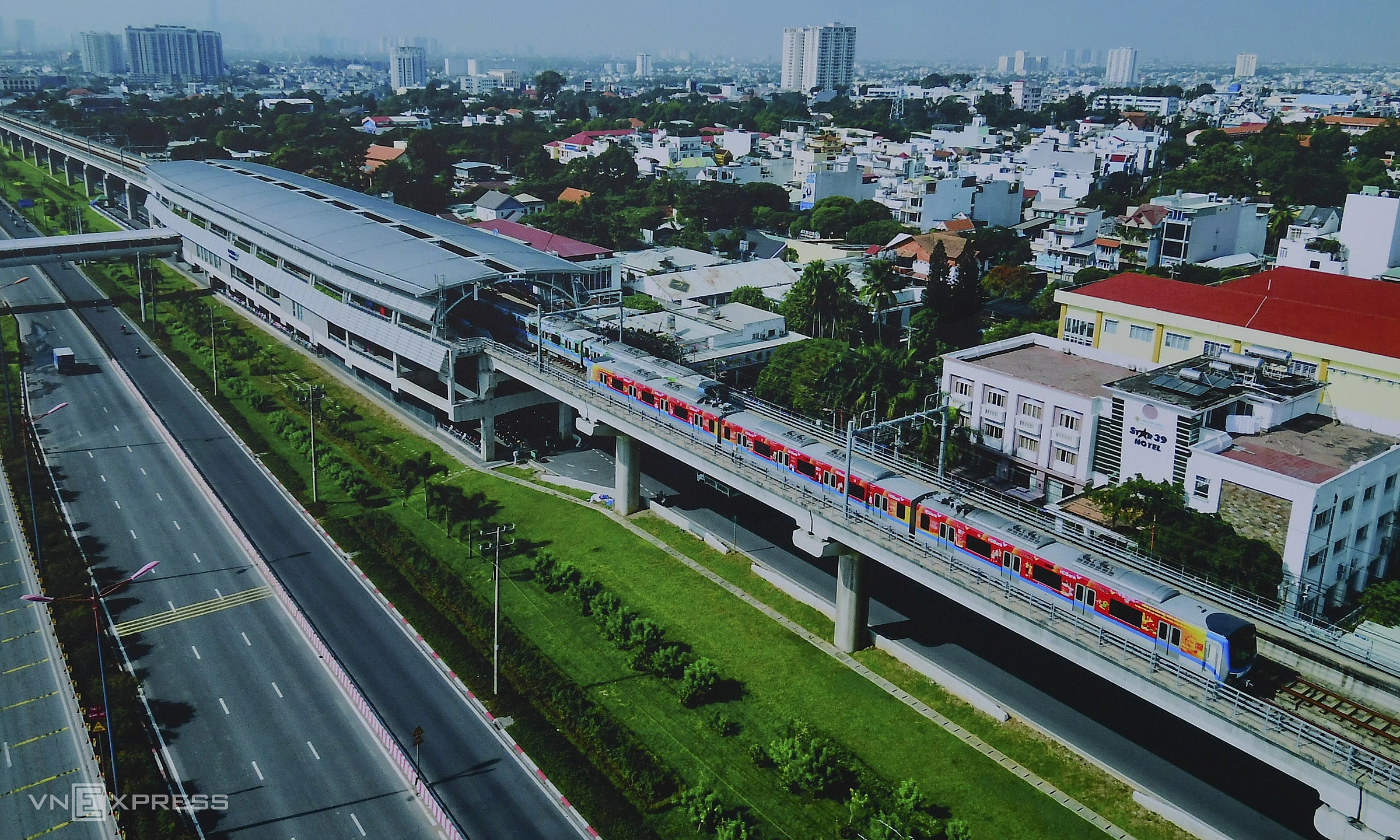
Passengers on the Ben Thanh - Suoi Tien metro, the first line to be operational in Ho Chi Minh City. Photo: Quynh Tran |
Upon completion, these two lines will increase Ho Chi Minh City's total urban railway length to approximately 255 km by 2030. The metro system will connect the city center with satellite urban areas, regions expanded after administrative boundary mergers, and important transport hubs like Tan Son Nhat and Long Thanh airports.
Previously, the city planned to complete six additional metro lines by 2030, bringing the total network length to 187 km. These included Ben Thanh - Tham Luong, Ben Thanh - Thu Thiem, Thu Thiem - Long Thanh, Ben Thanh - Can Gio, Binh Duong New City - Suoi Tien, and phase one of Line 6 (Tan Son Nhat - Phu Huu). After the Politburo issued Resolution 09, targeting approximately 200 km of urban railway by 2030, Ho Chi Minh City continued its review to add sections that could be implemented sooner.
The city has already started construction or broken ground on three lines: Ben Thanh - Tham Luong, Ben Thanh - Thu Thiem, and Ben Thanh - Can Gio. Remaining projects are accelerating investment preparation, aiming for groundbreaking later this year.
According to the Department of Construction, following the expansion of administrative boundaries, the city collaborated with consultants and relevant agencies to review the entire railway master plan, adjusting the network to align with new development areas.
By 2050, Ho Chi Minh City aims to have approximately 1,540 km of urban railway, comprising about 1,100 km of metro and 440 km of light rail (LRT), with a 100-year development vision. This network will enhance connectivity between the central area and new growth poles.
To achieve this goal, the city will leverage special mechanisms and policies to streamline procedures and accelerate project progress. It will also review and update the urban railway network plan and transit-oriented development (TOD) model.
Regarding funding, Ho Chi Minh City aims to mobilize diverse resources, with public investment playing a leading role in attracting the private sector. The city will also innovate its investment, management, and operational models, while developing human resources, science and technology, and the urban railway industry.
By Giang Anh