On the afternoon of 28/4, during a Ministry of Home Affairs press conference, Nguyen Thi Tu Thanh, Deputy Director of the Department of Local Government, announced that her unit is developing a draft decree on the organization and activities of villages and residential groups, including policies for non-specialized staff. This decree will provide a framework for local implementation in the coming period.
According to Thanh, the draft decree has been thoroughly researched for submission to competent authorities. The aim is to streamline the nationwide organization of villages and residential groups, reducing their overall number while considering the practical scale and specific characteristics of each region.
Thanh stated that reducing the number of villages and residential groups across the country will enhance operational efficiency. This initiative will facilitate task execution and alleviate direct management pressure on commune-level governments. The size of villages and residential groups will be adjusted to align with the current scale of commune-level administration.
The Ministry of Home Affairs is currently developing options for reducing the number of villages and residential groups, though specific figures have not yet been disclosed.
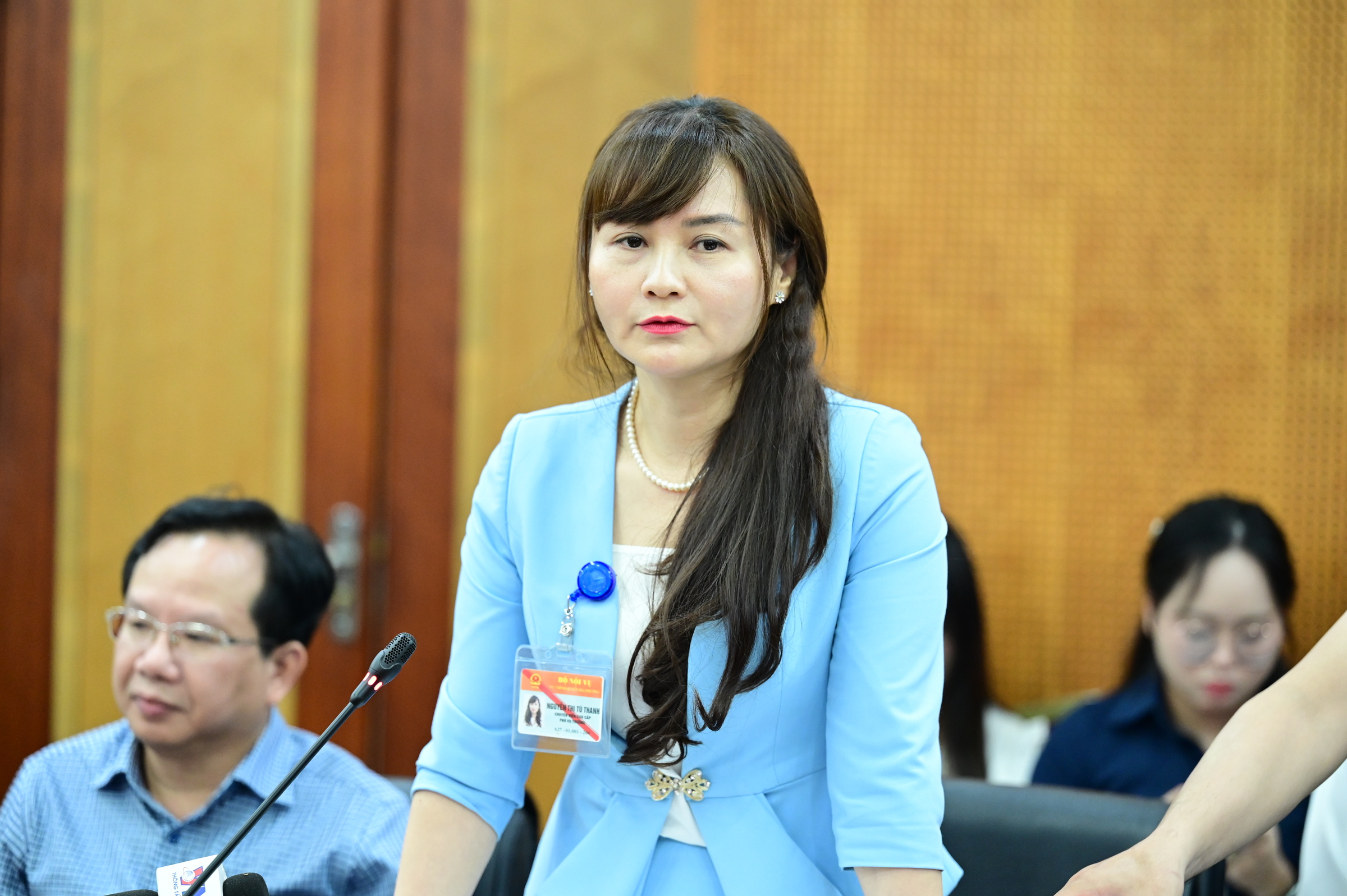 |
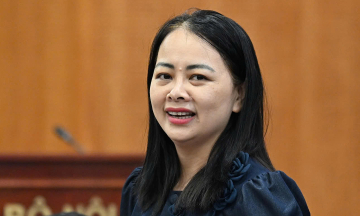
Nguyen Thi Tu Thanh, Deputy Director of the Department of Local Government, Ministry of Home Affairs, speaking at the press conference on the afternoon of 28/4. Photo: Do Trung
Regarding the two-tier local government model, Thanh noted that after one year of operation, it has achieved many positive results but also revealed some challenges. Specifically, the information technology system, databases, and digital infrastructure for administrative procedures have shown initial positive effects. However, some areas still experience a lack of synchronization, and certain specialized local utilities are not yet operating smoothly, requiring further improvement.
Following the reorganization, commune-level officials and civil servants face a substantial workload, with much of it concentrated at the commune level. Concurrently, specialized personnel in some areas are unevenly distributed, with certain fields lacking in-depth expertise. In some localities, officials must work across multiple offices, complicating management and task processing.
Moving forward, the Ministry of Home Affairs will continue to refine institutions, promote decentralization and delegation of powers, and improve the quality of civil servants and public employees, particularly at the grassroots level. Commune-level officials and civil servants will be re-assigned to better meet job requirements.
The policy for reorganizing villages and residential groups was initiated by the government in 4/2025 as part of a project to restructure administrative units at all levels and establish a two-tier local government model. Under this plan, the Ministry of Home Affairs was tasked with researching a streamlined reorganization roadmap to directly serve community life.
On 17/4, Prime Minister Le Minh Hung assigned the Ministry of Home Affairs to advise on the reorganization of villages and residential groups in QII/2026, integrating it with the deployment of non-specialized staff nationwide.
Under current regulations, villages are organized at the commune level and include various designations such as thon, lang, ap, ban, buon, bon, phum, soc. Residential groups are organized in wards with designations like to dan pho, khu pho, khoi pho, khom, tieu khu. By the end of 2021, the country had over 90,000 villages and residential groups, comprising about 69,500 villages and 20,900 residential groups, with nearly 297,800 non-specialized staff.
Villages and residential groups are not administrative levels but self-governing organizations of residential communities within the same area. They operate on self-management principles, under the direct administration of commune-level governments and the leadership of Party committees, ensuring democracy, transparency, and openness. Each village has a head, and each residential group has a leader; if necessary, one deputy may also be appointed.
Vu Tuan