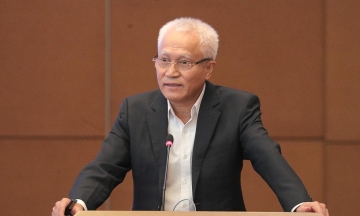
General Secretary and President To Lam expressed this opinion during a meeting with the TP HCM Party Committee Standing Board on 27/4. This marks his fifth working session with the city since its merger nearly a year ago. "The Party and State are deeply concerned about the city, the nation's largest economic center," the General Secretary and President stated.
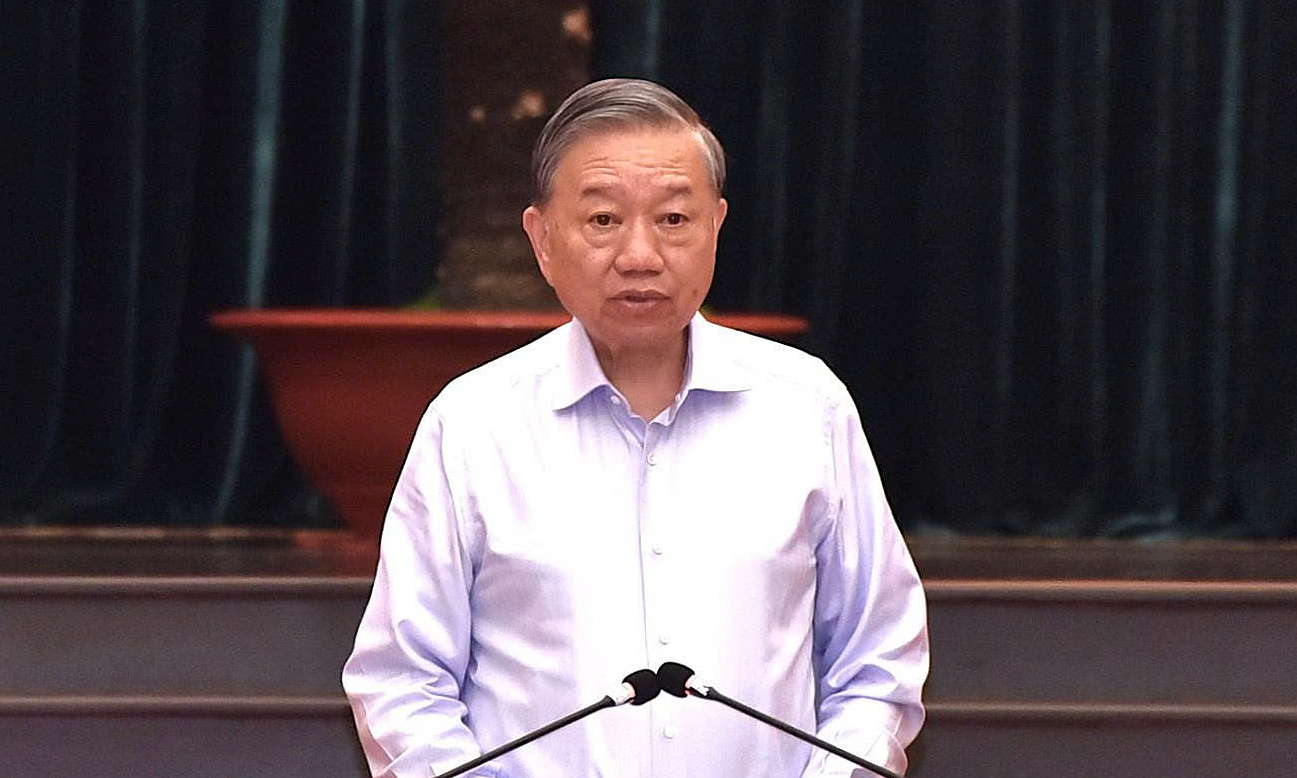 |
General Secretary and President To Lam speaking at a working session in TP HCM, afternoon of 27/4. *An Phuong* |
He emphasized that after 40 years of Doi Moi (renewal), TP HCM developed strongly due to economic opening, a dynamic private sector, and its commercial, service, and industrial pillars, making significant contributions to the national budget. However, "the old momentum is gradually declining, and previous advantages are no longer superior."
Following its merger, TP HCM has become a megacity with significant potential, but its ability to reach new heights depends on its vision, growth model, governance institutions, and implementation capacity. Although it still contributes over 23% of the nation's GDP and about 31% of budget revenue, the city no longer maintains outstanding growth efficiency.
According to the General Secretary and President, the gap between TP HCM and leading Asian cities is widening in many aspects: income, infrastructure, internationalization, innovation, and governance. The city's GDP, over 100 billion USD, is lower than Bangkok, Jakarta, Shanghai, and Singapore; its average income of about 8,000 USD also lags far behind these cities.
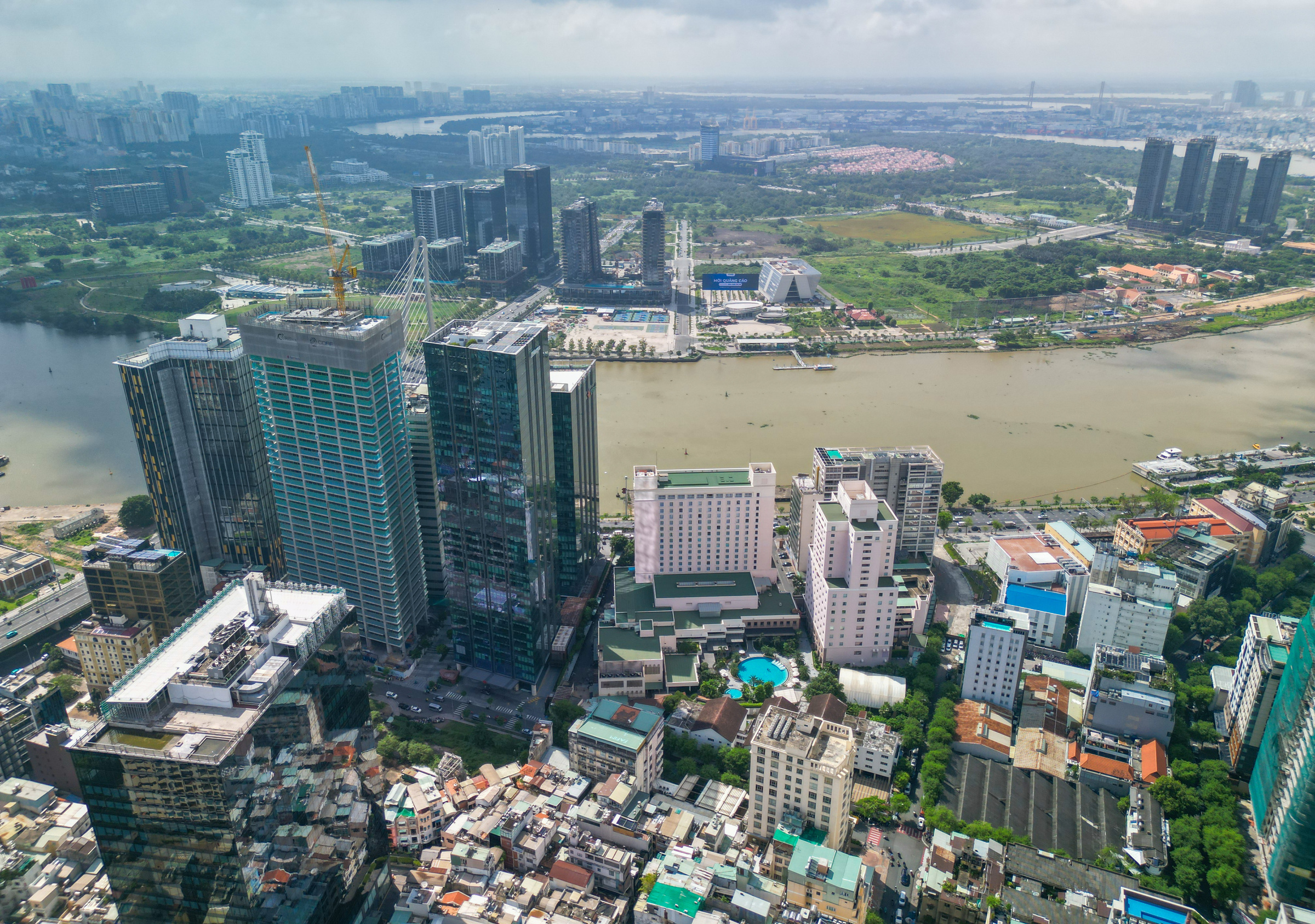 |
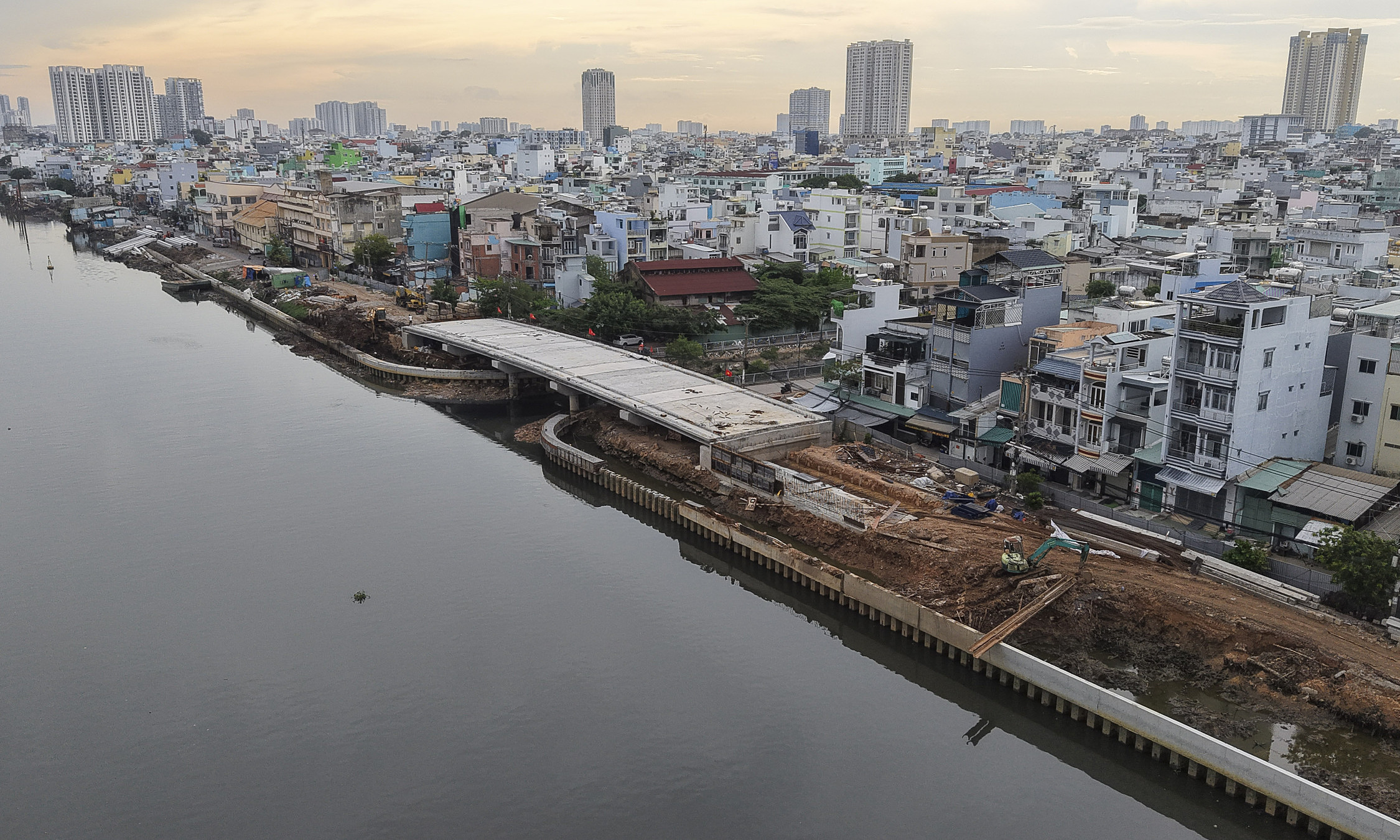
Central TP HCM looking towards the Thu Thiem New Urban Area. *Quynh Tran* |
"We cannot be satisfied with the current position," he stated, adding that TP HCM must transition to a growth model based on productivity, science and technology, digital transformation, and efficient resource allocation. The city needs to lead in materializing resolutions on science and technology, integration, and the private economy into tangible results. "We cannot allow a situation where plans sound good and are well-articulated, but execution is ineffective," he emphasized.
The head of the Party and State also noted that development must benefit the people. Citing the example of the free bus policy, he suggested that TP HCM expand and increase resources to encourage residents to abandon personal vehicles; other localities could also consider this.
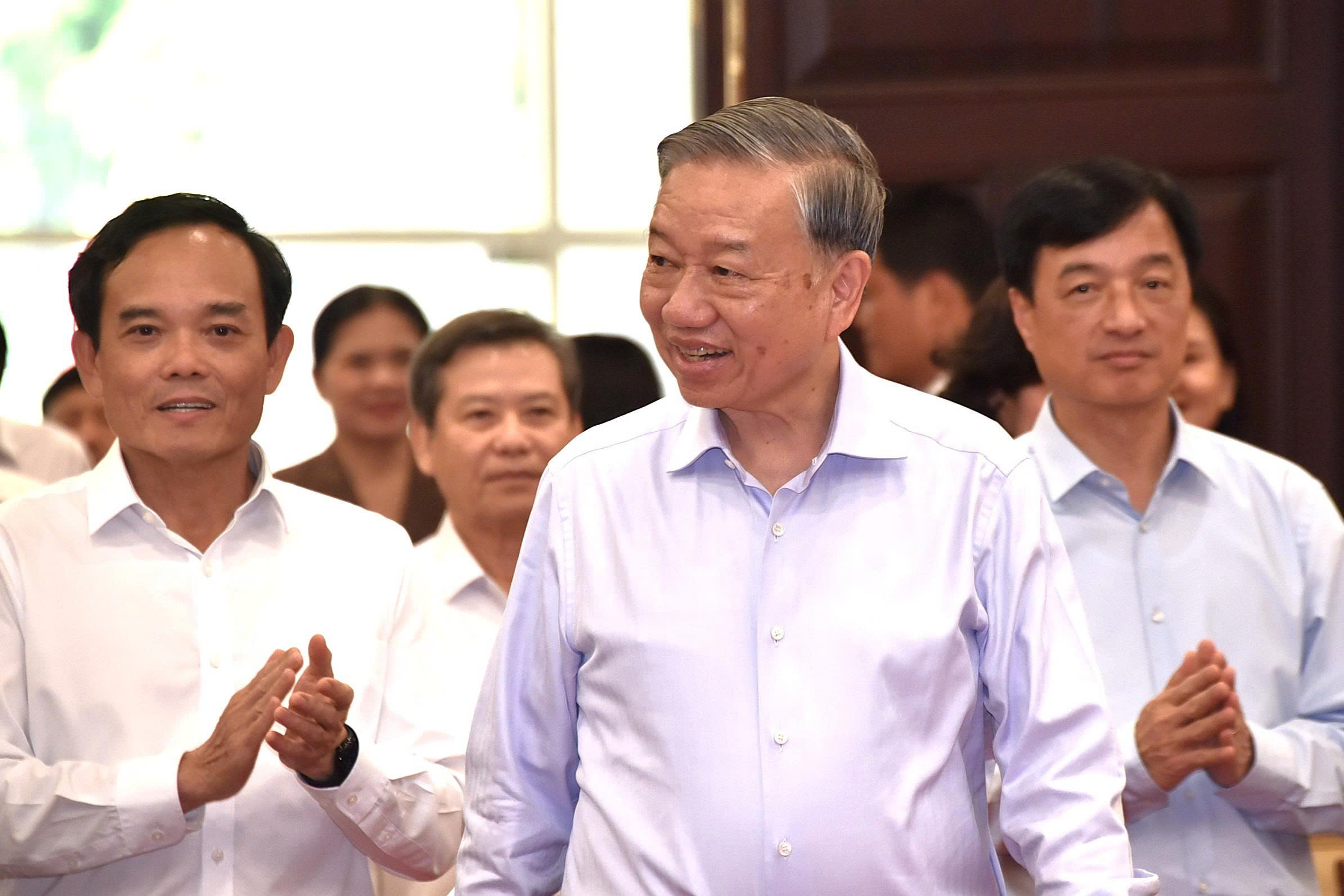 |
General Secretary and President To Lam (center), Head of the Central Organization Commission Nguyen Duy Ngoc (right), and TP HCM Party Committee Secretary Tran Luu Quang at the working session, afternoon of 27/4. *An Phuong* |
Acknowledging the directive, TP HCM Party Committee Secretary Tran Luu Quang stated that the achievements remain modest compared to requirements and expectations. "The task is very challenging, but the city is not alone," he said, emphasizing the Central Government's support through numerous working sessions with the General Secretary and President.
He pledged that TP HCM would act with concrete, measurable results. The city aims for double-digit growth, targeting a budget revenue milestone of one quadrillion VND, not relying on land-related revenue but on production, services, innovation, the digital economy, and effective governance.
TP HCM also proposed that the Central Government soon issue a new resolution to replace Resolution 31 and develop a Law on Special Urban Areas to increase autonomy, management tools, and international competitiveness.
Le Tuyet