 |
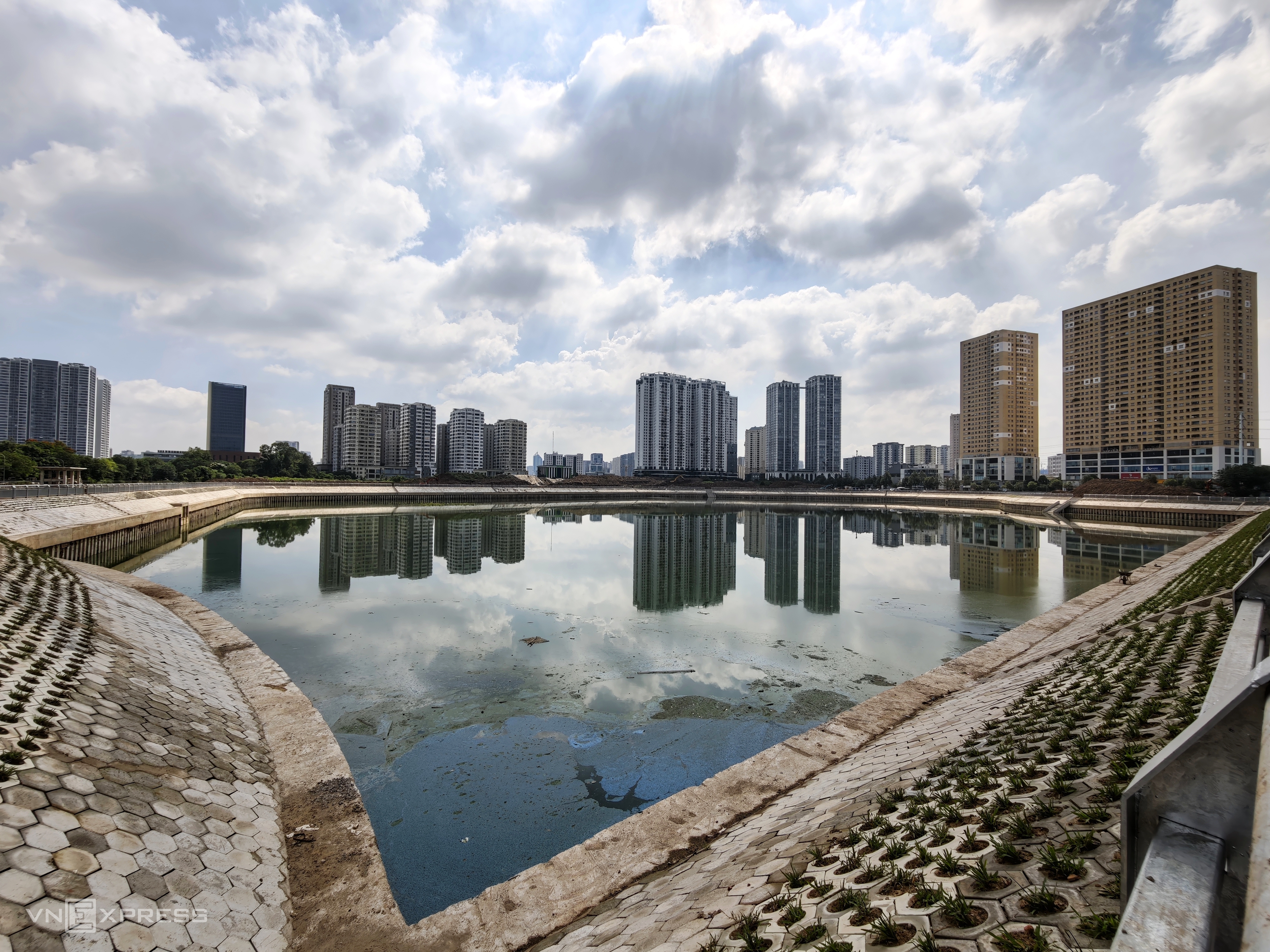
The Me Tri (Dong Bong 2) regulating lake on To Huu street, Dai Mo ward, is a key project in Hanoi's drainage system. Spanning about 12 hectares with a total investment of 370 billion VND and a revetment line over 1,9 kilometers long, it aims to enhance water regulation and improve urban landscapes. However, shortly after water accumulation, the lake surface developed green scum and emitted foul odors during hot weather.
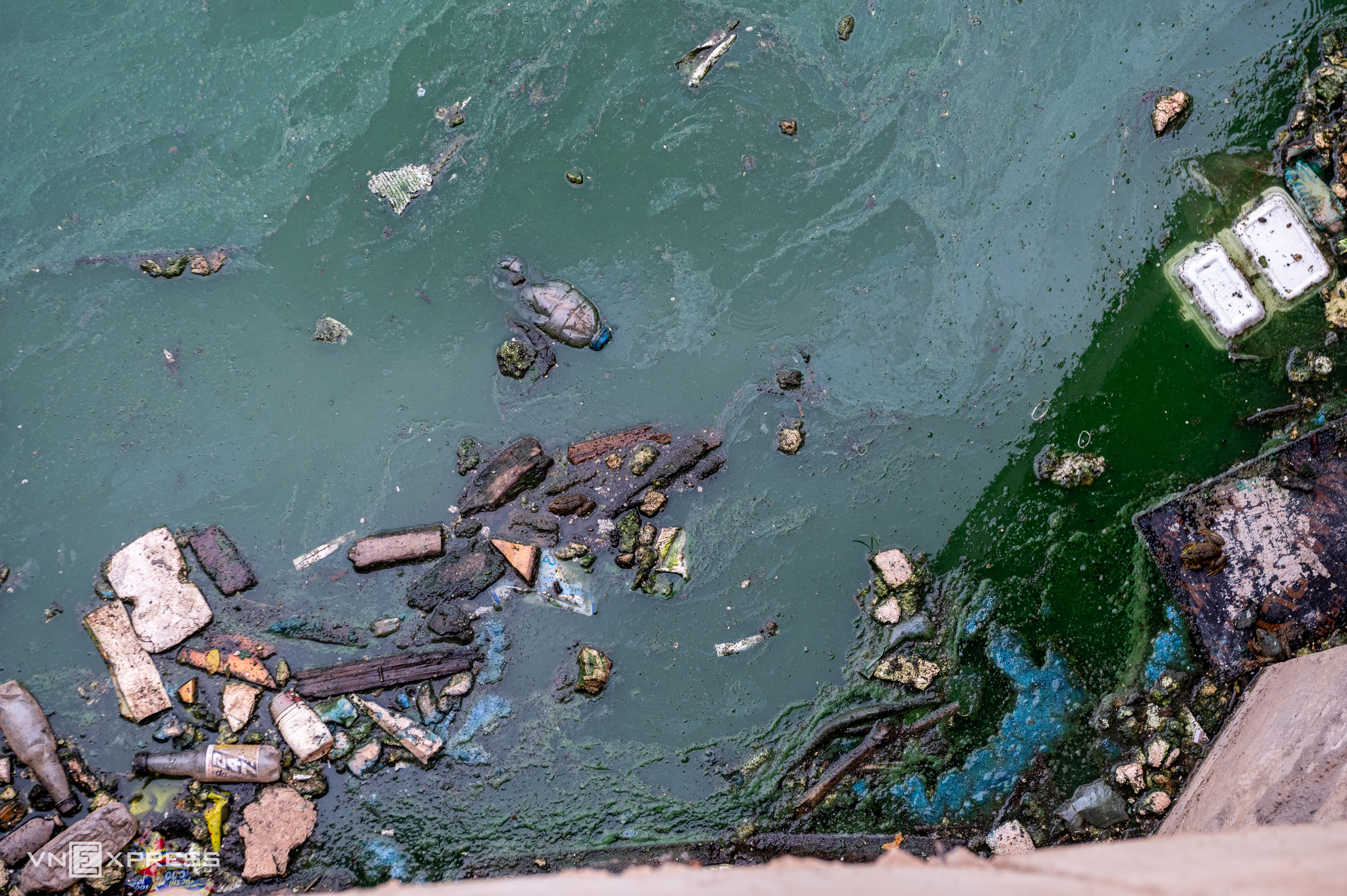
Along the revetment base and in many areas, algae, moss, and household waste have accumulated in patches. The lake has two compartments; the larger one has held water for many weeks, while the smaller one, recently filled, shows similar issues. Patches of green and white scum are visible in the lake's corners. In the afternoon, wind pushes the scum towards the road bordering the Trung Van urban area. For many weeks, whenever the weather is hot, the area around the lake has emitted an unpleasant odor.
Waste, algae, and moss have begun forming patches, and the entire water surface has turned dark green. Currently, workers and excavators are completing the landscaping around the lake.
According to its design, Dong Bong 2 lake features five sluice gates: two for receiving water from the drainage system into the lake; one for discharging water from the lake to the Dong Bong canal; one for discharging water to the Dong Bong pumping station; and one inter-lake sluice connecting the smaller lake with the larger one. The lake is ready to store water but lacks an aquatic plant system.
 |
Over 20 kilometers away, Ngoc Thuy park and regulating lake in Bo De ward, covering nearly 7 hectares with an investment exceeding 200 billion VND, was inaugurated in 10/2023. The project was expected to improve the landscape, regulate the microclimate, and create additional community space for local residents.
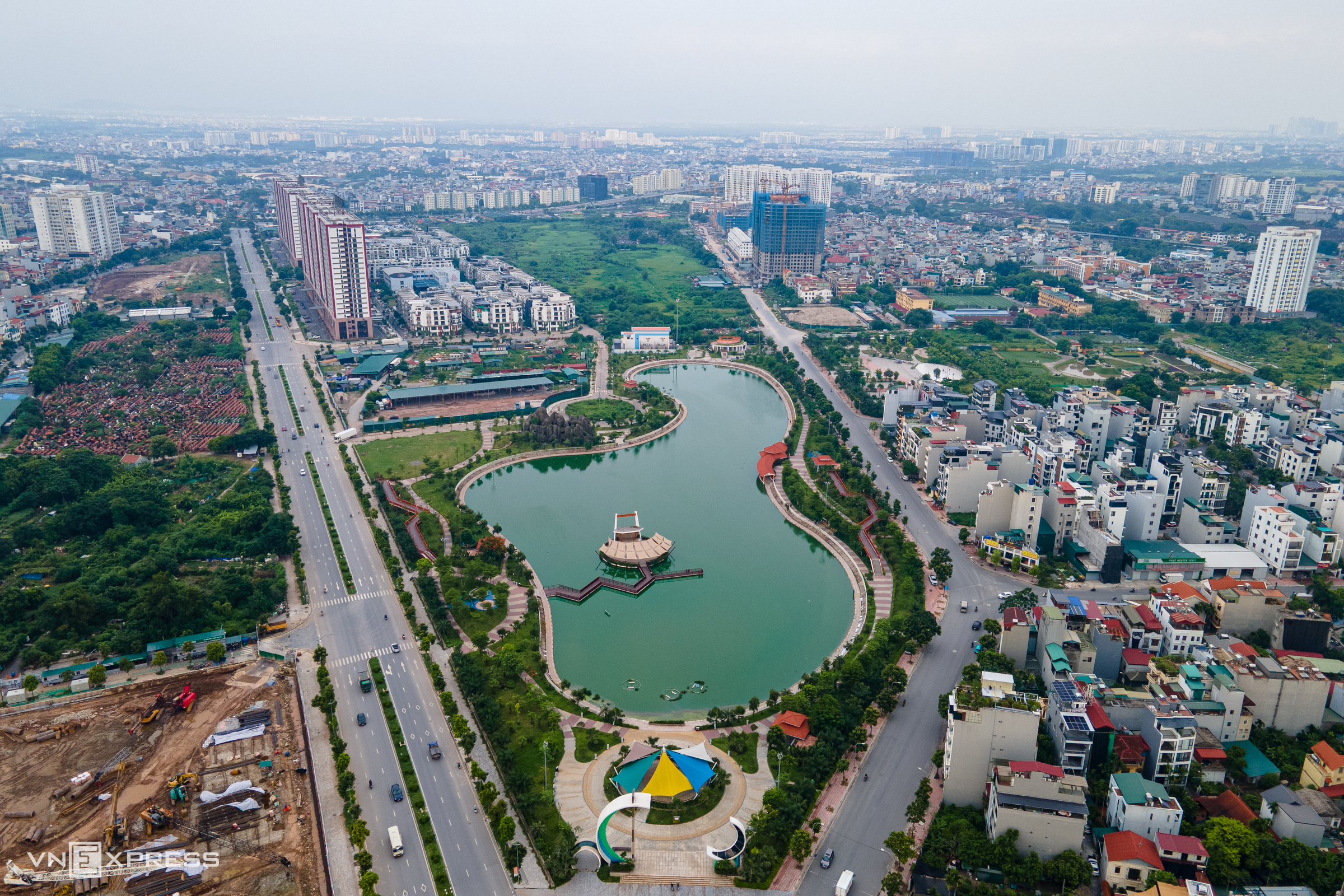 |
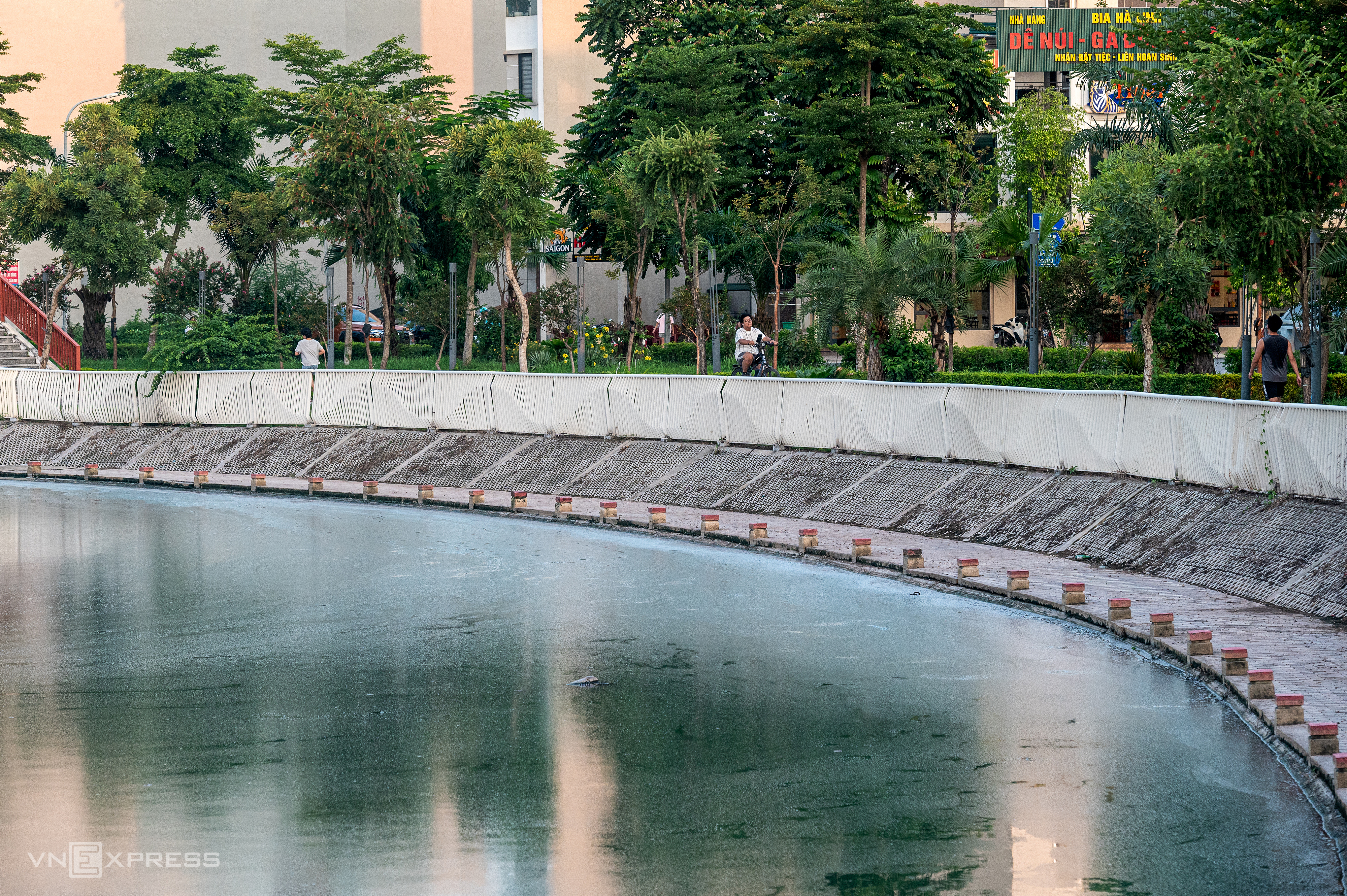
On the afternoon of 10/8, many areas of the lake surface showed floating black and green moss patches, accompanied by a foul odor. Although the management unit has collected algae and moss in recent days, the smell has not subsided, and the number of people visiting for recreation or exercise remains sparse.
 |
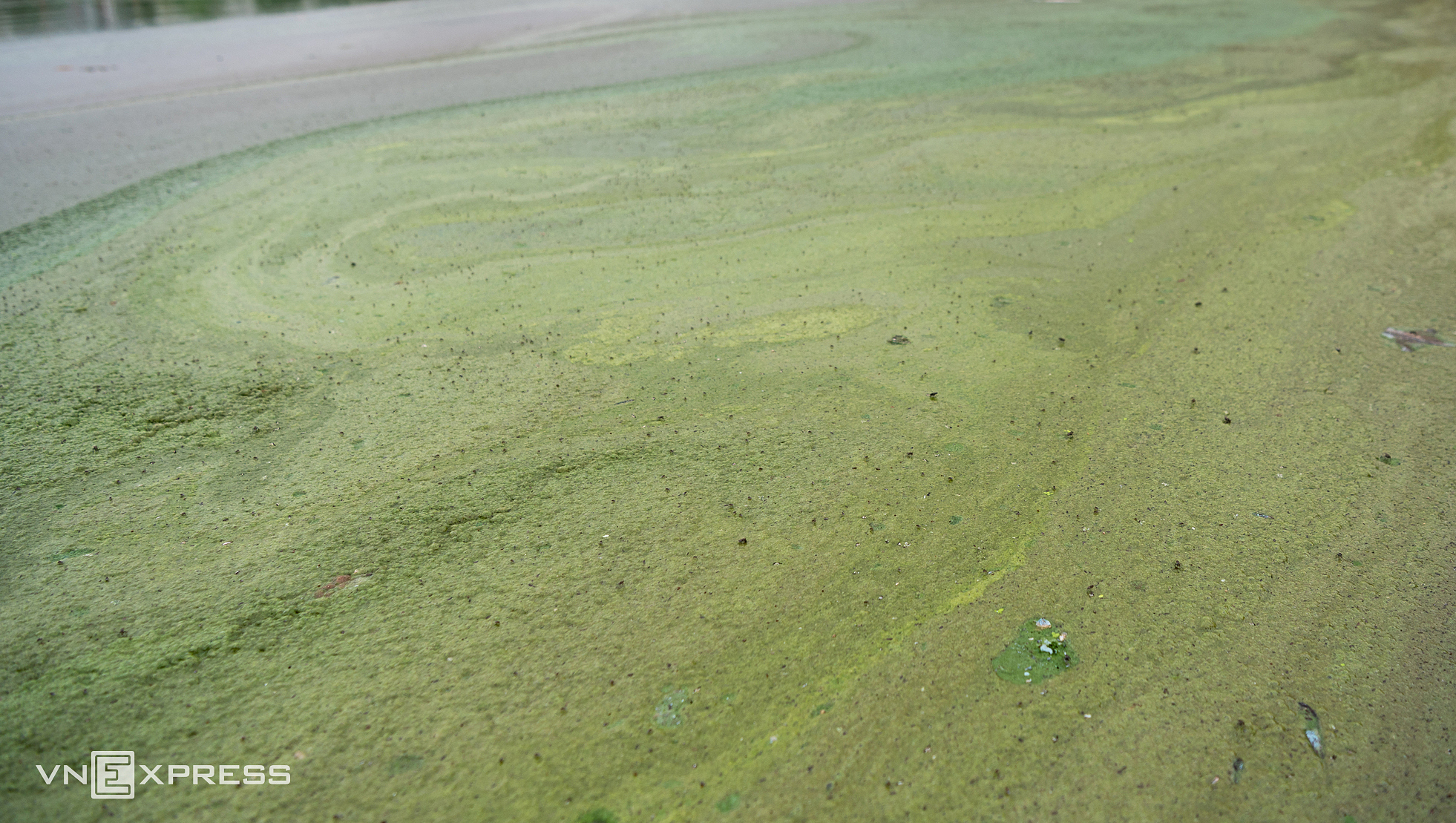
Previously, at the corner of the lake bordering Gia Thuong street and Nguyen Gia Bong road, many dark green patches floated on the water, mixed with waste and accumulated sediment, generating a foul odor.
 |
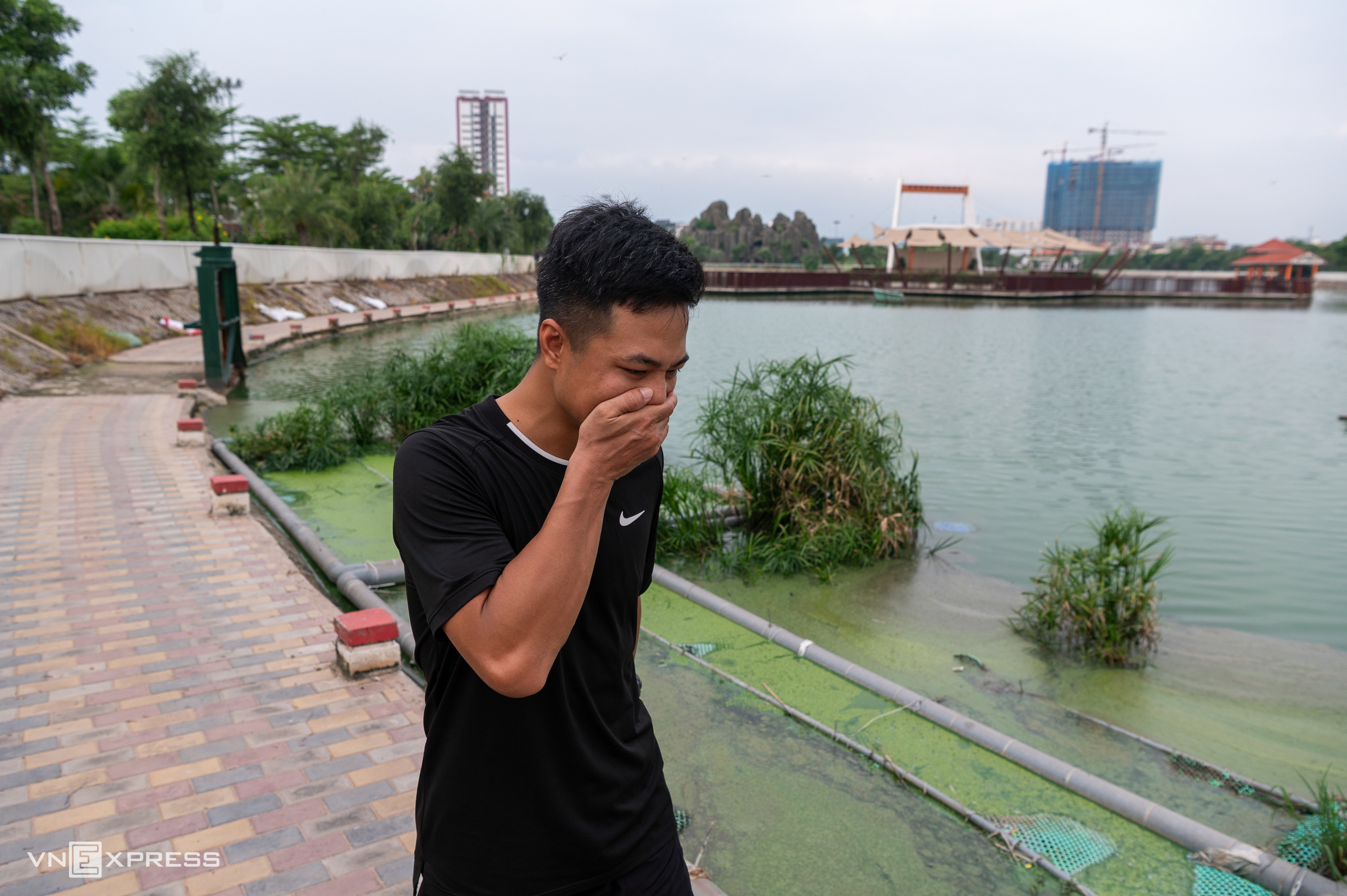
Duong Hoang Xuan, 26 years old, who regularly jogs around the park, stated that the foul odor from the lake has persisted for many months. "Some days the smell is very strong, making it uncomfortable to stand near the lake. If the smell is too heavy, I have to switch to running on the sidewalk outside the park," Xuan said.
 |
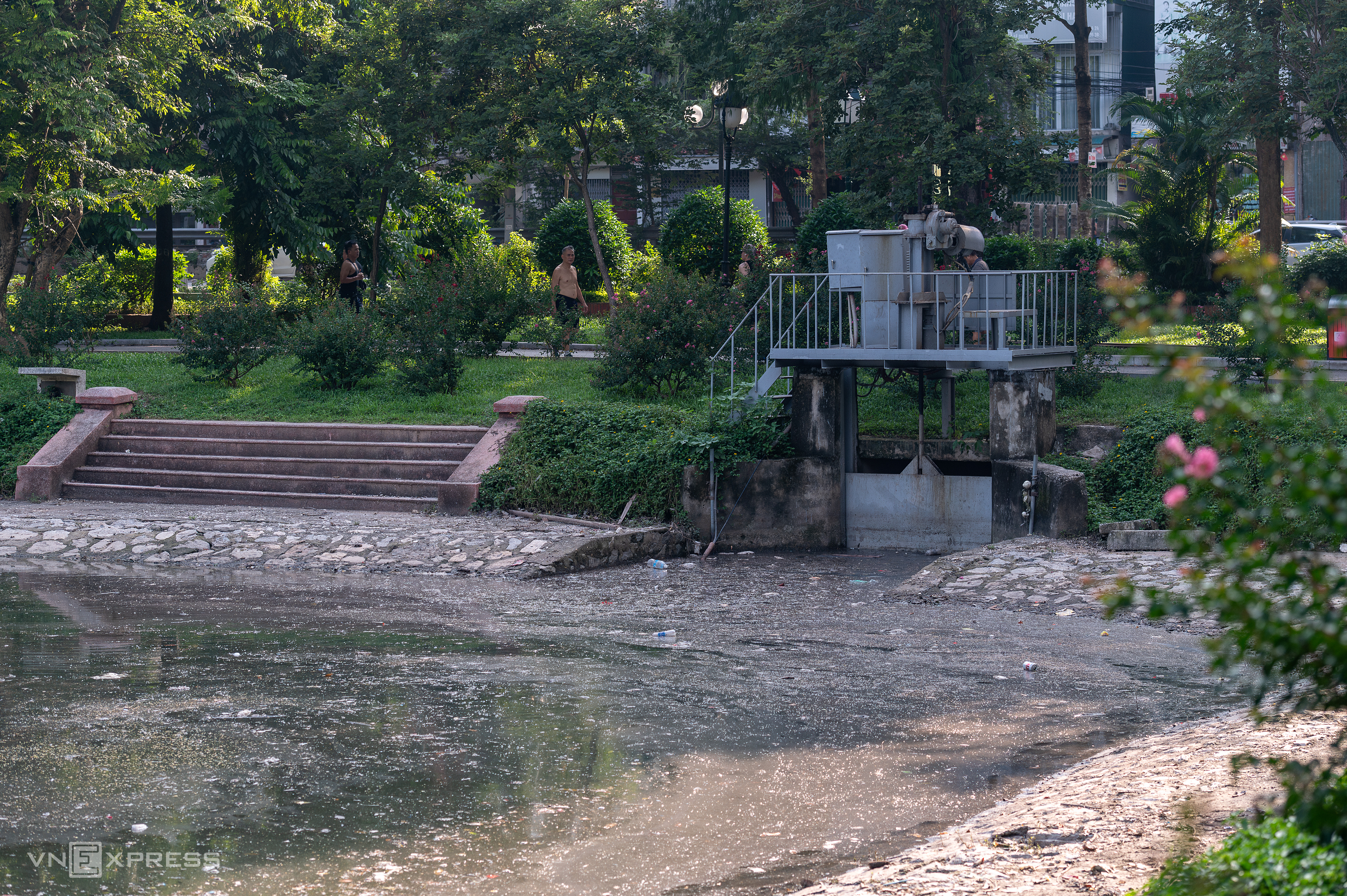
At Bay Mau lake, Thong Nhat Park, the corner area near the sluice gate towards Le Duan - Tran Nhan Tong street has a significant accumulation of waste.
 |
West Lake, the capital's largest natural freshwater lake with an area of over 526 hectares, also shows signs of declining water quality. In many sections along the lake, waste has washed ashore, and the water has turned dark.
Previously on 18/6, the regulating lake in Nghia Do park (Nghia Do ward) also repeatedly showed signs of water pollution. The lake surface developed thick patches of algae and moss, and the water changed color.
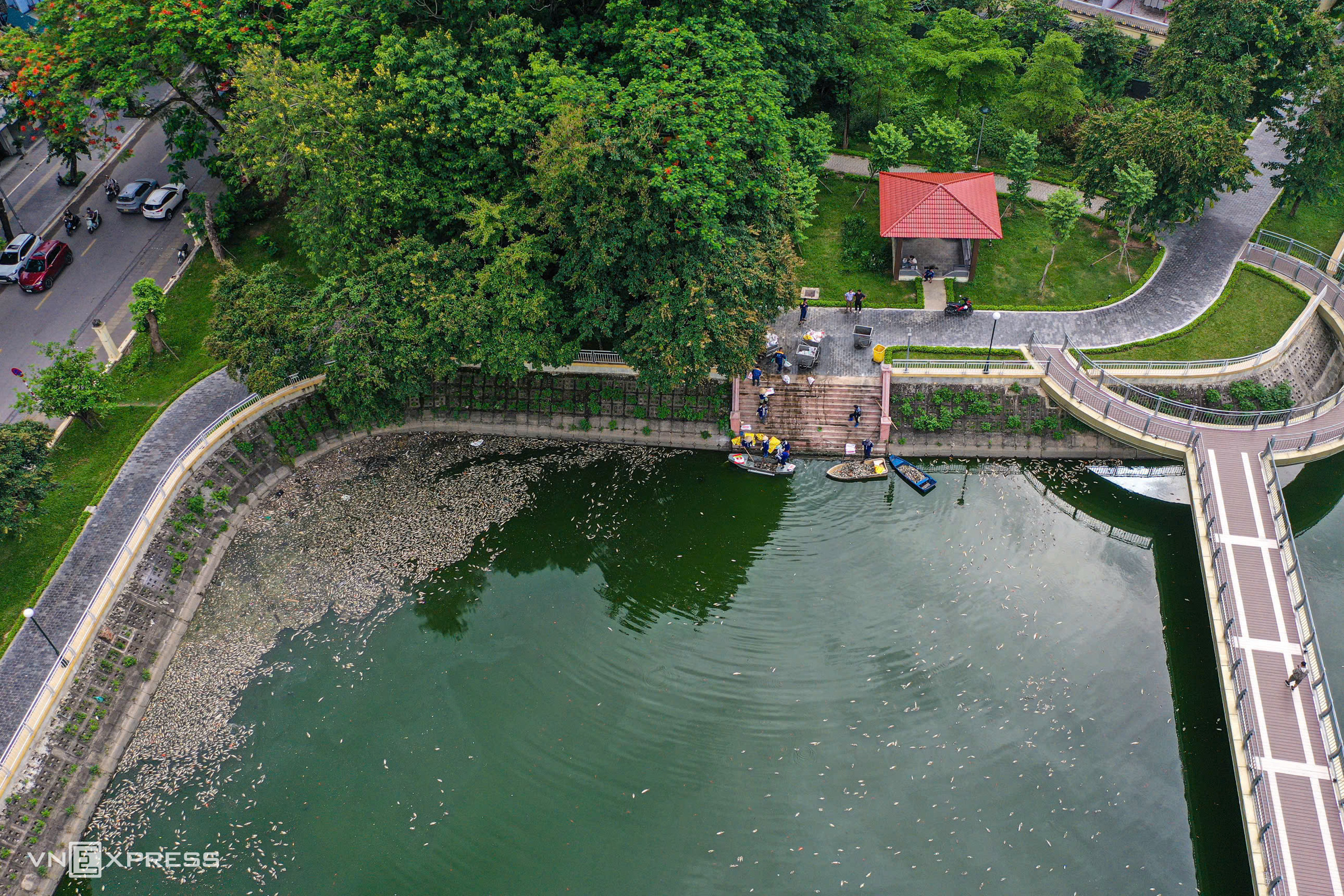 |
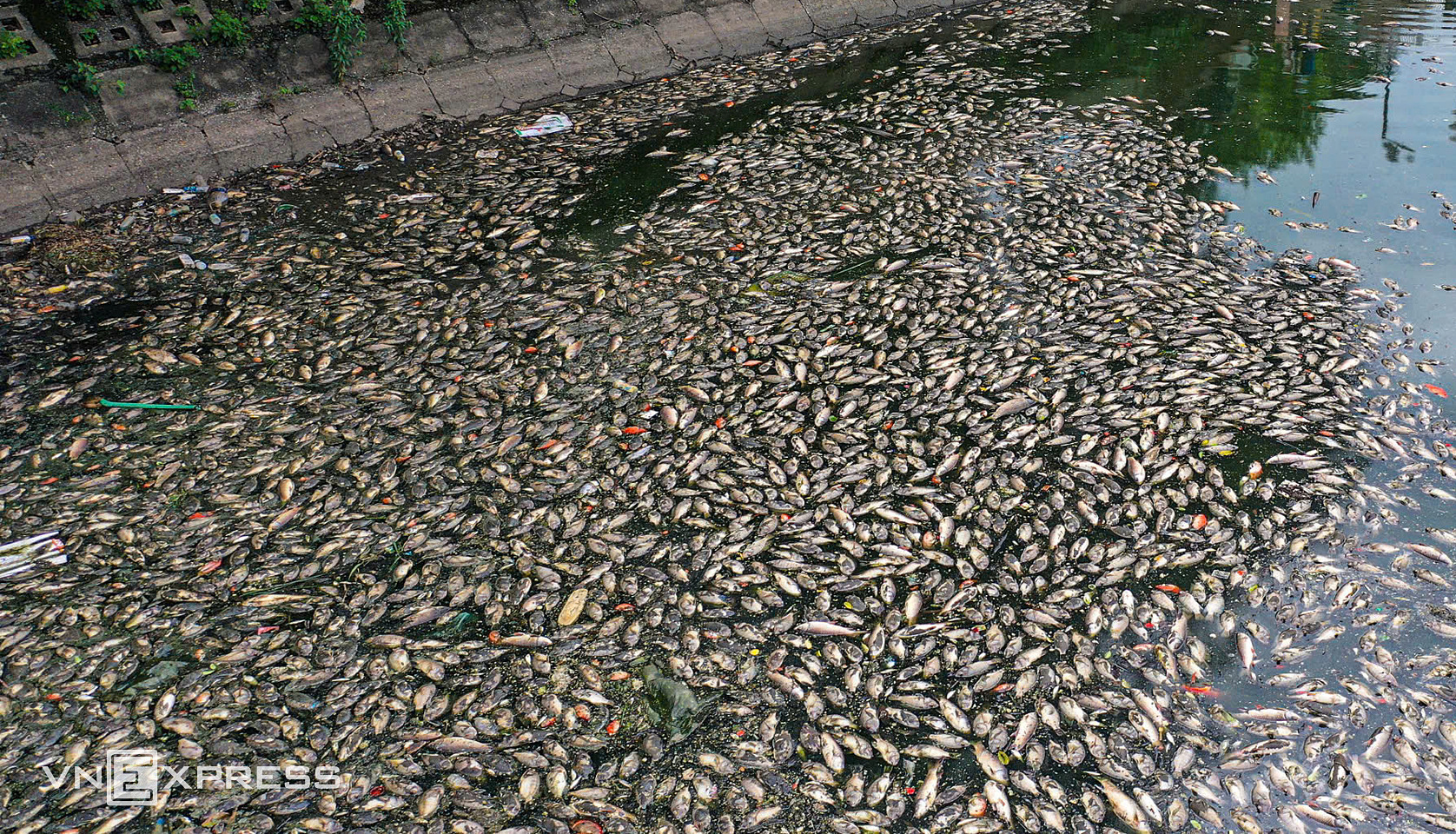
With changing weather, Nghia Do park lake experienced a mass fish kill, with dead fish densely floating on the water surface.
 |
Most regulating lakes in Hanoi only open their sluice gates during heavy rains or flood warnings to drain water. Under normal conditions, these gates remain closed, lacking a mechanism to maintain regular water flow when rainfall is light. Currently, water levels in many lakes are low, primarily replenished by rainwater and urban drainage systems. Poor water circulation, especially during hot seasons, reduces their self-purification capacity, leading to the accumulation of sediment, algae, and pollutants, which results in declining water quality.