On the morning of 10/8, the National Assembly debated the revised draft Law on Vietnamese Workers Going Abroad Under Contract in the assembly hall.
Representative Tran Dinh Gia, Deputy Head of the Ha Tinh Provincial National Assembly Delegation, highlighted that his locality has many citizens working abroad. However, some individuals work for only a few months before abandoning their contracts and violating legal terms. This situation has led certain markets to cease accepting workers from parts of Ha Tinh and other central provinces, significantly impacting those who seek legitimate overseas employment.
Gia advocated for stricter sanctions, including considering a travel ban for individuals who have violated laws while working abroad. He questioned the disparity, stating, "Individuals and businesses who fail to pay taxes are prohibited from leaving the country. So why can someone who violates laws while working in one country return and then work normally in another?"
The representative also proposed establishing a national database on Vietnamese overseas workers, connecting information across ministries, sectors, and localities. This data would serve as a vital tool for labor management, addressing violations, and preventing repeat offenders from entering new markets.
According to Gia, strengthening accountability would not only foster a healthier labor market but also enhance workers' awareness of host country laws, preserve the image of Vietnamese workers, and protect opportunities for those who comply diligently.
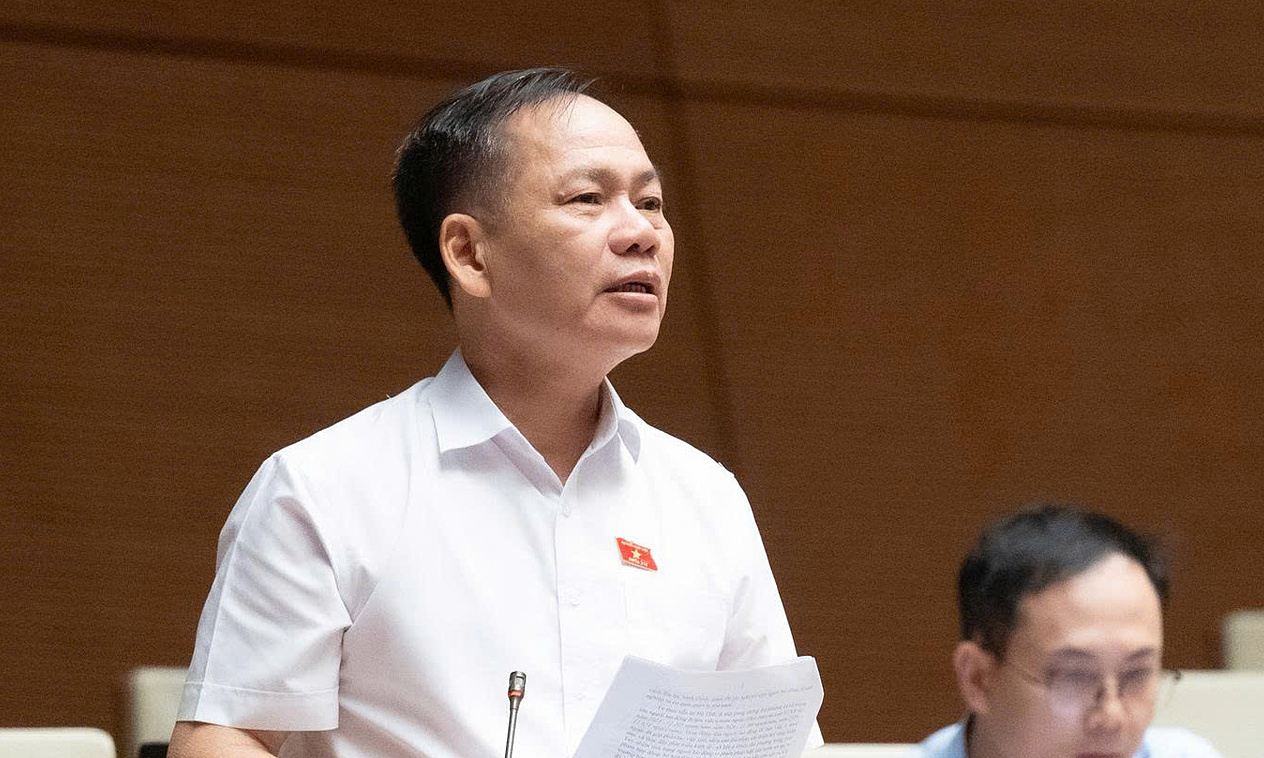 |
Representative Tran Dinh Gia (Deputy Head of the Ha Tinh Provincial National Assembly Delegation) speaks at the assembly hall on the morning of 10/8. *Photo: National Assembly E-portal* |
Need for emergency protection mechanisms for abused workers
Representative Thach Phuoc Binh, Deputy Head of the Vinh Long Provincial National Assembly Delegation, stated that as the number of overseas workers increases, management agencies cannot wait for risks to materialize before conducting inspections and taking action. Proactive measures are essential to safeguard workers.
The draft law has added responsibilities for legal counseling, legal aid, and resolving cases affecting the life, health, rights, and legitimate interests of workers. However, Binh believes protection measures need to be more specific and robust, especially for female workers, who often face unique vulnerabilities.
Workers in domestic, care, or isolated environments face a high risk of violence, harassment, and discrimination. Therefore, pre-departure orientation programs should help them identify harassment, forced labor, and human trafficking; teach safe reporting methods; and provide emergency support contacts. This orientation will empower workers to understand their jobs, recognize dangers, and effectively seek assistance when needed.
The representative proposed establishing an emergency support mechanism, clearly defining contact points, processing timelines, and the responsibilities of each agency to ensure timely intervention when workers are in danger. Such a mechanism would provide a critical safety net.
Sharing this view, Representative Dao Chi Nghia, Deputy Head of the Can Tho City National Assembly Delegation, stated that clear coordination procedures are needed among service enterprises, the Ministry of Home Affairs, the Ministry of Foreign Affairs, and Vietnamese representative agencies abroad. In cases of incidents affecting workers' lives, health, or rights, enterprises must have specific deadlines for receiving, processing, and reporting, rather than merely fulfilling general information obligations.
"In serious cases, enterprises must be responsible for advancing or arranging emergency funds to protect, support, and repatriate workers when necessary," Nghia said.
The National Assembly is expected to vote on the draft law on 24/8.
Son Ha