On the morning of 15/4, Bui Hai Nam from Dong Nai was swimming about 30 m from the shore when he felt a stinging sensation in his chest, which quickly spread as an itch. A man swimming nearby experienced a similar reaction. Observing their surroundings, they spotted numerous sea worms floating, prompting them to quickly head to shore.
Along the beach from Hon Ba to the end of Thuy Van street, sea worms, covered in bristles and about the length of an adult finger, were washed ashore by the waves. Near Cot Co square, they appeared in high numbers, often burying themselves under the sand. Simultaneously, many jellyfish were also present, getting caught in fishermen's nets during nearshore fishing and washing up in clusters at the water's edge.
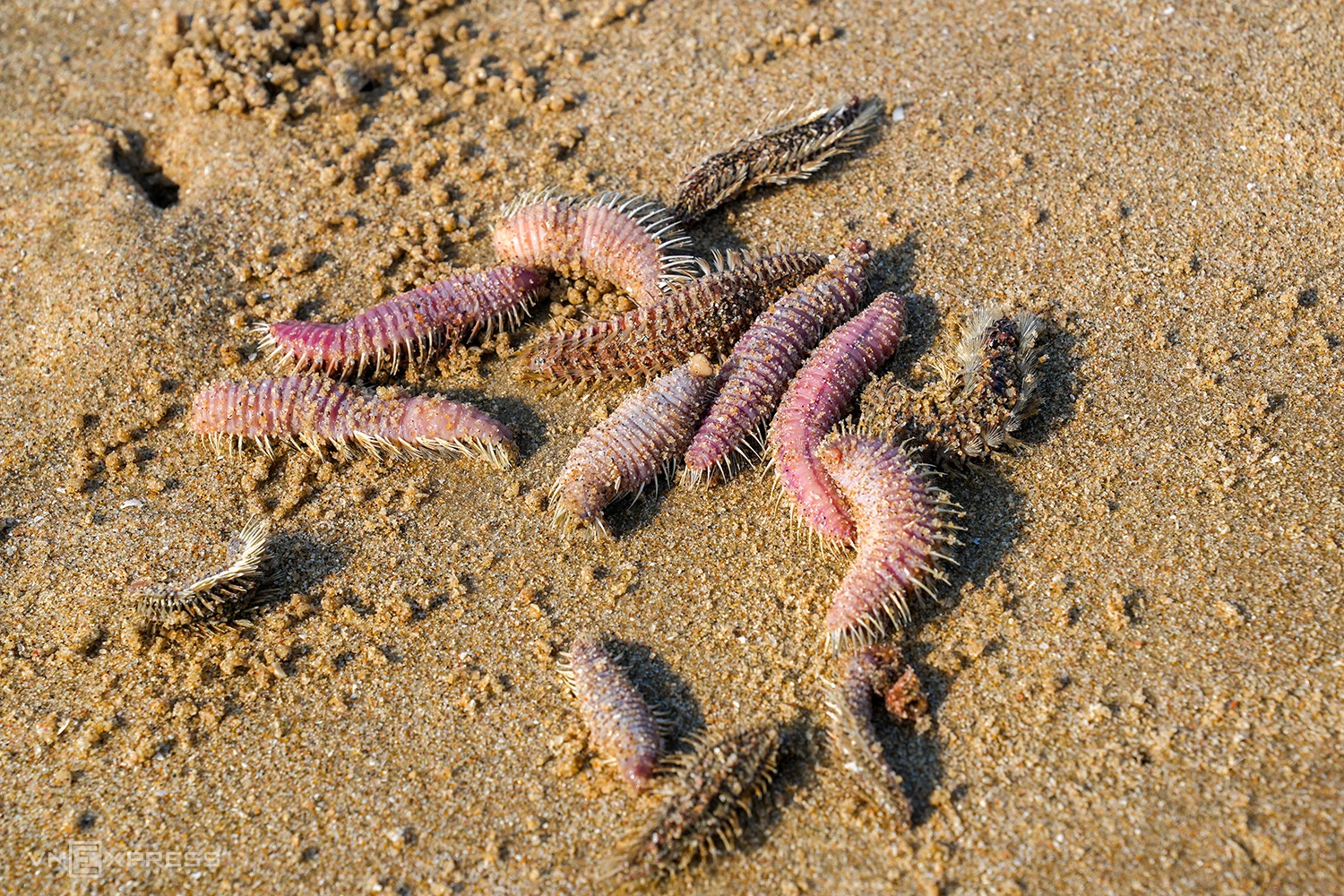 |
Sea worms collected by residents on Bai Sau beach, morning of 15/4. Photo: Truong Ha |
Despite the significant presence of jellyfish and sea worms, the number of tourists visiting Bai Sau beach for swimming has not decreased substantially. Many chose to swim further from shore or limit their time in the water. Huong Ly, a tourist from Tay Ninh, stated this was her first time witnessing such a dense appearance of jellyfish and sea worms with "somewhat eerie" shapes. She opted to stay on shore, walking and chatting with her three friends instead of swimming.
In contrast, local residents express less concern, noting that the appearance of these creatures has little impact on their daily swimming habits. Ho Thi Minh Trang said she usually wears full-body swimwear when entering the water to limit contact, while also actively avoiding areas with many drifting organisms.
A marine biology expert identified the sea worms appearing here as belonging to the bristle worm group, scientifically named Chloeia parva. Commonly known as "fireworms" or "sea caterpillars", these creatures thrive and breed when the water warms up in spring and summer. They typically appear in large numbers when water temperature rises and currents change. Their washing ashore is not a sign of pollution but a seasonal ecological phenomenon. The species is characterized by fine, toxin-laden bristles covering its body. Upon contact, these bristles easily break off, embed in the skin, and release toxins, causing stinging pain and itching.
Regarding jellyfish, Tran Huu Bao Luyen, who has over 40 years of experience in sea rescue, noted the presence of blue jellyfish on the beach, in addition to the less dangerous white jellyfish. This species, along with fire jellyfish, can cause skin irritation and stinging upon contact.
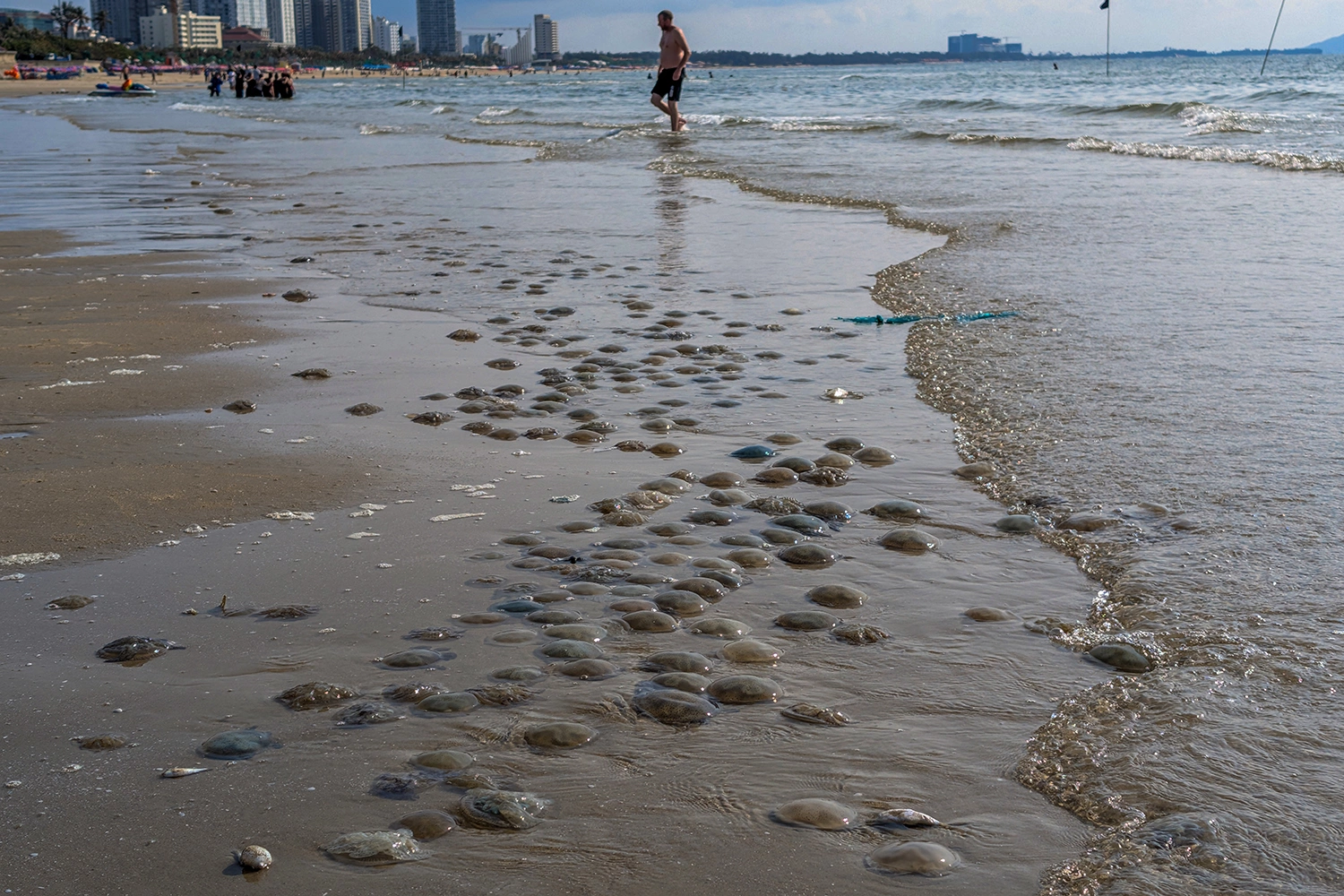 |
Jellyfish caught in fishermen's nets near Hon Ba beach. Photo: Truong Ha |
A representative from the Vung Tau Ward Public Service Center confirmed that the appearance of jellyfish and sea worms has been noted over the past few days. This is a natural annual phenomenon, and no severe allergic reactions have been recorded. "This situation appears at the beginning of the rainy season, then gradually decreases as weather conditions and ocean currents stabilize", he said.
Tourists stung by jellyfish or sea worms should quickly come ashore, wash the affected skin with clean water, apply lemon or vinegar to reduce itching, or visit beachside rescue stations for first aid and specific medication. Additionally, affected individuals should monitor their body's reaction and seek medical attention if swelling or severe allergic reactions occur.
Truong Ha