Ho Chi Minh City Party Committee Secretary Tran Luu Quang made this request at a meeting with voters and candidates for the 16th National Assembly, 2026-2031 term, in Ben Thanh and Cau Ong Lanh wards (formerly District 1). These two central city projects involve many residents but have seen slow implementation.
 |
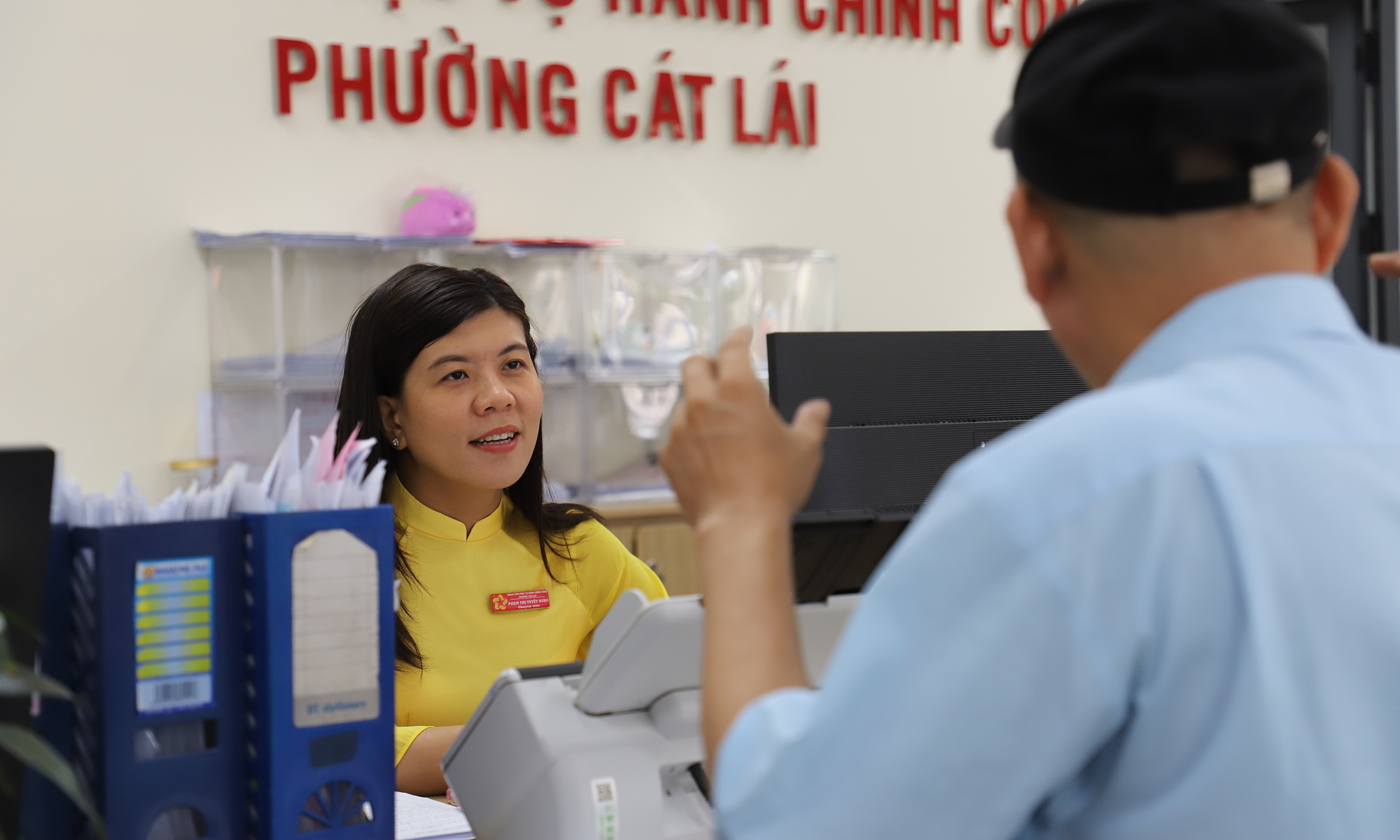
Secretary Tran Luu Quang speaks at a voter meeting on the afternoon of 5/3. Photo: An Phuong |
Secretary Tran Luu Quang is running for the National Assembly in electoral unit 6, alongside four other candidates: Do Duc Hien, a full-time representative for the 15th National Assembly's Committee on Legal Affairs and Justice; Trinh Thi Hien Tran, deputy secretary of the Ho Chi Minh City Youth Union; Vuong Thanh Lieu, chairwoman of Binh Tien Ward People's Committee; and Nguyen Vu Trung, director of the Pasteur Institute Ho Chi Minh City.
After the candidates presented their action plans, voters raised many concerns. Trinh Van Thanh from Cau Ong Lanh ward noted the prolonged delays of several suspended projects in the area, including the Nguyen Cu Trinh quadrilateral (Ma Lang area), which has remained unresolved for many years.
Voter Pham Thanh Trieu also highlighted the severe housing congestion in the Ma Lang area, where families of 9–10 people must "take turns" sleeping in houses only 10–15 square meters in size. Additionally, the Cau Muoi market area is dilapidated, characterized by cramped living conditions and environmental pollution.
Given these realities, voters expressed their hope that elected representatives, especially Secretary Tran Luu Quang, will work with Ho Chi Minh City and the central government to establish mechanisms and policies to resolve issues in these areas.
According to Secretary Quang, not only the residents but he himself is also concerned about the Ma Lang area and Ga - Gao market. He explained that the Ma Lang area was historically a place where many people returned to the city after participating in new economic zones, settling in very cramped houses.
"I had a friend in college whose house was only a few square meters. At night, his body would be inside, but his feet had to extend into the alley, and he couldn't sleep all night for fear of his feet being run over by a vehicle," he recounted, adding that such stories are moving and illustrate the difficult living conditions there.
 |
Life of residents in Ma Lang area, 2023. Photo: Thanh Tung |
The Ho Chi Minh City Party Committee Secretary stated that the government bears responsibility for such areas. A preliminary report indicates that over 1,400 households reside in the Ma Lang area. He requested the ward to conduct a complete survey and compile a list of households in the Ma Lang and Ga - Gao market areas, sending it to the City Party Committee for joint assessment and solution planning.
According to reports from the leaders of the two wards, the project previously had an investor and was partially implemented before being halted. Secretary Quang noted that project delays stem from challenges in attracting investors. To resolve this, it is necessary to re-evaluate traffic solutions and adjust urban planning, such as increasing permitted building heights.
The head of the Ho Chi Minh City Party Committee suggested that if an apartment building is constructed in the Ma Lang area, allocating about eight floors for resettlement would require an additional ten floors of commercial housing for the investor to sell. This would ensure the financial resources needed to implement the project.
However, with a total height of approximately 18 floors, the existing traffic infrastructure might not be able to cope. Therefore, he emphasized that the renovation of this area must be synchronized, involving adjustments to building heights, upgrades to roads, and planning indicators that are sufficiently attractive to draw investor participation.
"I promise the residents that we will thoroughly organize and survey this issue," Quang said.
The Ma Lang area, also known as the Nguyen Cu Trinh quadrilateral, is bordered by four streets: Nguyen Trai, Cong Quynh, Tran Dinh Xu, and Nguyen Cu Trinh. Before 1975, it was a cemetery that was later relocated, gradually forming a residential area in the center of the former District 1. Currently, the area has over 530 houses under 20 square meters, most of which are extremely small and dilapidated.
Since 2000, Ho Chi Minh City has pursued a policy to clear and redevelop the 6,8-hectare Ma Lang area. The project has passed through several investors but could not be implemented, leading the city to reclaim it three years ago.
 |
Ga – Gao market area from above. Photo: Dinh Van |
Meanwhile, the Ga – Gao market area, situated between Nguyen Thai Hoc, Vo Van Kiet, and Yersin streets in Cau Ong Lanh ward, is a traditional market that has existed since before 1975 but has deteriorated. The 6,300 square meter plot is planned for a building with a maximum height of 50 meters (10–14 floors), accommodating approximately 700 residents. The project is expected to affect 290 households with 1,173 residents, but it has not attracted investors for many years.
Le Tuyet