Over the past week, an estimated 30-50% of the total 80 hectares of farmed clams in Mai Lam village, Mai Phu commune (formerly part of Loc Ha district) have died. The dead clams float to the surface, decompose, and emit a foul odor. When the tide recedes, their shells accumulate in vast white strips along the shoreline.
Nguyen Thi Dung, 60, a resident of Mai Lam village, reported an 80% loss of clams on her two-hectare farm. She had been cultivating them for one and a half years, and they were ready for harvest. Dung typically invests 300 million dong per season in young clams and labor costs. Under favorable conditions, she expects to earn over one billion dong from sales, yielding a profit of about 40%.
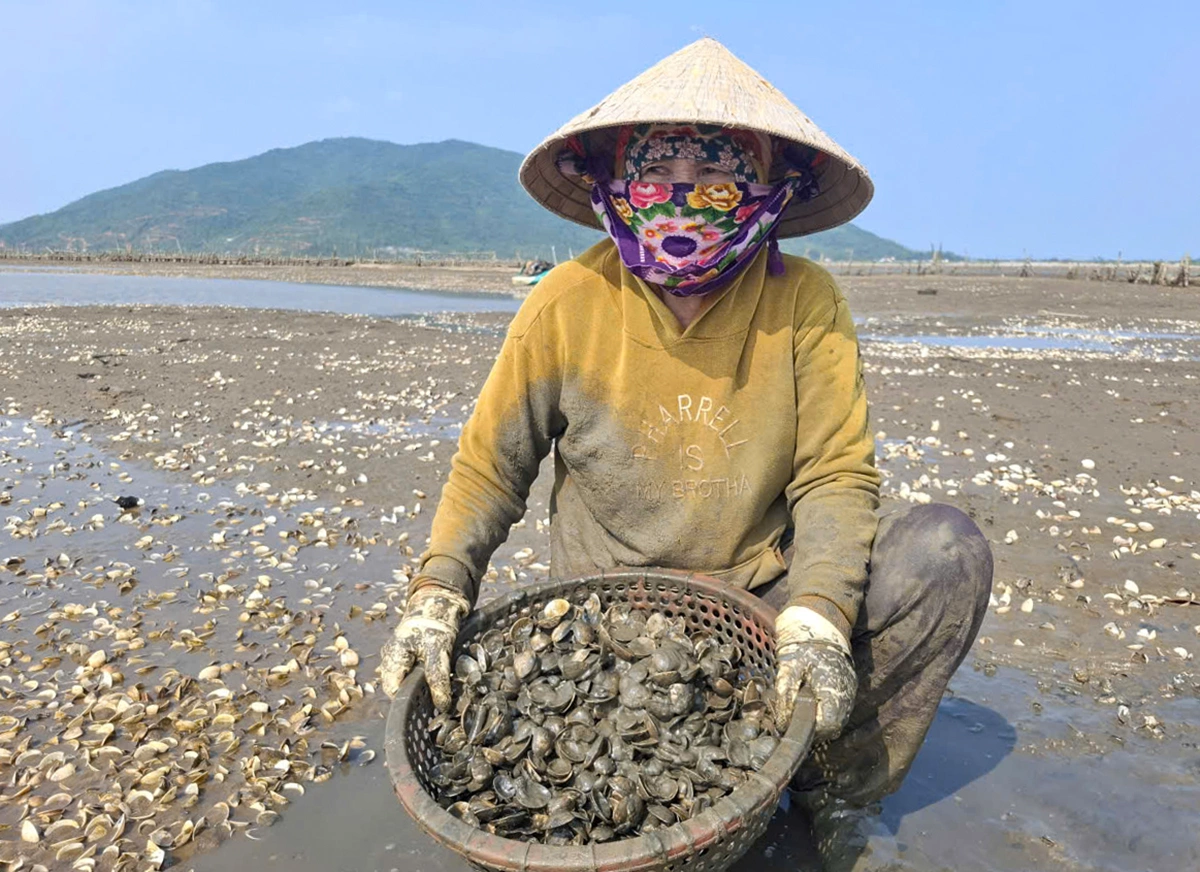 |
Ms. Dung collects dead clams at her pond on 26/4. Photo: Duc Hung |
"The harvest began a few weeks ago, and my family only managed to sell 10 tons," Dung stated. "About 50 tons of commercial clams in the pond are now just shells, an estimated loss of over one billion dong."
Dung emphasized that the widespread clam deaths not only inflict significant economic damage but also leave behind a mess of shells in the ponds, posing a potential environmental risk. The daily cost to hire workers for shell cleanup is approximately 500.000 dong, a burden she must bear as cleaning it alone would take several months.
Nguyen Thi Thanh, another Mai Lam resident, noted that clams at harvest stage typically weigh about 120 clams per kilogram and sell for 24 million dong per ton in the market. This period is crucial for farmers to recover their investments and make a profit after months of cultivation.
"My family faces total loss as 10 hectares of farmed clams have died, with only about 30-40% remaining. This season's losses amount to hundreds of millions of dong," Thanh shared, adding that she will need to borrow more money from the bank to purchase new stock, hoping to recoup her capital.
Mai Phu commune has 43 farming households cultivating approximately 80 hectares of clams. Initial assessments by authorities estimate that around 120 tons of clams have perished, leading to billions of dong in losses for the affected households.
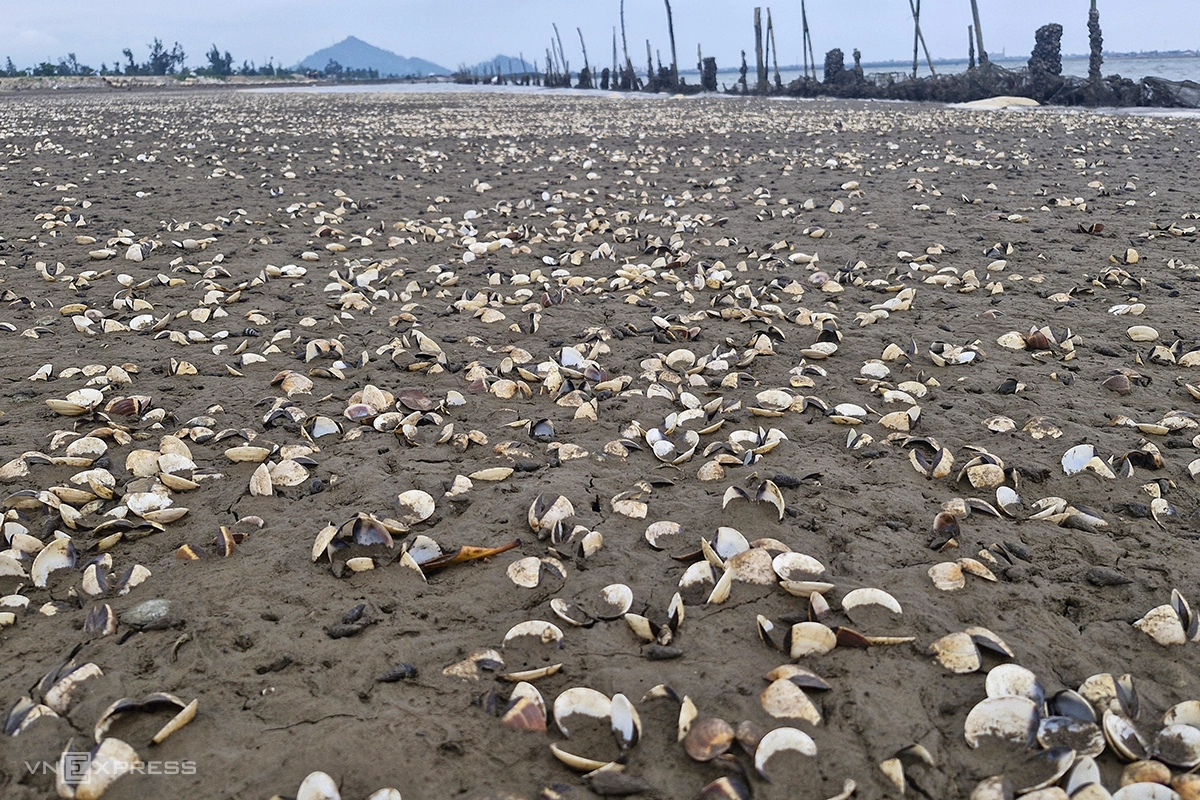 |
Clam shells accumulated in white strips when the tide receded, not yet collected. Photo: Duc Hung |
On the afternoon of 26/4, Mai Phu commune collaborated with the Ha Tinh Fisheries Sub-Department to inspect the sites and collect samples for analysis. The aim is to determine the cause of the clam deaths and implement appropriate solutions. For now, farmers have been advised to temporarily refrain from restocking their ponds.
Commercial clams from Ha Tinh are primarily purchased by traders and supplied to wholesale markets and restaurants both within and outside the province for seafood businesses. A portion of the harvest is sent to processing facilities for freezing or drying, ensuring longer shelf life and distribution.
In previous years, farmed clams in the coastal mudflats of Mai Lam village, Mai Phu commune, also experienced multiple mass mortality events, with losses ranging from tens to hundreds of tons. Expert agencies concluded that these incidents were caused by factors such as frost and freshwater intrusion into the seawater.
Duc Hung