The stele, measuring 2,8 m tall and weighing 7 tons, located in the bi dinh (stele pavilion) of Khai Dinh's tomb, bears hundreds of lines and symbols carved with sharp objects. Among these is the inscription, "Dinh Bao Phuong, 18/7/1986, Phu Dong, Gia Lam, Ha Noi". The etchings overlap the existing Chinese characters on both sides of the stele. A wooden fence, approximately 0,5 m high, surrounds the stele, but no cameras are installed in this area.
Emperor Khai Dinh's tomb is situated on Chau Chu mountain, Thuy Xuan ward. Emperor Khai Dinh (1885-1925), the 12th emperor of the Nguyen Dynasty, reigned from 1916 to 1925. His reign saw the construction of many court architectural works blending Asian and European styles, including the Khai Dinh tomb complex. This complex features a triple gate (tam quan), a courtyard for mandarins (san chau), the stele pavilion (bi dinh), and tiered worshipping halls on the mountainside. Constructed with materials sourced from France, Trung Quoc, and Japan, the tomb is a popular tourist attraction in Hue.
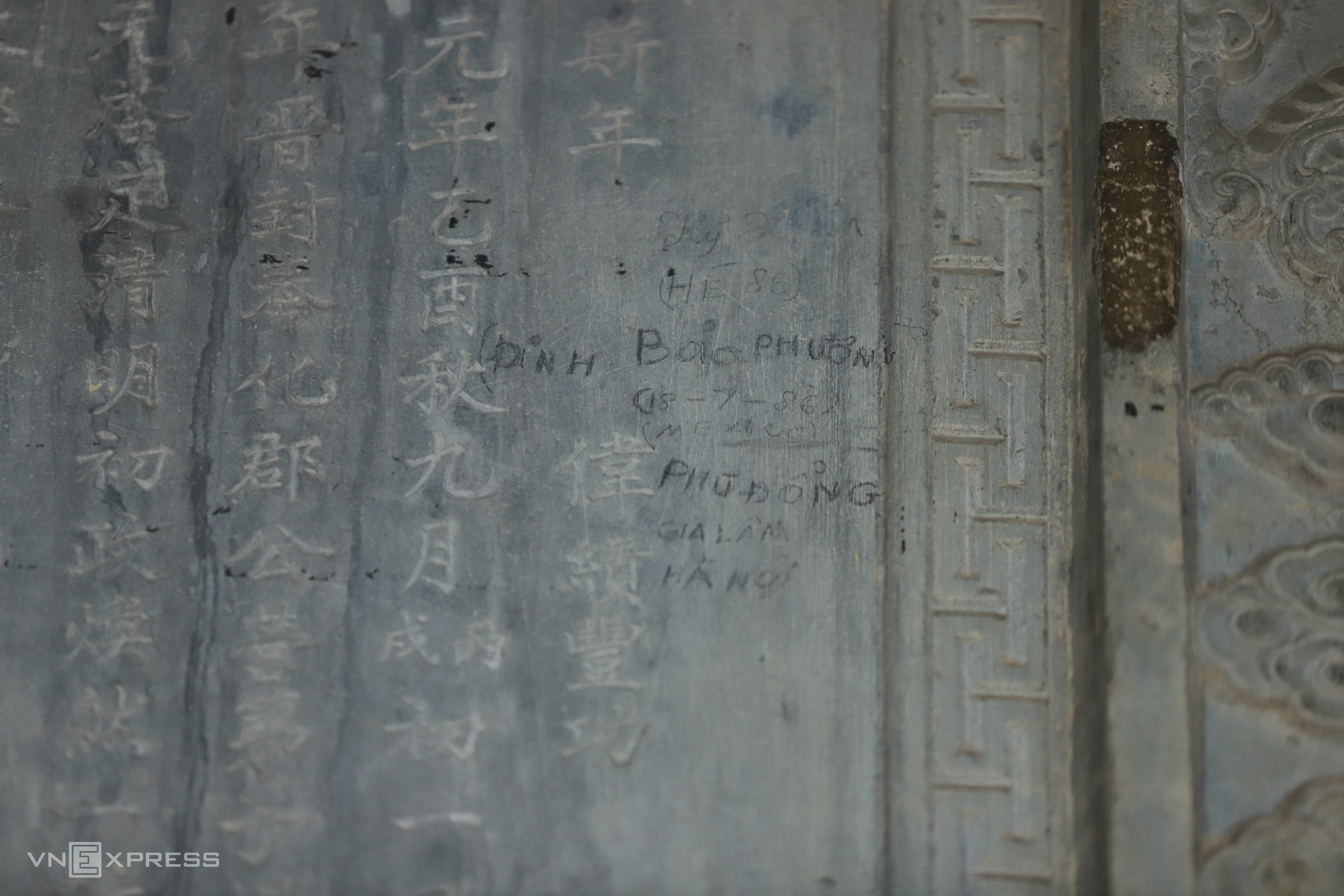 |
The "Thanh Duc Than Cong Bi Ky" stele at Emperor Khai Dinh's tomb has been vandalized. *Photo: Vo Thanh*
Approximately 3 km away, at Emperor Tu Duc's tomb, the "Khiem Cung Ky" stele, recognized as a national treasure, also shows numerous etchings made with sharp objects. Emperor Tu Duc (1829-1883) was the 4th and longest-reigning emperor of the Nguyen Dynasty, ruling from 1847 to 1883. He commissioned the construction of Khiem Lang (Khiem Mausoleum) and Khiem Cung (Khiem Palace) for his use during his lifetime and as his final resting place. The "Khiem Cung Ky" stele features texts personally drafted by the emperor.
A tour guide, who regularly brings visitors to Nguyen Dynasty tombs, noted the absence of security guards in the stele pavilion areas at various times, despite the large number of visitors.
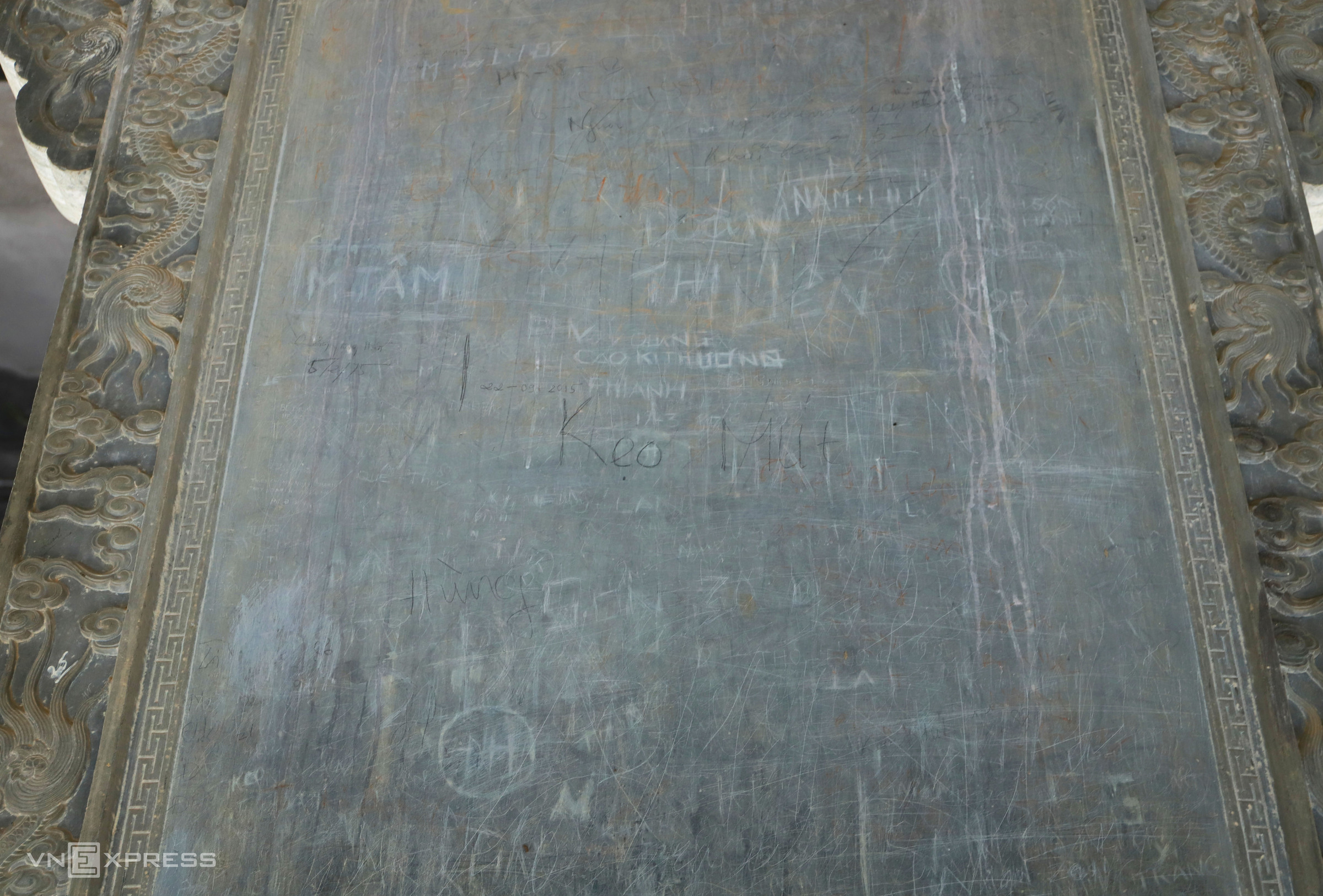 |
The reverse side of the stele at Emperor Khai Dinh's tomb is covered with inscriptions left by tourists. *Photo: Vo Thanh*
Tran Dinh Than, head of the Security Department at the Hue Monuments Conservation Center, stated that each tomb, such as Khai Dinh and Tu Duc, has a security team of 12 people, with about 60-70% of the force on duty per shift. For the past two years, the center has erected wooden fences around the steles to limit direct contact by visitors.
In May, the throne in Thai Hoa Palace was damaged by a visitor. Following this incident, the Center installed a 1,5 m high, 21,3 m long tempered glass barrier to protect the exhibition area. Additional surveillance equipment is being added to other areas within the complex.
According to Decree 38/2021, acts of writing, drawing, carving, or defiling historical-cultural relics are subject to fines ranging from 1 to 3 million dong. Offenders are also required to restore the relic to its original condition. In cases causing serious damage to a relic, authorities may consider criminal liability under the provisions of the Penal Code.
Vo Thanh