Around 4:00 AM on 6/2, Ms. Chu Thi Ngu, mother of Nguyen Thi Van, found Van, her 3-day-old daughter, and Van's 21-year-old sister, Nguyen Thi Huong, unconscious in their bedroom in Hong Loc commune, Ha Tinh province. The room, about 10 square meters in a level-4 house, had all doors and windows sealed. A charcoal pot, used for warmth, was found under the bed with the fire extinguished. Local authorities believe the three victims suffered carbon monoxide poisoning due to the charcoal pot in the enclosed space.
Family members explained that Van had recently given birth and moved in with Ms. Ngu. The family burned charcoal for warmth to protect the mother and newborn from the cold. Nguyen Thi Huong, Van's sister, sometimes slept in the room to assist with childcare.
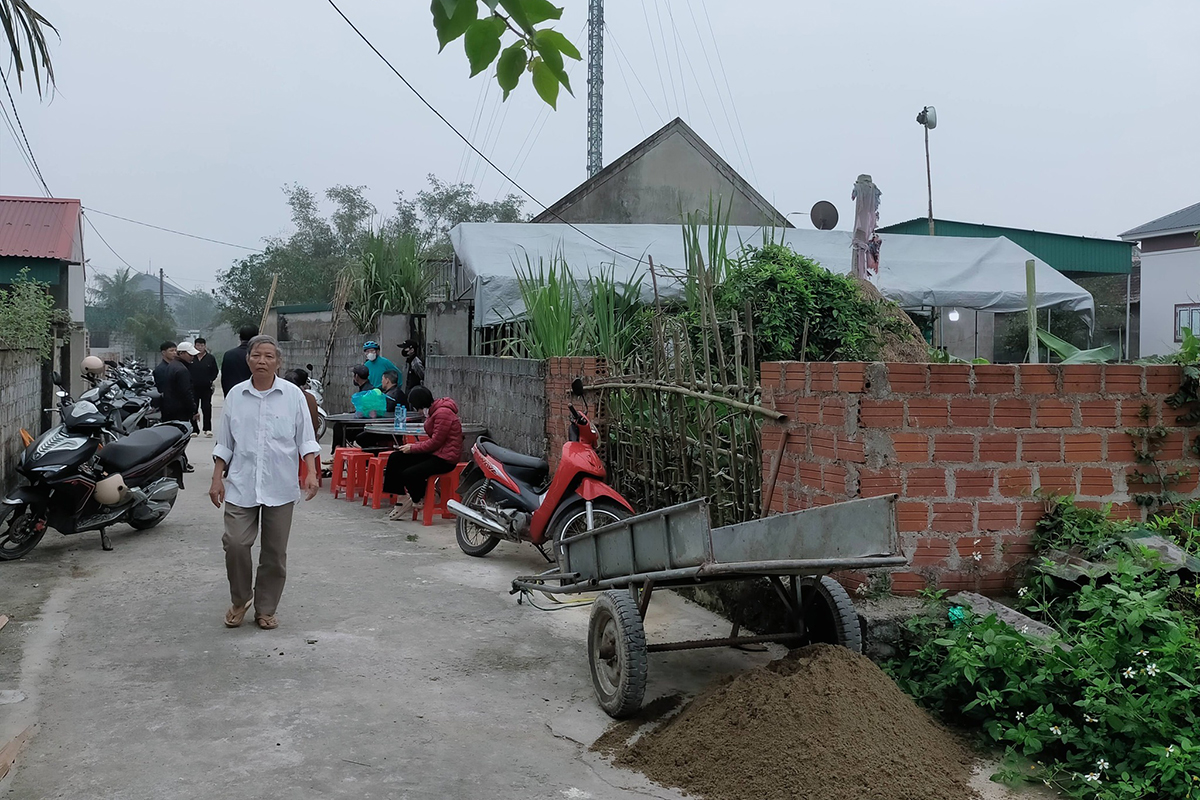 |
Ms. Ngu's house (covered with a tarp), where the incident occurred. Photo: Hung Le |
This tragic incident occurs as Ha Tinh has experienced a week of cold weather, with temperatures ranging from 17-22 degrees Celsius. Such incidents are not uncommon in Vietnam. Each year during the cold season, the country records numerous cases of carbon monoxide poisoning from burning wood, charcoal, honeycomb briquettes, or using gas stoves in sealed rooms, often leading to fatalities. These cases frequently happen in the mountainous and rural areas of the northern and central regions, where winter temperatures drop significantly, and residents commonly use burners for heating.
Health experts issue strong warnings against placing wood, charcoal, or gas stoves in bedrooms. For cooking purposes, stoves should always be used outdoors or near open doors and windows to ensure adequate ventilation. This is because burning charcoal, wood, or using gas stoves produces significant amounts of carbon monoxide (CO), a toxic gas widely known as the "silent killer." CO gas is colorless, odorless, and tasteless, making it impossible for individuals to detect until early symptoms of poisoning manifest. These symptoms include: headaches, nausea, difficulty breathing, chest pain, and confusion.
Duc Hung