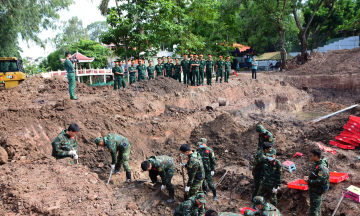
During the expanded search, as they meticulously removed layers of earth and rock, the Search and Collection Team for Fallen Soldiers' Remains, operating under the Da Nang City Military Command, uncovered bone fragments, fabric pieces, buttons, and numerous other personal effects.
Of the two newly found sets of remains, one was relatively intact, while the other provided sufficient bone samples for DNA identification. After recovering and preserving the personal effects according to established procedures, authorities continued to expand their survey of adjacent areas.
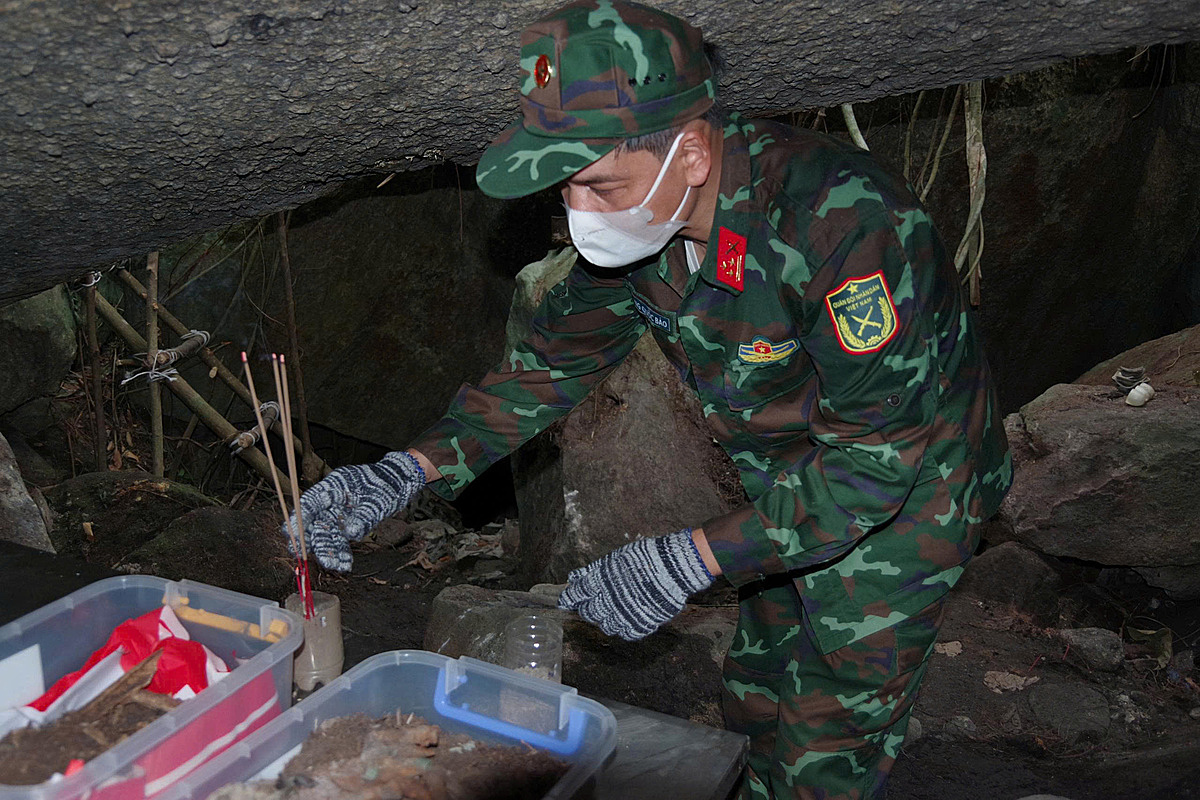 |
The remains of two fallen soldiers were recently found. Photo: Quang Cuong |
Da Sap cave is a large cave complex with many nooks and crannies, deeply buried under earth and rock after the war. It served as a military base, a site for treating wounded soldiers, and a critical food transit point for many main units, including Artillery Regiment 575 of the Quang Da Front 44. Located near the "steel gate" of Thuong Duc, the storage of provisions within the Son Ga mountain cave system was vital for fueling the guerrilla movement and approaching the Da Nang military base.
At noon on 25/4/1969, kitchen smoke was accidentally exposed, leading to detection by enemy reconnaissance aircraft. An F4 jet squadron was called in, launching continuous bombardments for many hours. Numerous caves were flattened, and thousand-ton boulders collapsed, sealing off entrances and burying dozens of soldiers inside. Due to the enemy's detection and the complete destruction of the terrain, the troops had to abandon the base, leaving their comrades buried deep within the rocks for over half a century.
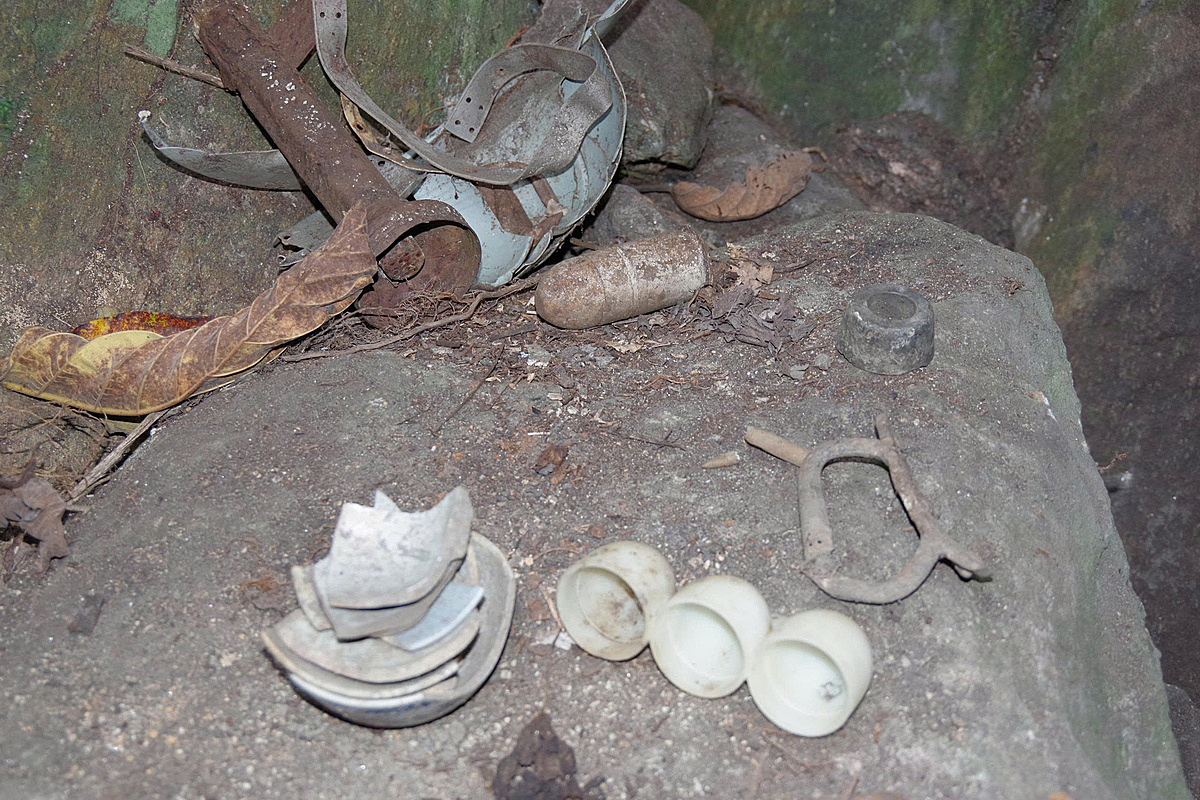 |
Personal items of the two fallen soldiers recently found. Photo: Quang Cuong |
The search faced numerous difficulties due to the steep, rocky terrain, harsh weather, and narrow cave entrances that were just wide enough for one person. To access the site, police, engineering, and elite special forces cleared dozens of unexploded bombs and mines, used crowbars to move large rock blocks in the dark, and sifted through every handful of soil under freezing underground currents. Because the remains were buried deep underground and subjected to strong underground currents, many bone fragments disintegrated immediately upon exposure to air.
Previously, the City Steering Committee for Search and Collection had surveyed and recovered 5 fallen soldiers' remains, holding a solemn memorial and burial ceremony at Dai Dong Martyrs' Cemetery in Ha Nha commune. The Da Nang City Military Command affirmed its commitment to continue coordinating with functional agencies, local authorities, and historical witnesses to persistently expand the search, determined to bring all remaining fallen soldiers back to their families and homeland.
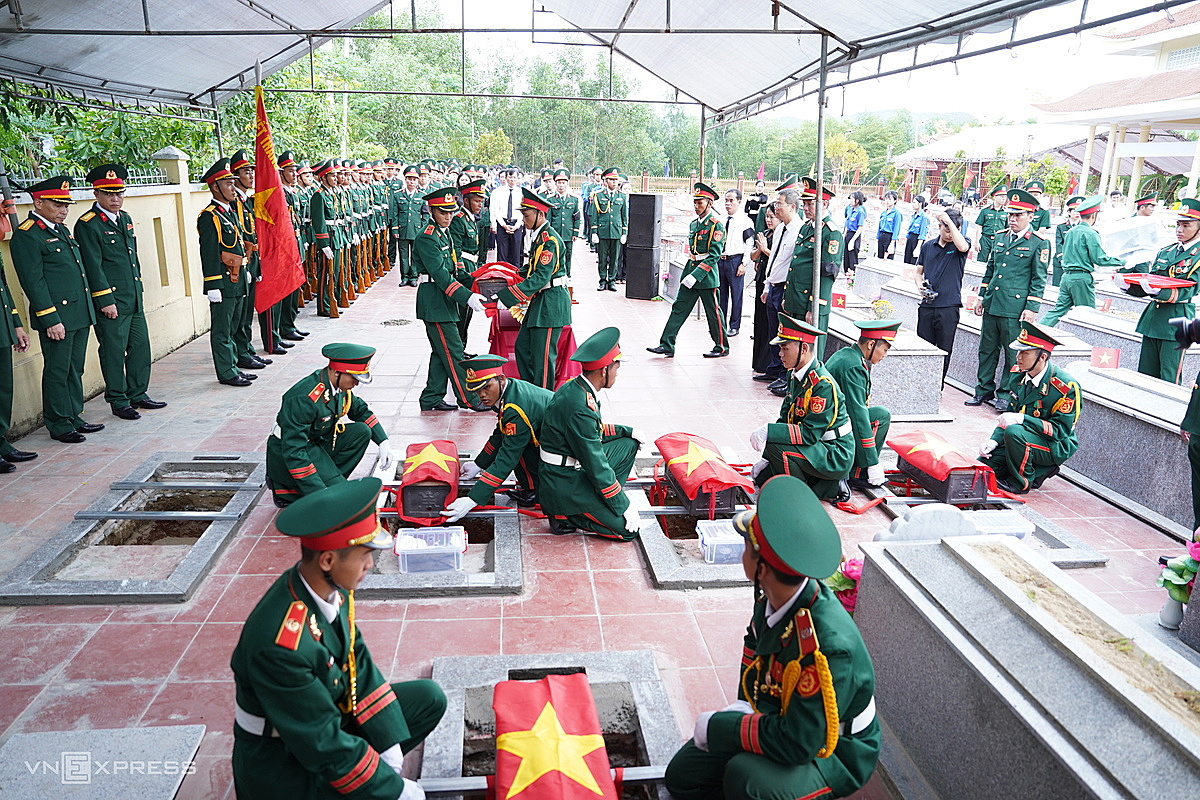 |
The memorial ceremony for 5 fallen soldiers at Dai Dong cemetery, on the afternoon of 14/7. Photo: Nguyen Dong |
Nguyen Dong