The Ministry of Justice is currently evaluating the draft Law amending and supplementing a number of articles of the Social Insurance Law, developed by the Ministry of Home Affairs. This draft law is expected to be presented to the National Assembly for comments and approval during its October session.
The drafting agency proposes adjustments related to the age for receiving social retirement benefits. This new social security tier, effective 7/2025, targets individuals aged 75 and above who lack a monthly pension or social insurance (SI) benefits. For poor and near-poor households, the eligible age is from 70 to under 75. The current benefit amount is 500,000 VND per month.
The draft outlines two amendment options for this policy. Option one maintains the current regulation, with any gradual reduction in the eligible age falling under the authority of the National Assembly Standing Committee, based on a government proposal. Option two proposes adding a regulation that allows the government to decide on a gradual reduction of the social retirement benefit age to 70, in line with socio-economic development and budget capacity at each period. It also stipulates that the government would present a proposal to the National Assembly Standing Committee to further reduce the eligible age below 70 when necessary conditions are met. Regarding these proposals, eight ministries and agencies support option one, while over 50 agencies and units favor option two.
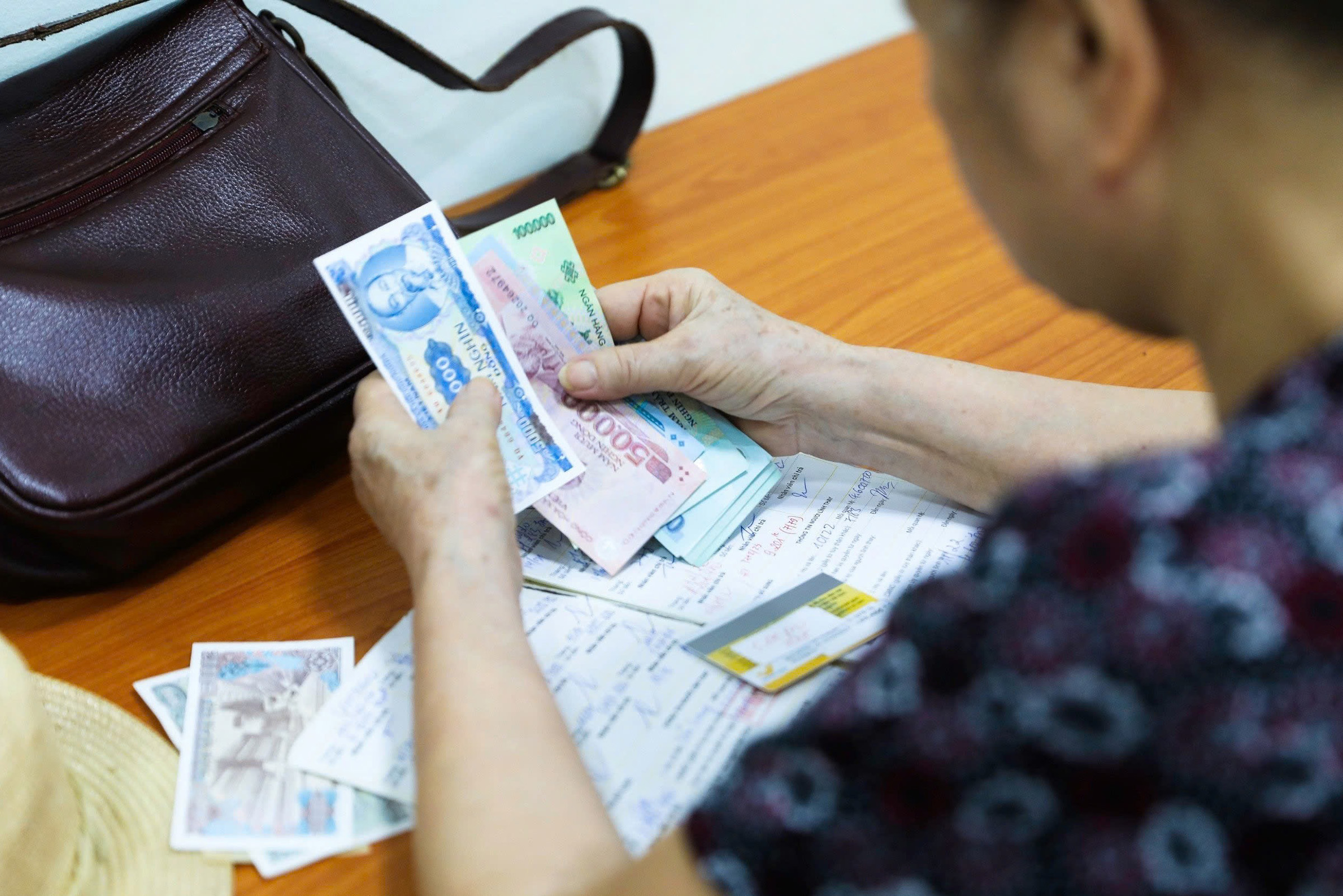 |
Elderly residents in Hanoi receive their pensions at a disbursement point. Photo: Thu Huong |
According to the Ministry of Home Affairs, the policy to reduce the social retirement benefit age from 80 to 75, effective 7/2025, has brought an additional 500,000 people into the social safety net, increasing coverage to nearly 42%. However, this rate remains far from the Central Resolution 28 target of approximately 60% of post-retirement individuals receiving pensions, monthly SI benefits, or social retirement benefits by 2030. Gradually reducing the eligible age would contribute to achieving this central goal. Reducing the age from 75 to 70 would extend benefits to an estimated 1,8 million more people, costing 11,7 trillion VND annually.
Currently, 2,5 million people nationwide receive social retirement benefits, costing nearly 7 trillion VND from the state budget. Several provinces and cities, including Hai Phong, Quang Ninh (700,000 VND), Hanoi, Ho Chi Minh City (650,000 VND), and Tuyen Quang (530,000 VND), disburse higher rates than the national average. Beneficiaries also receive health insurance (HI) cards, covering 100% of their HI medical examination and treatment costs.
Vietnam faces a demographic shift. In 2025, approximately 16,5 million people will be aged 60 or older, accounting for 16% of the population. Projections indicate that by 2036, the country will enter an aging population phase, and by 2050, this demographic could represent over 25% of the population. While the average life expectancy for Vietnamese people is 74,7 years, the number of healthy life years is only about 65,4, posing significant demands for elderly healthcare and services.
Hong Chieu