The National Center for Hydro-Meteorological Forecasting reported that at 4:00 on 23/8, the typhoon was approximately 110 km east of Quang Ninh, 130 km east of Hai Phong, and about 80 km north of the Bach Long Vi special zone. It had maximum sustained winds of 74 km/h, level 8, gusting to level 10, and was moving south-southwest at about 3 km/h.
By 4:00 on 24/8, the typhoon is expected to be over the waters of Bach Long Vi, maintaining its intensity but shifting south-southeast at 3 km/h. By 4:00 on 25/8, it will be east of the Gulf of Tonkin, with maximum sustained winds increasing to level 9, gusting to level 11, and continuing to move east-northeast at 3-5 km/h.
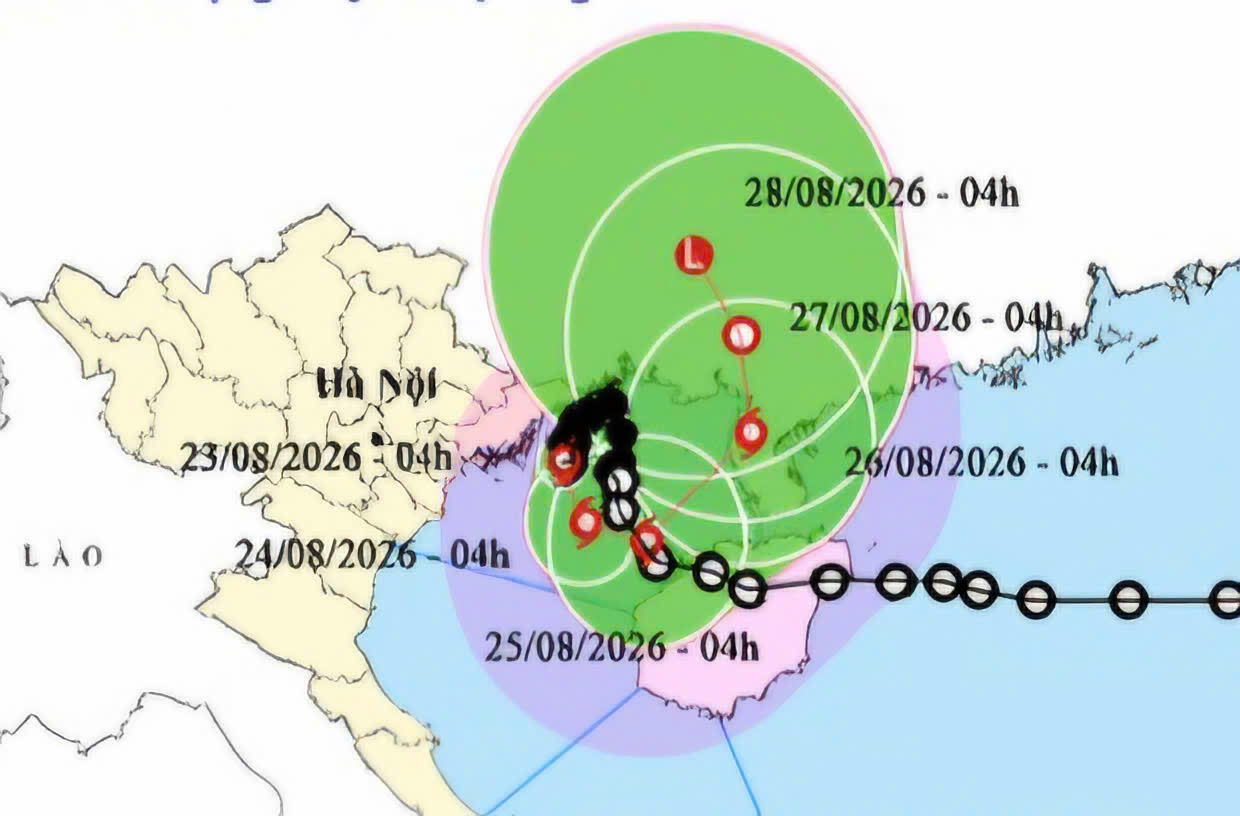 |
Forecast track and affected area of typhoon Narra, morning of 23/8. *Photo: NCHMF* |
The typhoon is projected to continue moving northeast at 5-10 km/h by 4:00 on 26/8, reaching the western mainland of Leizhou Peninsula (China) and weakening to level 8, gusting to level 10.
The Japan Meteorological Agency predicts the typhoon will maintain 65 km/h winds before veering towards Hainan Island and Leizhou. The Hong Kong Observatory, however, anticipates the typhoon's intensity will increase to 85 km/h after looping towards Hainan Island.
As a result of the typhoon, the Gulf of Tonkin, including the Bach Long Vi, Van Don, Co To, Cat Hai special zones, Hon Dau island, and the coastal waters of Quang Ninh and Hai Phong, will experience winds of level 6-7. Areas near the typhoon's eye will see winds of level 8-9, gusting to level 11, with waves reaching 2-4 meters. Fishing vessels, cargo ships, tourist boats, aquaculture rafts and cages, and coastal structures face potential damage. Offshore exploitation, transportation, and tourism activities may be disrupted.
Coastal areas of Quang Ninh and Hai Phong will experience level 6 winds, gusting to level 7-8, which could lift roofs, damage temporary structures, topple trees and billboards, and affect power systems and traffic.
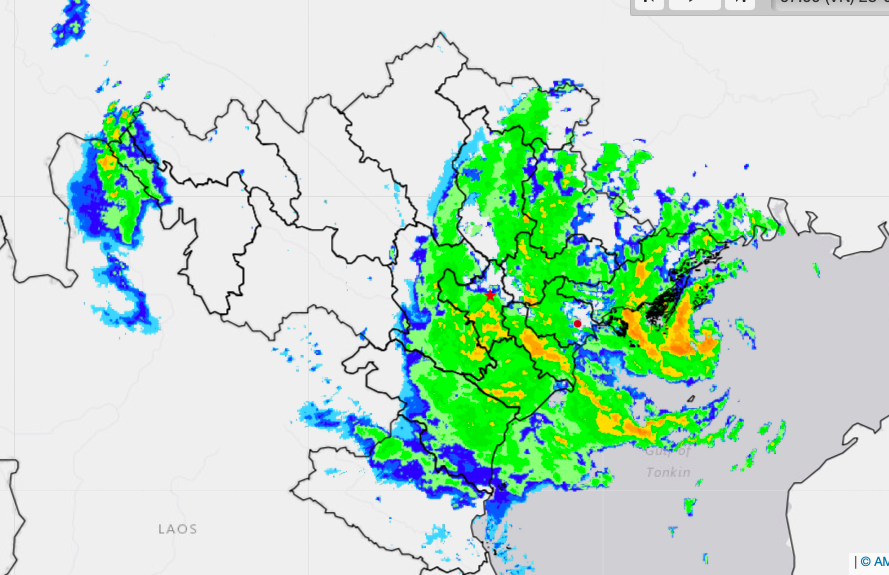 |
Rainfall circulation of typhoon Narra at 7:00 on 23/8. *Photo: NCHMF* |
From the night of 21/8 to 4:00 on 23/8, the Northeast region received 60-120 mm of rain. Quang Ninh, Lang Son, and Hai Phong recorded 130-250 mm, with some localized areas exceeding 300 mm. Notable rainfall amounts included Mau Son (Lang Son) with 437 mm, Ban Chat (Lang Son) with 396 mm, and Ky Thuong (Quang Ninh) with 316 mm.
The meteorological agency forecasts that from 23/8 to the end of 24/8, the Northeast region, southern Phu Tho, and Thanh Hoa will continue to receive 50-100 mm of rain, with localized areas exceeding 200 mm. Specifically, Quang Ninh, Hai Phong, Lang Son, and Bac Ninh are expected to see 100-200 mm, with some localized areas exceeding 350 mm. Heavy rainfall is expected to gradually decrease from the night of 24/8.
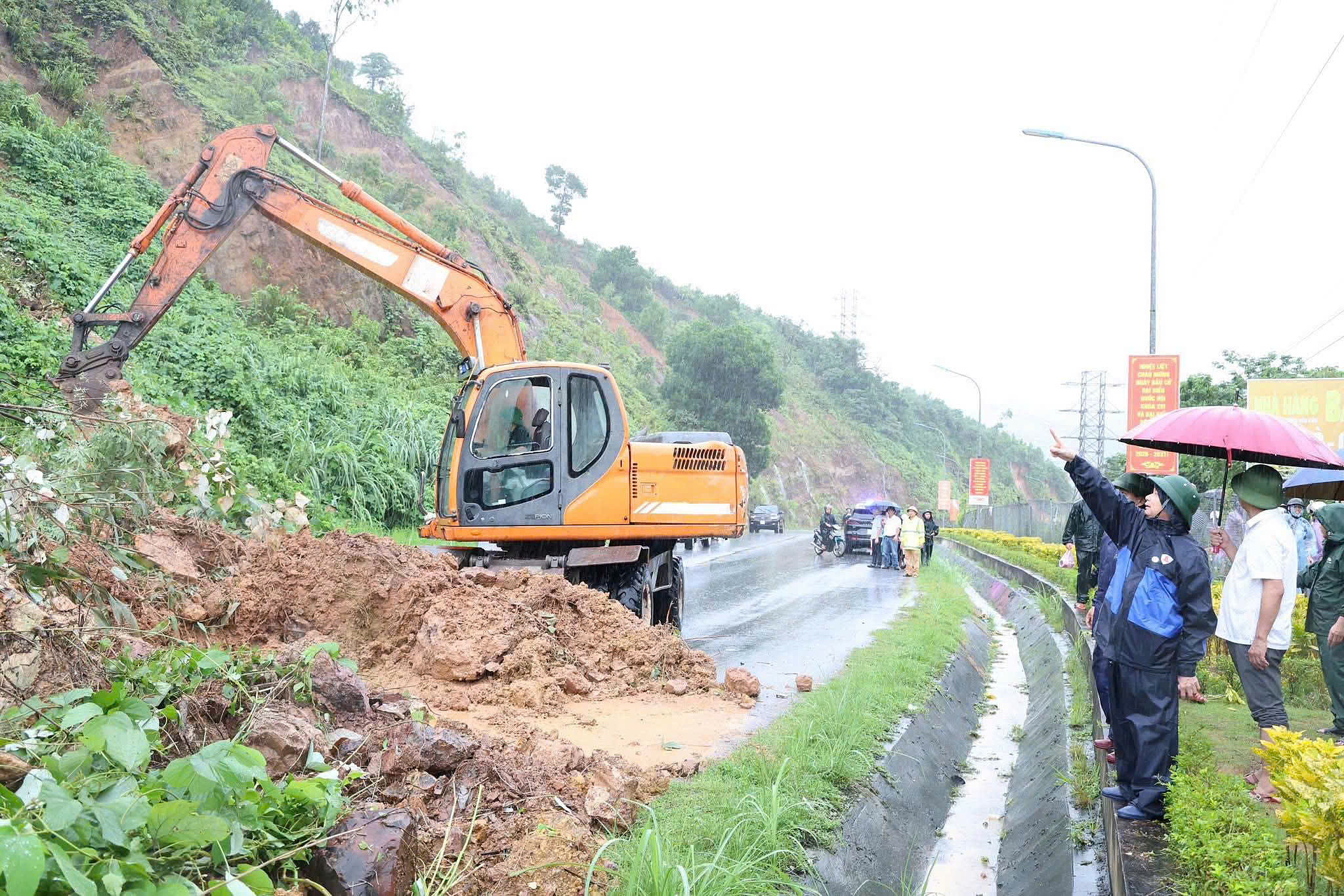
Heavy rain could cause urban flooding, particularly in industrial zones and low-lying areas. It also increases the risk of flooding on small rivers and streams, flash floods, and landslides in mountainous regions. The typhoon's circulation may also trigger thunderstorms, whirlwinds, and strong gusts.
The Prime Minister has urged ministries, agencies, and localities to closely monitor the typhoon's development and associated rainfall and floods. They are to proactively implement response measures and address the aftermath of the natural disaster. Local authorities must ensure the safety of vessels, especially in the Gulf of Tonkin. They are also tasked with reviewing and evacuating residents from areas at high risk of deep flooding, flash floods, and landslides, and controlling traffic at flooded areas, overflows, and roads prone to landslides.
The Ministry of National Defense and the Ministry of Public Security are prepared to deploy forces to support localities as needed. The Ministry of Construction will coordinate efforts to repair damaged and isolated transportation routes due to landslides. Nghe An is specifically required to urgently repair infrastructure, schools, and temporary bridges washed away by floods to ensure safe travel for residents and students before the new school year begins.
Gia Chinh