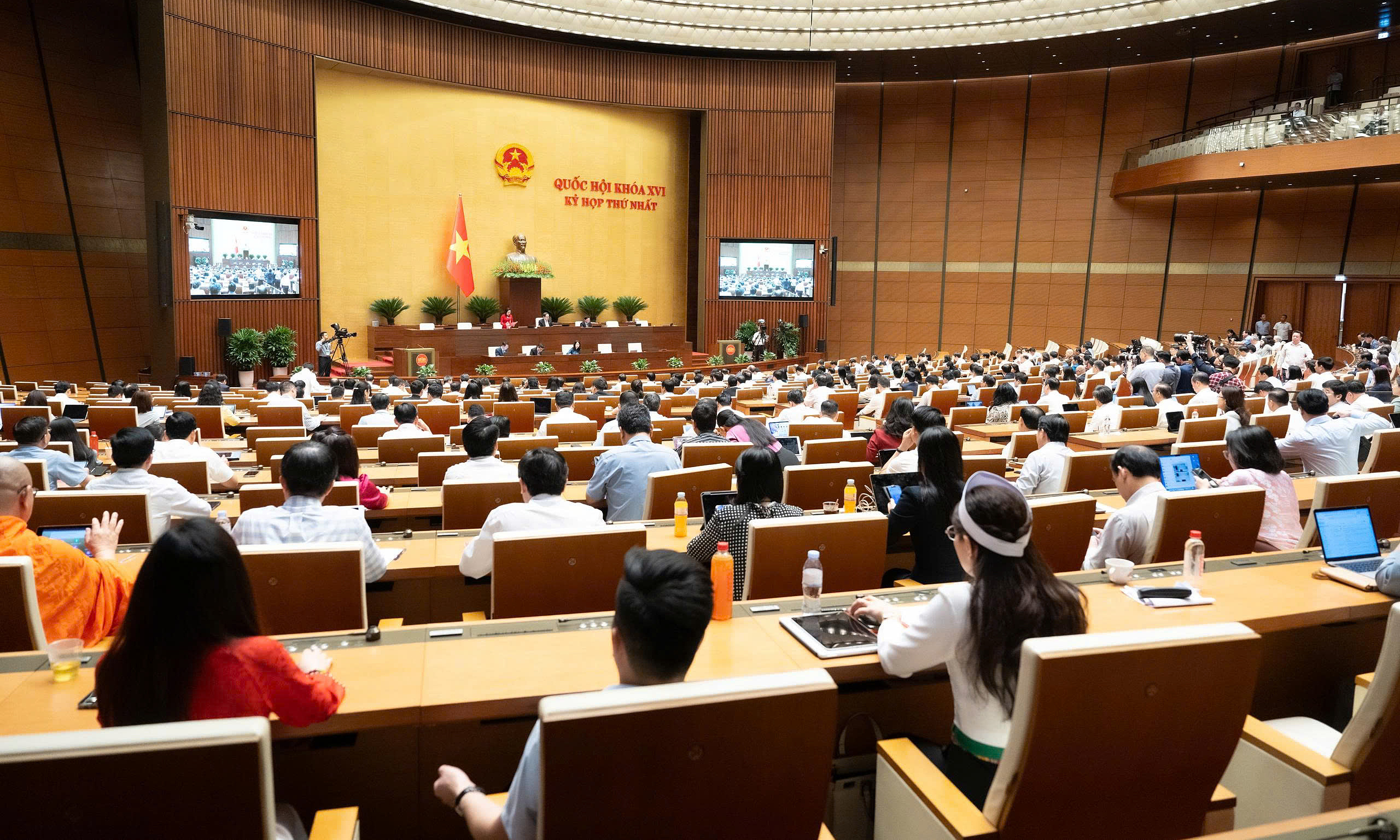
On the morning of 3/3, Deputy Prime Minister Pham Thi Thanh Tra chaired a meeting to deploy the 2026 work plan for the National Steering Committee for searching, gathering, and identifying martyrs' remains. She emphasized that this task is not merely an administrative order but a profound "command from the heart." The Deputy Prime Minister urged each committee member to innovate their thinking and implementation methods, consistently striving to collaborate on this crucial mission. Agencies must swiftly finalize plans and prepare all necessary conditions, aiming to launch the 500-day-and-night campaign by late March 2026.
Highlighting the spirit of "saying it and doing it, doing it immediately and effectively," the Deputy Prime Minister called for the completion of related mechanisms, particularly amendments to the Ordinance on preferential treatment for people with meritorious services and its detailed decree. Agencies must focus on clearing mines and explosive ordnance to facilitate the search and collection of martyrs' remains, especially in key areas such as Lao Cai, Lang Son, and Quang Tri. This work should proceed section by section, ensuring absolute safety. The decisive and widespread collection of biological samples for DNA testing from unidentified martyrs' remains in cemeteries nationwide is also essential. Furthermore, the national database on martyrs, their graves, and cemeteries must be rapidly completed.
 |
Deputy Prime Minister Pham Thi Thanh Tra speaking on 3/3. Photo: Thu Giang
According to the action program, the Steering Committee has set ambitious goals for the upcoming phases. For the 2026-2027 period, the objectives include: searching for and collecting 7,000 martyrs' remains; collecting biological samples from all 230,000 unidentified graves in national martyrs' cemeteries, along with newly discovered remains; conducting 18,000 DNA tests; and developing and operating a gene database for relatives of unidentified martyrs. In the 2027-2030 period, the Steering Committee aims to search for and collect an additional 3,000 martyrs' remains, conduct 30,000 DNA tests, and intensify the verification and correction of martyrs' graves with incomplete information using empirical methods.
In the preceding 2020-2025 period, the country successfully searched for and collected 6,959 martyrs' remains. Of these, 3,122 were found domestically, 938 in Laos, and 2,899 in Cambodia. The program also received 13,404 samples of martyrs' remains and biological samples from relatives. Analysis and cross-referencing led to the return of DNA test results for 1,094 cases, successfully identifying 103 martyrs' remains. Additionally, information for 2,560 martyrs' graves was verified, corrected, and supplemented using empirical methods.
Nguyen Phong