"Ancient nghien forest protected by the people" - this moss-covered cement sign was placed by residents of Dong Dang village, Bac Son commune, next to a map describing the forest's location and area, created by Lang Son province's agriculture department many years ago.
The ancient forest contains 184 nghien trees, with diameters ranging from 0,2 to 2,04 meters, concentrated on limestone mountains. These mountains are part of an ancient limestone system, averaging 600 meters in height, stretching to embrace the entire Bac Son valley. At the foot of the mountains lies Dong Dang, a village of ethnic Tay people with 625 residents living in stilt houses.
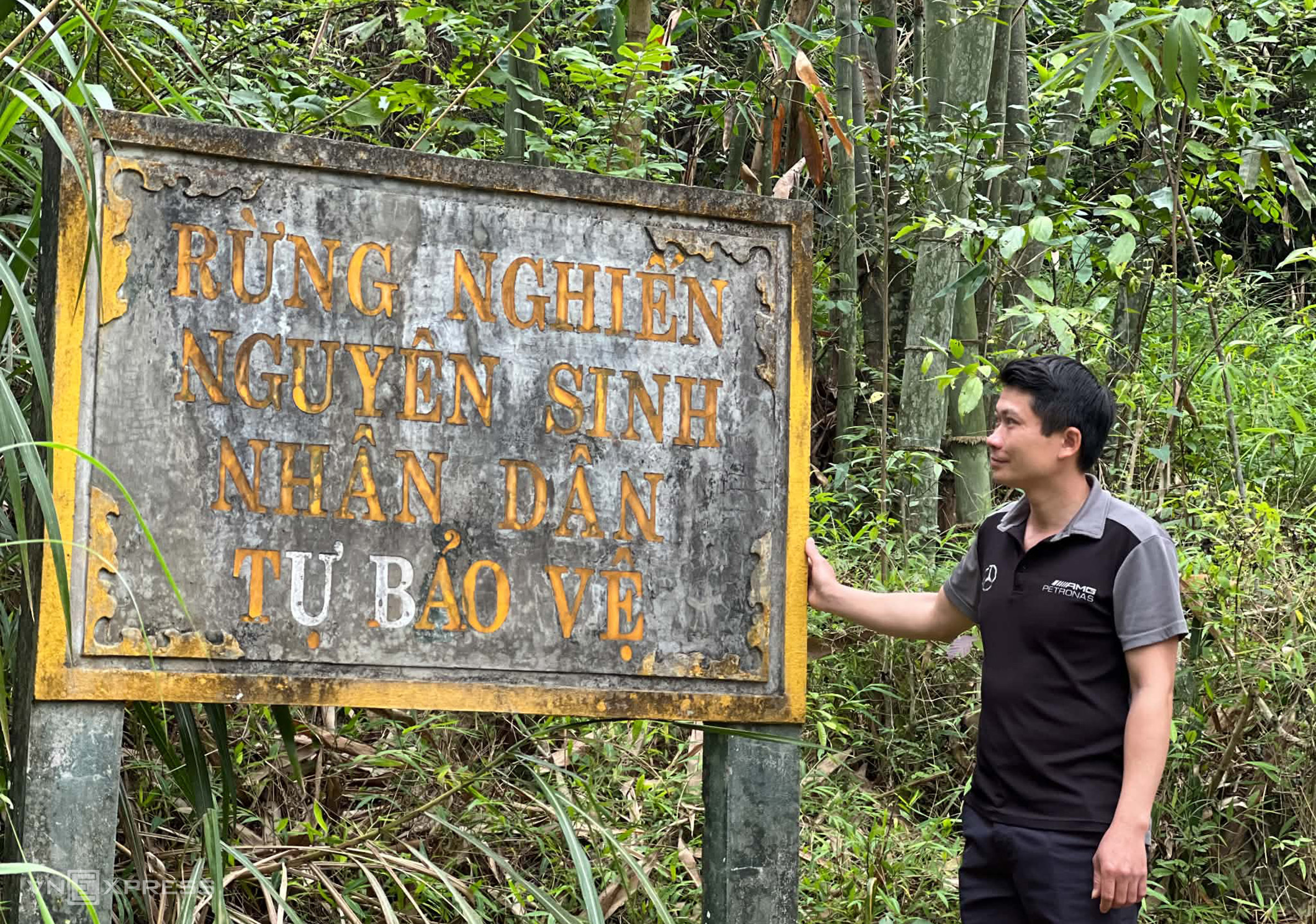 |
Village head Duong Huu Chung next to the sign placed by Dong Dang residents at the entrance to the nghien forest. Photo: Hong Chieu |
Functional agencies have managed and numbered the entire 13,3 hectares of nghien forest since 2013. Nghien is classified under group IIA in the list of endangered, precious, and rare species by the Ministry of Agriculture and Environment. The largest nghien trees in the old forest are covered with numerous burls, which are deformities formed during the trees' growth due to disorder or injury. Burl wood is hard, has beautiful swirling grains, and is often sought after for crafting fine art or feng shui objects.
Before being numbered for management, the forest existed for hundreds of years, alongside the history of the village's establishment. These intact ancient trees owe their preservation primarily to the community's invisible but strict rules: nothing, not even decaying wood, may be taken from the forest.
Village head Duong Huu Chung explained that the regulations originated from the Tay people's way of life when the first households settled and built homes at the foot of the mountain. The Tay knew that nghien trees have strong roots that tightly grip the rocks, preventing erosion. To prevent landslides and rolling stones during the rainy season and floods, villagers warned each other not to cut trees or remove forest products.
These reminders gradually formed into regulations and have been maintained through the "Hoi Hieu" (community association), the village's strongest institution. This organization, formed from traditional rituals, is responsible for funerals, weddings, and other important events in the village. The Hoi Hieu demonstrates that a funeral is not just a private family matter but requires the sharing and assistance of relatives and the entire village.
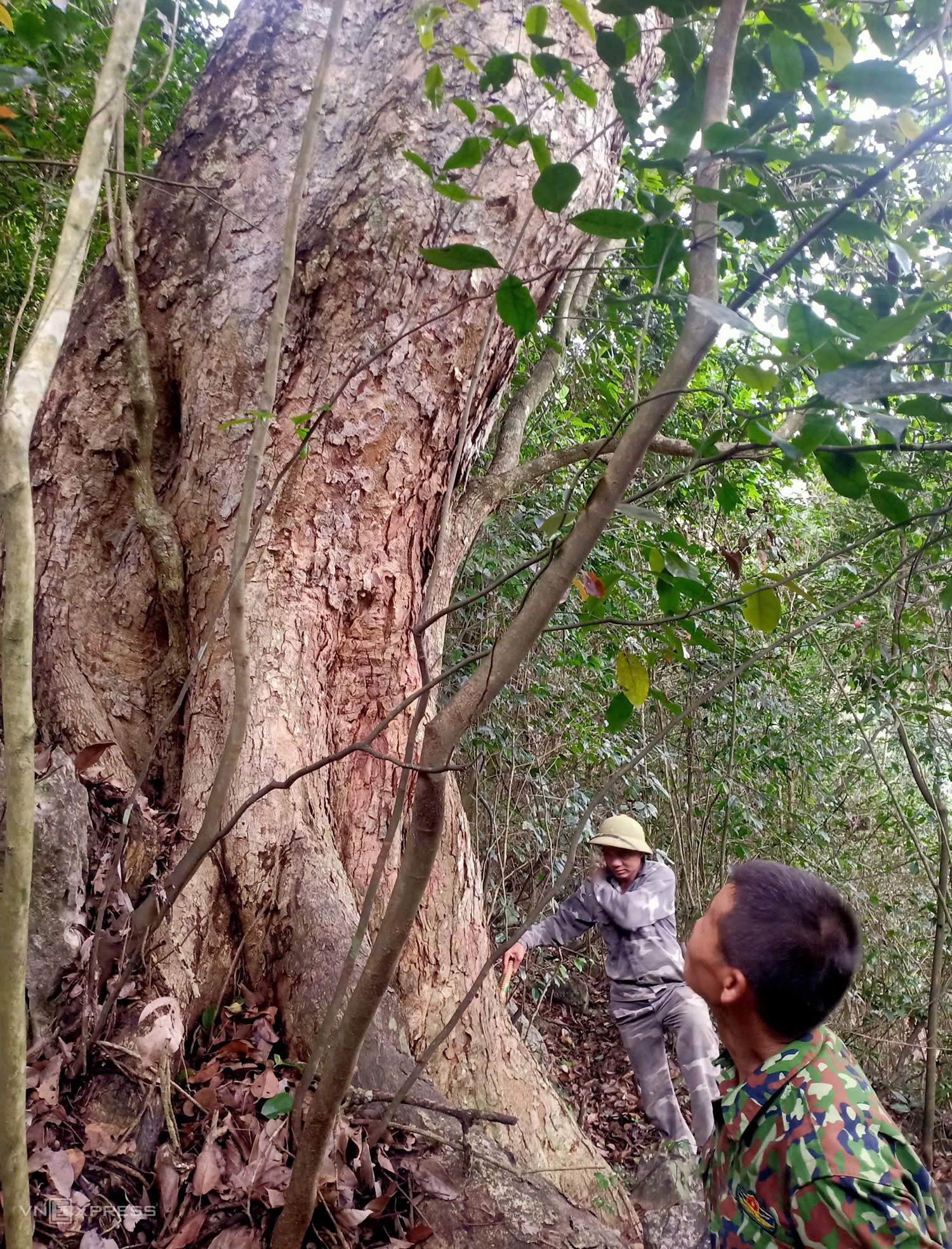 |
Ancient nghien tree stumps are regularly inspected by the Forest Protection Team, with reports submitted to functional management agencies. Photo: Huu Chung |
The Hoi Hieu stipulates that no trees may be cut, and no forest products may be taken. First-time offenders face a minimum fine of 500.000 dong and are reprimanded before the entire village. A third offense is unheard of because a second violation results in the offender being discussed by the villagers and expelled from the Hoi Hieu.
Those who make mistakes can still live in the village, but their funerals will lack pallbearers, and no one will help with family affairs. Beyond money or administrative regulations, what villagers fear most is expulsion from the Hoi Hieu, which means losing support for life's important events.
Dong Dang has 138 households. The village head counts one Dao person, two Nung people, 5 Kinh people, with the rest being Tay – all bearing the surname Duong. Outsiders often question the blood relations, but in reality, they belong to many branches: Duong Than, Duong Thoi, Duong Van, Duong Dinh, Duong Huu, and others.
By law, marriage is permissible after three generations. However, the Tay here say "not even after 9 generations" because the elderly worry about confusing kinship terms. Living in reliance on their clan and village, the fear of being separated from the community ensures everyone adheres to common regulations.
"People make a village. But the forest came before the village. To settle peacefully, we must protect the forest. This ancestral teaching has been passed down through generations, and all village members voluntarily comply," concluded the village head, who is from the 90s generation.
The regulations of the Hoi Hieu often serve as a cornerstone, helping the community preserve customs and develop cultural life. The head of the association is usually an elder with prestige, directly elected by the people. Major and minor village affairs in Dong Dang are often brought to this organization for discussion, allowing villagers' opinions to be heard before escalating to higher authorities.
A part of the Hoi Hieu's statutes was later incorporated into the Dong Dang village regulations, stipulating that all residents are responsible for protecting the forest, not cutting trees for burning, illegal logging, or hunting animals. Households do not clear forest for swidden agriculture and proactively implement fire prevention measures during the dry season. At the year-end review meeting, all 138 families sign commitments to protect the forest.
"Outsiders can hardly access the forest to damage it or steal trees," said Ms. Duong Thi Khuyen, a resident. To enter the forest, one must pass through the village, and residents living near the foot of the mountain immediately report any strangers seen heading into the forest.
In the collective memory of the villagers, the only violation involved a resident collecting firewood from another path and then crossing into this forest. Villagers immediately reported it to a Hoi Hieu member for inspection. Although unintentional, the offender voluntarily signed a record and paid a 500.000 dong fine. The money was added to a common fund for community activities.
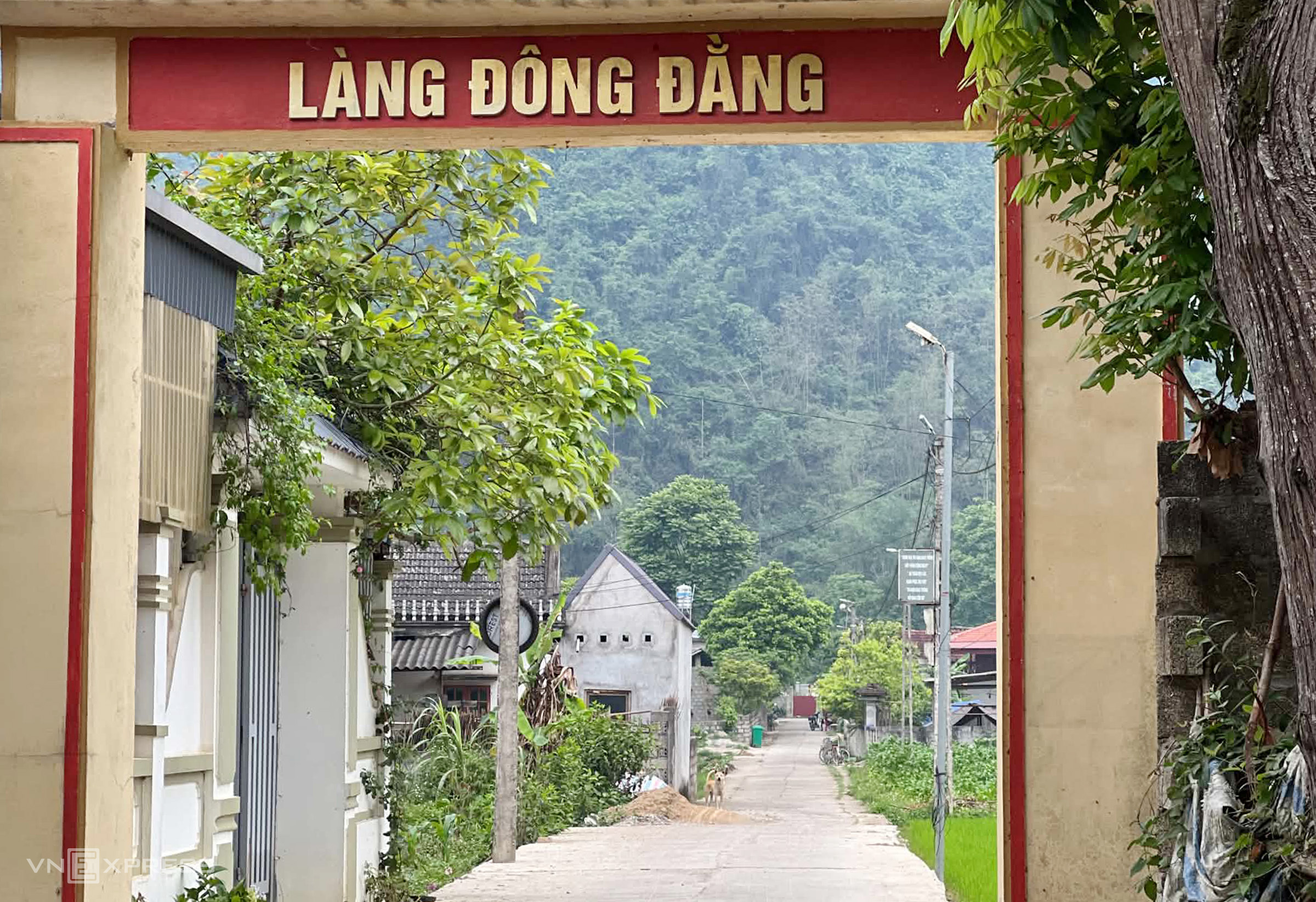 |
Entrance to Dong Dang village, home to 138 households, mostly Tay people with the surname Duong. Photo: Hong Chieu |
Dong Dang residents persistently adhere to village customs, partly due to their religious belief in worshipping Ong Duoi, a deity representing the mountains and forests. Under the ancient banyan tree at the forest entrance, there are still traces of a large, monolithic stone slab with ancient, undeciphered carvings, topped with an incense bowl also carved from stone. Village elders instruct children not to climb the stone slab, nor to relieve themselves or use foul language in this area. This belief is further reinforced by several instances where intruders reportedly became "bewildered as if possessed," requiring their families to bring offerings to appease the spirits.
However, concerns sometimes arise not from people but from unusual natural changes. In 2020, residents discovered silkworm cocoons hanging like white spiderwebs in their gardens. Upon checking the forest, they found a caterpillar-like species with sharp red teeth, like a saw, devouring nghien leaves. Functional agencies had to provide biological pesticides and deploy machinery for three days of spraying to control the infestation.
The forest shelters the village, prevents erosion, and stretches to embrace the entire Bac Son valley. At its foot lie rice fields along the stream with stilt houses belonging to Dong Dang, Tri Yen, and Quynh Son villages – the latter recently recognized as the best tourism village in the world in 2025.
The village head stated that as part of tourism development plans, the locality will design a route from the foot of the mountain for visitors to tour the ancient nghien forest. The core principle, however, is that the forest must be preserved in its original state, just as previous generations have done. With an average per capita income of 56 million dong per year, primarily from growing tobacco, crops, and fruit trees, Mr. Chung hopes residents can prosper in their homeland through the benefits of forest protection.
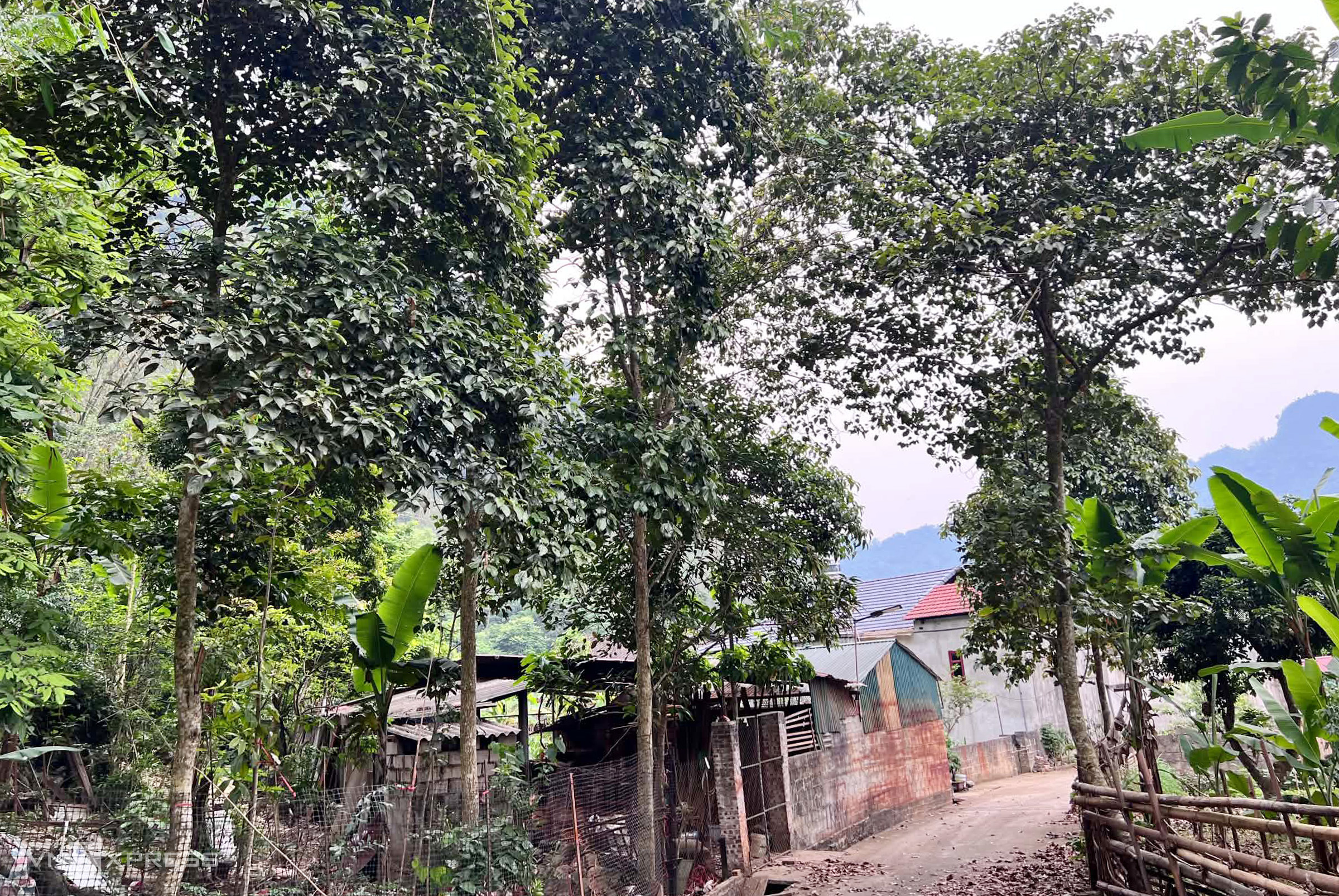 |
Nghien trees growing at the forest edge are "assets" of the forest, adjacent to villagers' gardens but untouched due to community regulations. Photo: Hong Chieu |
Beyond the nghien trees, Dong Dang residents are tasked with protecting a total of 427 hectares of forest within the Bac Son Nature Reserve. Some forest sections without nghien trees still boast a diversity of species such as ly, bong, and vang tam. Knowing that the limestone geology is suitable for these species, residents sometimes transplant saplings growing near the mountain base into the forest. Nghien trees grow slowly; many trunks initially as small as a pinky finger take decades to grow to the size of a wrist. Along the forest edge, a few trees grow straight, forming a natural barrier separating the forest from the residential area.
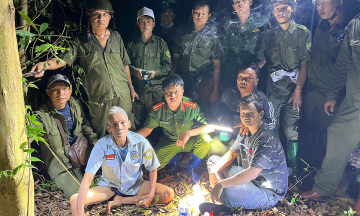
The Forest Protection Patrol Team was established seven years ago, comprising both specialized forces and young men from Dong Dang village. They patrol once a month, increasing frequency during the dry season. On each trip, team members bring packed rice and tools, navigating to inspect each nghien tree, taking photos, and reporting its condition to the management center. The team's favorite resting spot is under the canopy of a large tree with a trunk diameter of 2,04 meters, covered in burls and wild orchids. After each patrol, each member receives a support fund of 200.000 dong.
"Even without money, the people here have protected the forest for generations and will continue to do so for future generations," Mr. Chung said, expressing pride in his homeland's tradition, a Tay village that was also a revolutionary cradle for the Bac Son guerrilla team.
Hong Chieu