


The Urban Affairs Committee, Hanoi People's Council, recently reported on the survey results for green transport conversion across the city. The current bus network comprises 1,946 vehicles operating on 129 routes, managed by 11 operators.
By the end of 2025, the entire network is projected to have 503 clean energy buses across 33 routes, including 364 electric vehicles and 139 compressed natural gas (CNG) vehicles, accounting for 26,5% of all subsidized bus vehicles. Over the past four months, numerous additional electric buses have been deployed, bringing the total to 618 vehicles on 37 routes, representing 31,8%.
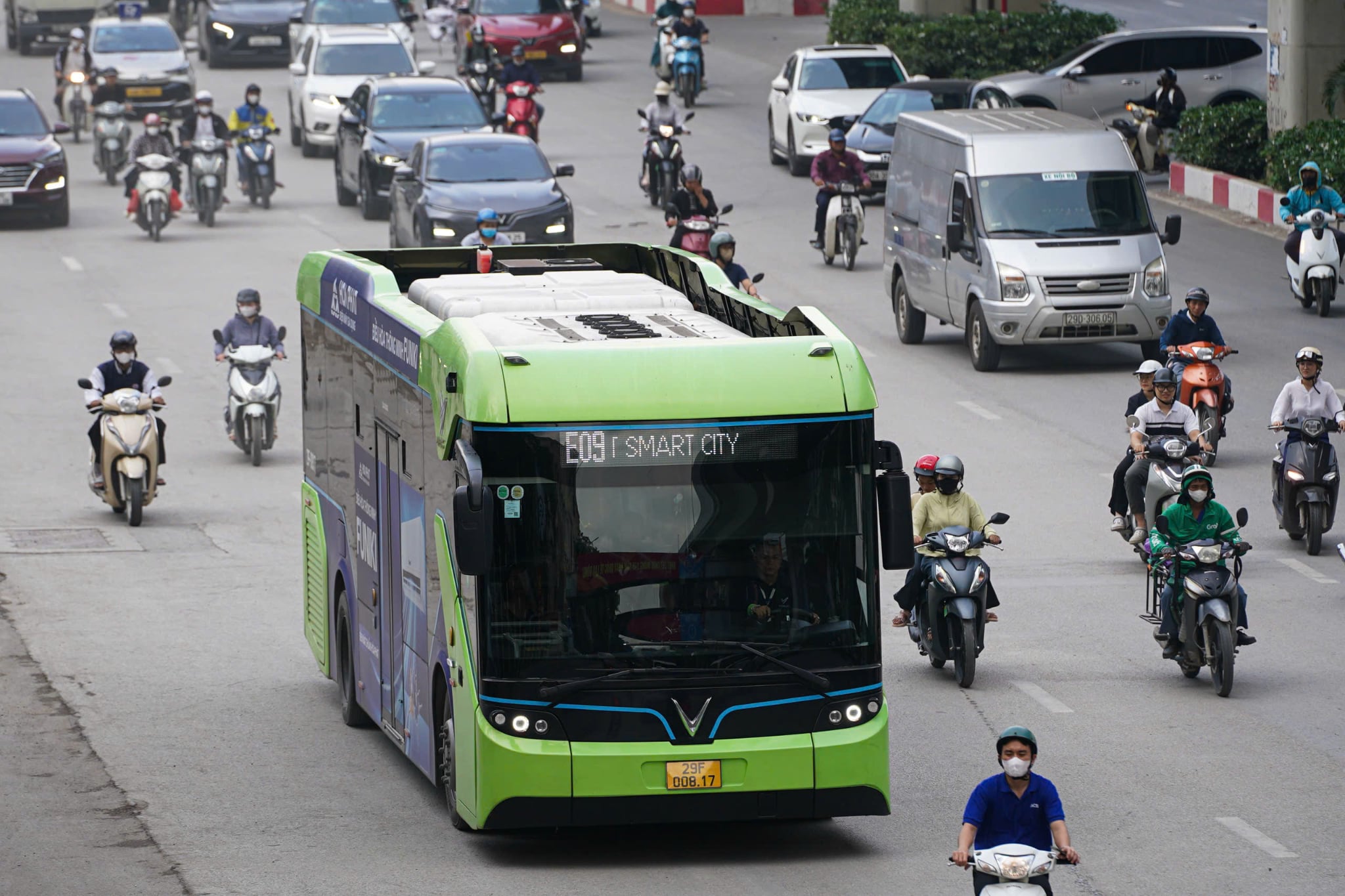 |
Electric buses running on Nguyen Trai street, Hanoi on the afternoon of 7/5. Photo: Hoang Giang |
By the end of april 2026, the city will add 203 electric buses on 12 routes, increasing the total number of clean energy vehicles to 822, or 42,1%. It is anticipated that by the end of 2026, the city will operate 857 clean energy buses, comprising 718 electric vehicles and 139 CNG vehicles, reaching 45,2%. This nearly doubles the city's original target of 20-23%.
Beyond buses, other public transport sectors also show positive transformations. For taxis, out of a total of 14,375 vehicles currently operating, 8,692 are electric vehicles, achieving a rate of 60,47%.
For ride-hailing services using vehicles with fewer than 8 seats, 23,819 electric vehicles and 105 hybrid vehicles are in operation, out of a total of 52,180 vehicles. This means 45,2% of these vehicles are green. Notably, electric vehicles under five years old account for nearly 70% of those undergoing procedures for new or renewed operating permits, indicating a substantive conversion trend.
However, the conversion of technology-connected motorcycle ride-hailing services is slower, with only 13,311 electric motorcycles out of 126,526, reaching 10,52%. The rapid increase in green energy vehicles and reduction in fossil fuel vehicles contribute to lower air pollution and encourage public usage.
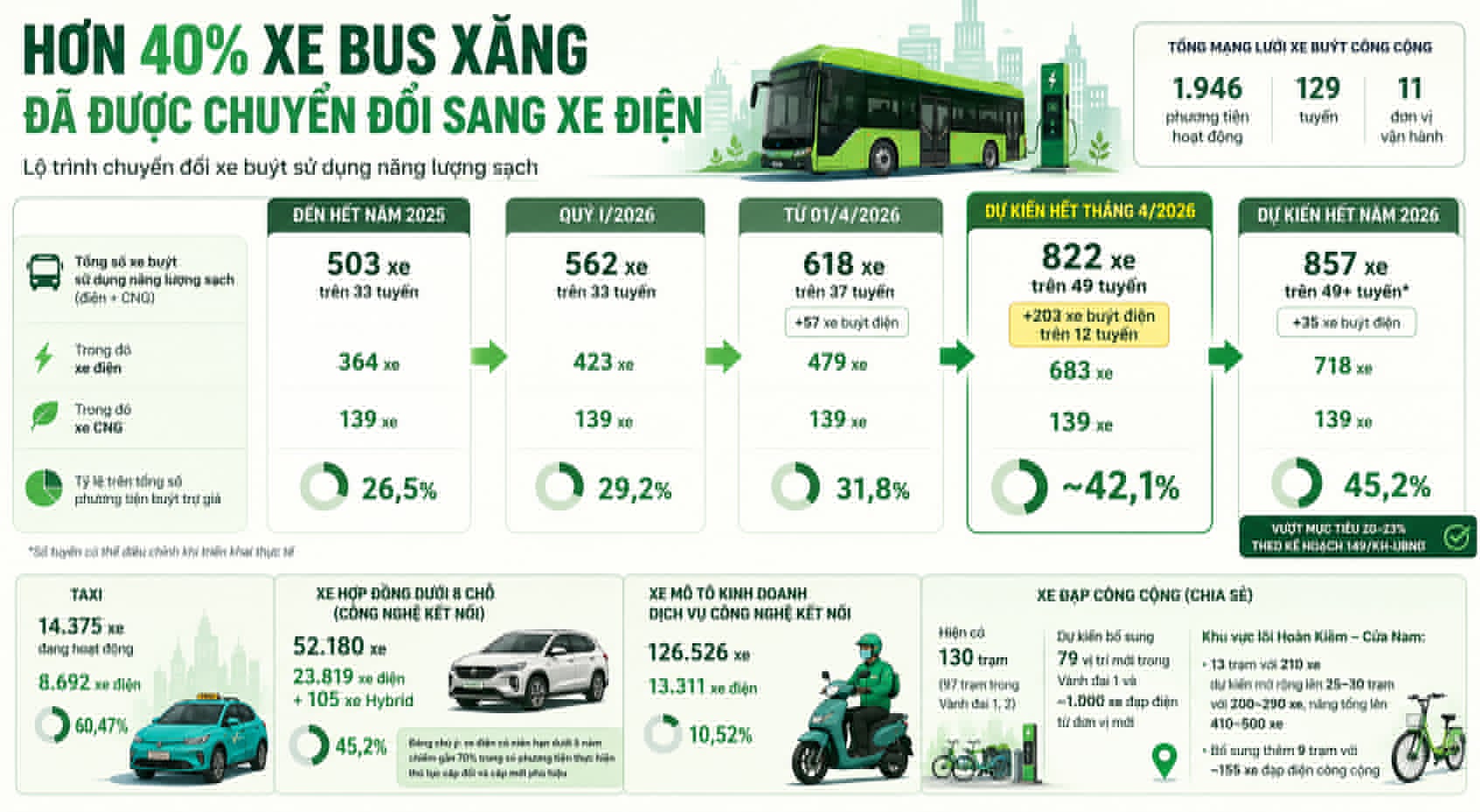 |
Graphics supported by AI. Source: Urban Affairs Committee, Hanoi People's Council |
Despite positive conversion results, a significant gap remains to achieve the 2030 goal of transitioning all buses and taxis to green energy. The Urban Affairs Committee highlighted several challenges: The rearrangement of bus routes within belt roads 1, 2, and 3 must align with the low-emission zone roadmap and require approval from the City People's Committee before implementation. Transport operators also need more time to prepare financial resources and vehicles.
Funding remains the biggest obstacle. The estimated capital required for operators to convert to green buses is 9,965 billion dong, while the maximum loan amount from the Hanoi Development Investment Fund for a single client is only approximately 950 billion dong.
The Urban Affairs Committee proposed that the City People's Committee promptly issue regulations on the procedures for supporting loan interest for public transport infrastructure investment and electric bus procurement. Concurrently, it is essential to review and propose unified technical standards for charging stations and battery swapping stations. This would allow operators to connect and share facilities, preventing fragmented and wasteful investments.
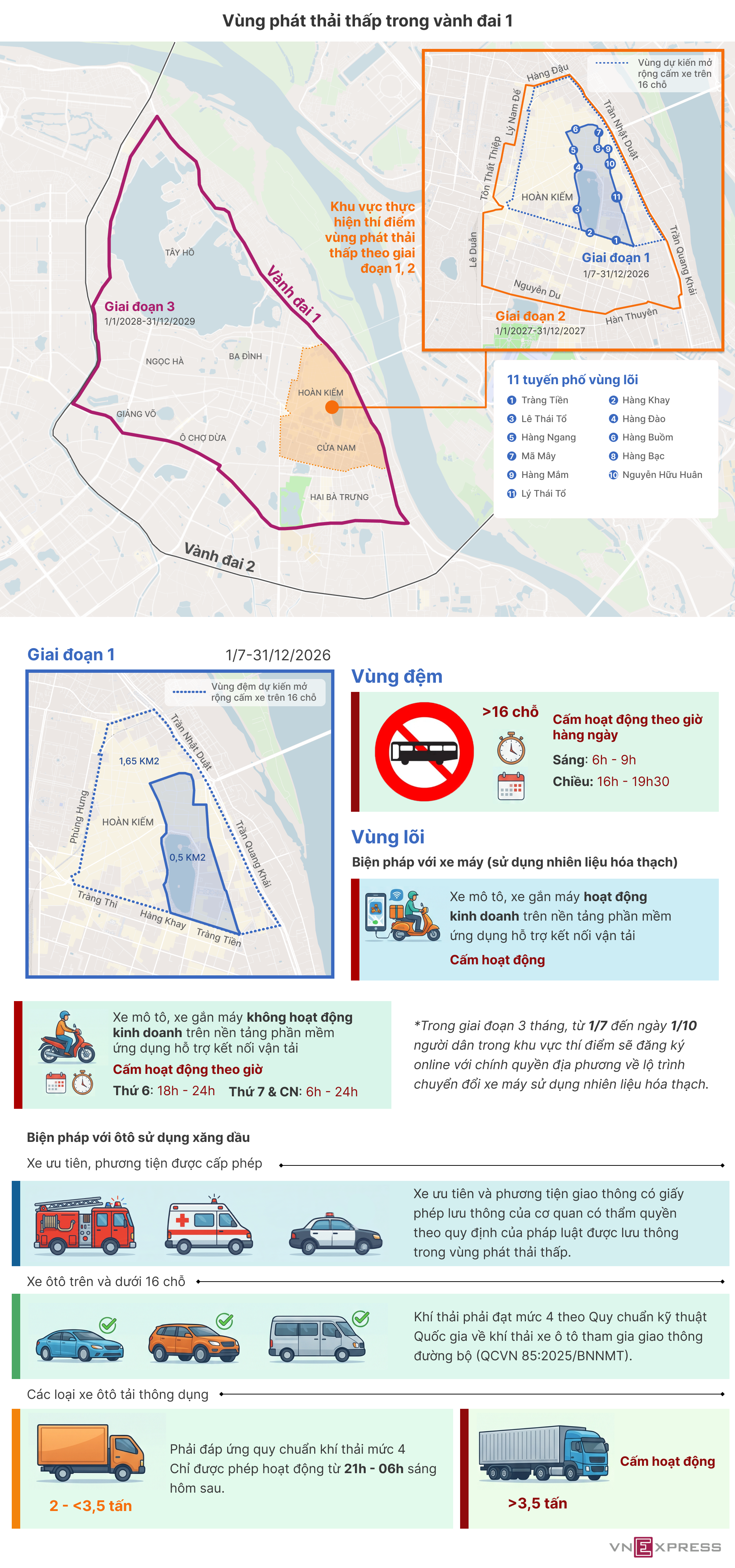 |
Expected roadmap for applying low-emission zones in Hanoi. Graphics: Tam Thao |
Moc Mien


