Residents of La village, in Luong Minh commune (formerly part of Tuong Duong district), have collectively decided to safeguard an ancient bronze Buddha statue, a decision made despite significant financial offers. This culturally important artifact, a dark bronze Buddha statue cast in a meditative posture, stands over 70 cm tall and weighs 57 kg. It is currently enshrined within a glass enclosure at the village's community cultural house, where it is preserved and worshipped.
The statue's origins trace back to 1757, the year La village was established, according to Lo Van Doan, an 83-year-old former teacher. At that time, Thach Giam commune, about 7 km from La village and the former center of Tuong Duong district, hosted a temple with a sizable Buddhist following. After settling in, La villagers pooled their resources to commission the statue, seeking blessings from the Buddha.
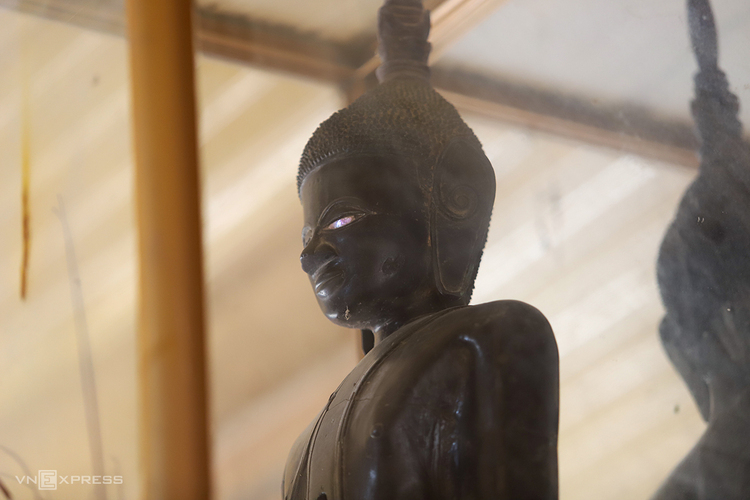 |
The ancient Buddha statue is worshipped at the community cultural house in La village, Luong Minh commune. Photo: Duc Hung
The casting process was not straightforward. Mr. Doan recounted that the first two attempts failed due to flaws in the hands and feet. Upon review, villagers discovered that a widow had not yet contributed her share of copper coins. Only after her contribution was complete did the subsequent casting succeed. "Villagers believed that the statue would only be complete if everyone contributed wholeheartedly", Mr. Doan explained.
Following its successful casting, villagers brought the statue to La village and erected a stupa for worship. The stupa collapsed during wartime, and from 1953, the statue was moved to the house of the village chief for safekeeping. Each new chief would assume responsibility for its worship and preservation on behalf of the community. In 2005, upon the completion of the community cultural house, the villagers ceremoniously moved the statue there for worship.
Mr. Doan noted that even at the time of its casting, many households in the village were not Buddhist but were deeply committed to its preservation. "Since the statue arrived, harvests have been abundant, and our fields have thrived. Because of this, everyone views this ancient artifact as a spiritual anchor. Families live in harmony and unity, and our children maintain traditions", Mr. Doan said.
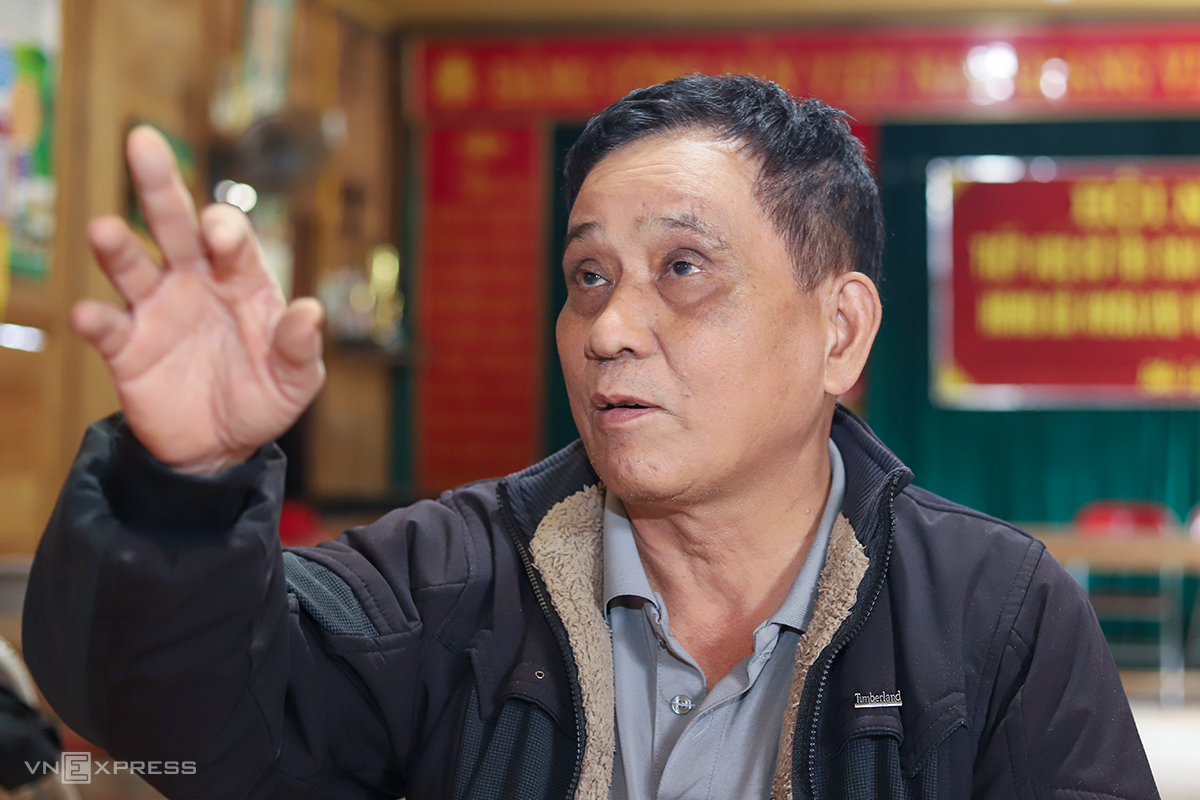 |
Lo Van Chinh recounts when a group of strangers offered billions of dong to buy the ancient statue, but La villagers voted not to sell. Photo: Duc Hung
Lo Van Chinh, secretary of the La village Party cell, revealed that because the Buddha statue is made of dark bronze, often mistaken for "black bronze", it has frequently attracted unwanted attention. In 1987, while housed at the village chief's residence, thieves breached a wall and stole the statue. It was found 20 days later in a stream near the village. Approximately three years later, another individual sneaked into the house and carried the statue away, only to return it a few days later.
In 2006, after the statue was moved to the community cultural house, thieves took advantage of a rainy night to break through a wall and steal it. Nearly one month later, residents noticed a group of strangers with a suspicious truck across the Nam Non river, more than 3 km from the village, and reported it to the village chief. When La villagers arrived, the thieves fled, and a search of the area revealed the statue hidden under a cluster of trees by the riverbank.
After multiple thefts and recoveries, the Buddha statue is no longer entirely intact. The finial on its head is missing and has been replaced with another material, and a small crack remains on its chest, a mark from when thieves threw the statue into the stream.
Following these repeated attempts at theft, more than 10 years ago, La villagers convened a meeting and agreed to construct a reinforced altar within the community cultural house. A concrete pillar, approximately 2 m high, was deeply embedded into the foundation, with a steel frame securely welded to the statue's body, ensuring its complete immobility. The area housing the statue was also fortified with a glass display case, carefully designed to deter theft. Since then, the statue has not been stolen.
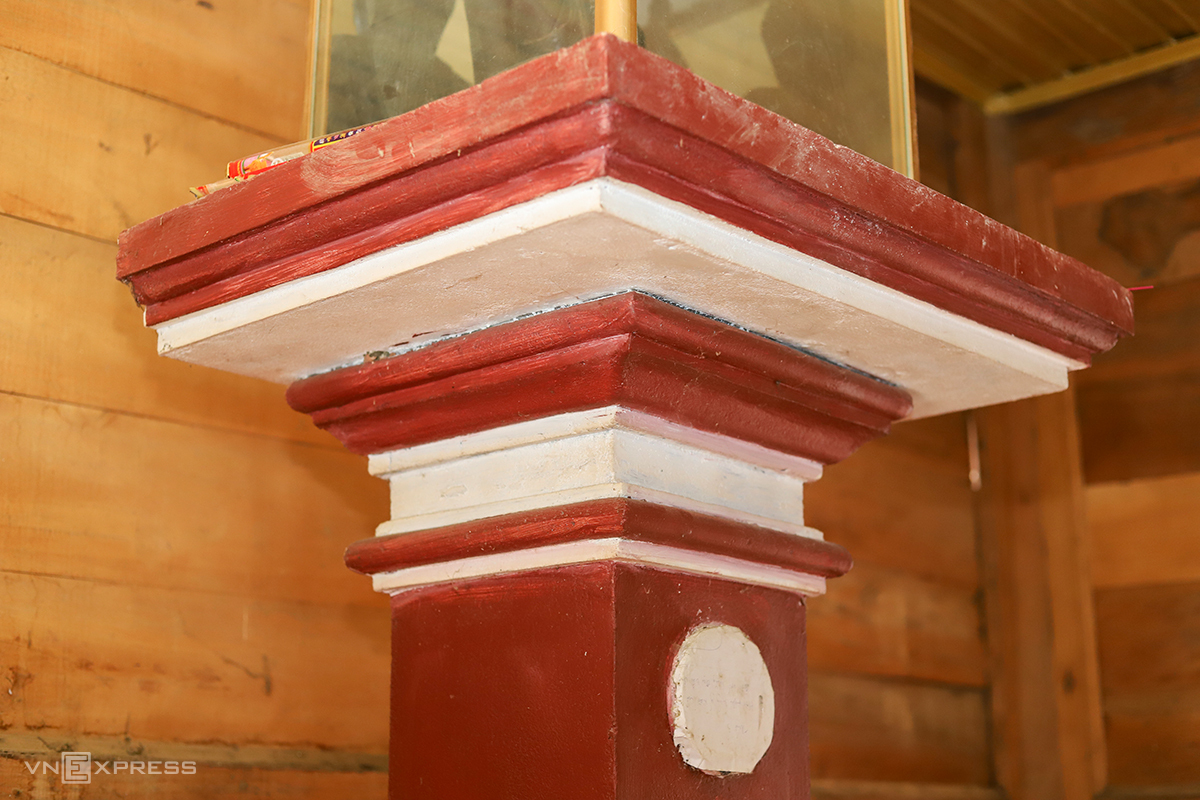 |
The statue is now secured with a steel frame, fixed to a concrete pillar, and protected by a glass case. Photo: Duc Hung
According to Mr. Chinh, not only thieves but also individuals from other areas have sought to purchase the statue. About 15 years ago, a group of antique dealers offered billions of Vietnamese dong to take the statue out of the village. If divided among more than 100 households, each family would have received over 40 million dong—a substantial sum for residents of this often-struggling highland region.
La village then held a meeting to gather opinions. Some suggested selling the statue to fund road construction or house repairs. However, the majority disagreed. Elders recounted how their ancestors contributed every coin to cast the statue, advocating for its preservation as the village's spiritual symbol. Ultimately, the entire village unanimously decided not to sell, regardless of the price. "Money comes and goes. The statue is the soul of our village; once lost, it cannot be recovered", Mr. Chinh recalled the words of many villagers who supported keeping the artifact.
Lim Thi Hong, an 88-year-old resident of La village, said that upon hearing the offer of over 40 million dong per family, many pondered for days. Fifteen years ago, that amount was enough to build a small stilt house or purchase several buffalo or cattle to start a livelihood. "My family was also struggling then, so to say I didn't think about the money would be a lie", Ms. Hong admitted. However, reflecting on the possibility of the statue, which their ancestors had diligently preserved for hundreds of years, leaving the village forever, Ms. Hong and many neighbors abandoned the idea of selling it. They rejected the offer from the strangers.
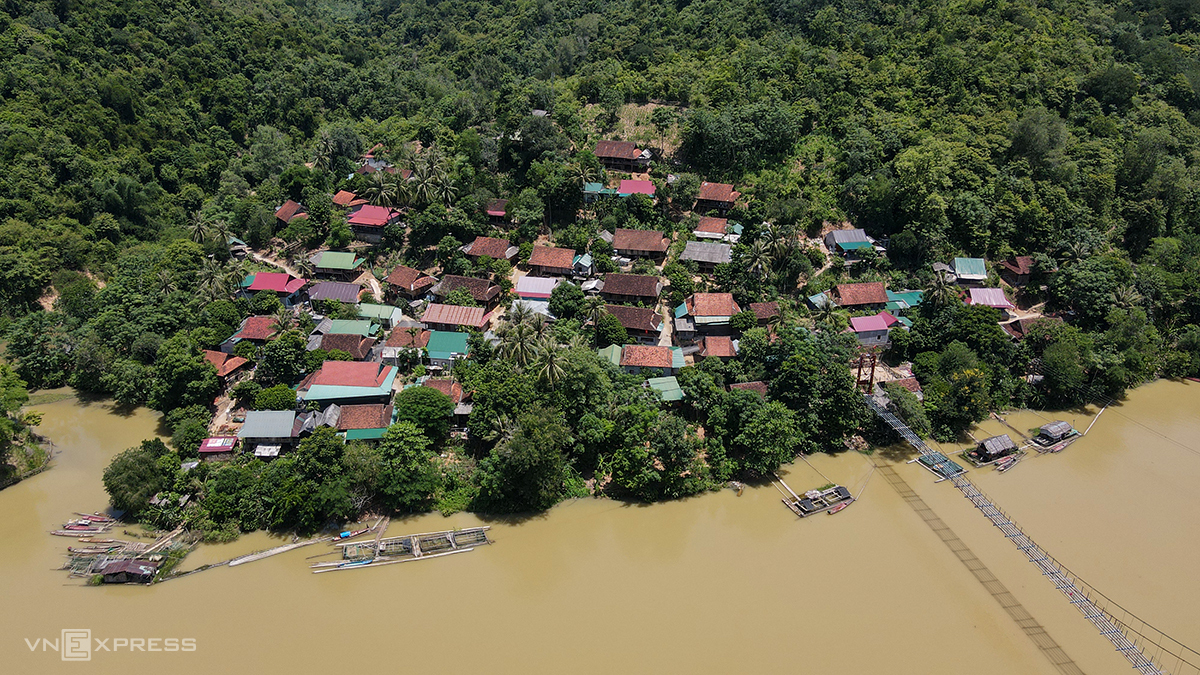 |
La village, Luong Minh commune, lies along the Nam Non river. Photo: Duc Hung
Kha Thi Chom, chairwoman of the Luong Minh commune Fatherland Front, stated that the ancient statue holds not only historical value but also symbolizes the unity of the people. Through numerous challenges, from multiple thefts to offers of billions of dong, the community has consistently chosen to keep it, seeing it as a way to protect the honor and identity of their homeland. "The decision to refuse to sell the statue clearly demonstrates the people's commitment to preserving their heritage", Ms. Chom said. She also mentioned that cultural and historical research teams occasionally visit La village for surveys, and some individuals interested in spiritual aspects have requested to borrow the statue for study, but the villagers have always politely declined.
Currently, at the end of the lunar year, La villagers traditionally perform a bathing ceremony for the statue using water infused with cinnamon bark. During festivals or important events, incense is lit before the statue to pray for peace.
By Duc Hung
Nghe An | Buddha statue | ancient