The Urban Development Law, passed by the National Assembly at an extraordinary session, establishes a legal framework for Ho Chi Minh City, other special urban areas, cities, and special economic zones. The law comprises 5 chapters and 66 articles, taking effect on 1/10/2026.
Under the law, a special economic zone is a commune, ward, or special zone with a strategic location; an international airport or a type I seaport or higher; a relatively independent and controllable space with a large population and natural area. This area will apply superior mechanisms and policies to enhance national competitiveness and promote socio-economic development at the local, regional, and national levels.
Urban regeneration: prioritizing residents to remain
A set of policies directly impacting residents focuses on urban regeneration, upgrading, reconstruction, and housing development.
Article 12 stipulates that urban construction, regeneration, and reconstruction must be synchronized with technical and social infrastructure; it must protect heritage, landscapes, green spaces, and waterways. The implementation process must harmonize the interests of residents, the State, and businesses; prioritizing on-site resettlement, enhancing amenities, and improving living environments and livelihoods in regenerated areas.
According to the Government's explanation, the policy considers not only those whose land use rights are revoked but also tenants, informal workers, small business households, the elderly, people with disabilities, and groups whose livelihoods depend on the old area. New residences must offer living conditions at least equal to or better than previous ones.
The law groups social housing, resettlement housing, lodging houses, and rental housing under the same policy cluster, enabling localities to proactively meet actual demands. Individuals whose homes and residential land are expropriated and who are resettled in social housing will possess full ownership rights, similar to commercial housing, upon full payment for the property.
The City People's Committee (UBND) is empowered to regulate the procedures for investing, constructing, and developing various types of housing, excluding commercial housing; it can also decide on conversions between certain housing types for flexible use, aligning with residents' needs.
The City People's Council (HDND) specifies the criteria and conditions for implementing urban regeneration, upgrading, and reconstruction projects; it issues preferential mechanisms for investment, construction, management, maintenance, and operation. These policies aim to support the development of social housing, public housing, resettlement housing, lodging houses, rental housing, and other types.
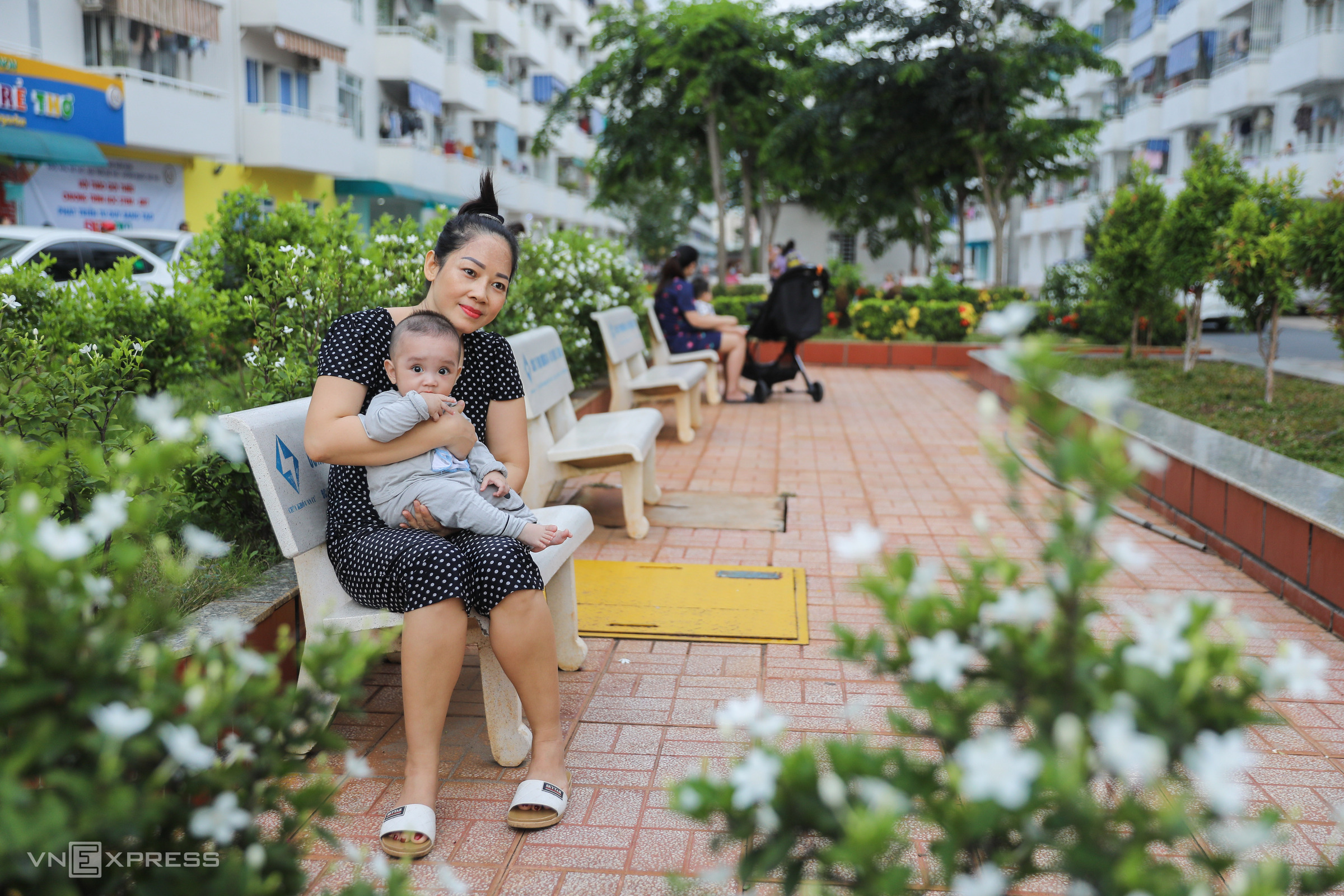 |
Residents at Le Thanh An Lac social housing complex, Ho Chi Minh City. *Photo: Quynh Tran*
City takes proactive steps in education investment
According to Article 27, the City People's Council (HDND) can establish mechanisms for management, finance, public asset utilization, and social resource mobilization for multi-level educational institutions, high-quality schools, affiliated educational facilities, and advanced, modern school models.
The city can develop scholarship policies and special incentives for gifted, talented, or outstanding individuals; it can support learners, teachers, and education administrators in studying, researching, and guest lecturing both domestically and internationally in key sectors and fields.
The locality is also assigned to commission, order, or tender training and development services with universities, vocational education institutions, research institutes, and organizations with training functions to cultivate high-quality human resources.
The City People's Council (HDND) is authorized to stipulate policies for supporting and investing in facilities and equipment for key educational and training institutions; modernizing several high-quality colleges to meet regional and international standards; and subsidizing tuition fees for students in key vocational fields.
The Chairman of the City People's Committee (UBND) can decide on the establishment, merger, division, separation, dissolution, renaming, and licensing of operations for certain universities and colleges under its management.
These regulations enable the city to proactively select school models, invest in facilities, provide vocational training, and attract human resources according to development needs, rather than applying a single, uniform mechanism.
Additional support for healthcare costs
Article 28 grants the city additional authority in organizing its healthcare system and implementing social welfare policies.
The City People's Council (HDND) can support disease prevention costs and certain medical examination and treatment expenses beyond the scope of health insurance coverage. The locality can also develop policies to enhance the pre-hospital emergency system, medical transport, and support the operations of all levels of the healthcare system.
The city can issue specific preferential regimes for revolutionary contributors within its jurisdiction; it can expand beneficiaries and increase social welfare and security benefits towards a comprehensive, modern, sustainable, and universal coverage.
The law also mandates the development of elderly care facilities and social assistance centers; it expands medical examination and treatment services for foreigners at local healthcare facilities.
Healthcare and social security policies are integrated into overall urban development, covering everything from disease prevention, emergency care, patient transport, to supporting treatment costs. This enables the city to proactively address needs arising from its demographic characteristics and local living conditions.
Enhanced food safety supervision
The City People's Council (HDND) can issue preferential mechanisms, investment support, and resource mobilization for food safety efforts; it can develop shared infrastructure and food management databases within the city and special urban areas.
The city administration is empowered to stipulate measures, monitoring procedures, and rapid response protocols to prevent, mitigate, and remedy food safety incidents. Regulations for supplying and sharing information about raw materials and food products manufactured in the city or brought in from other areas must also be established.
These regulations provide a basis for the city to control the food supply chain over a broader scope, detect risks early, and respond quickly when incidents occur.
Son Ha