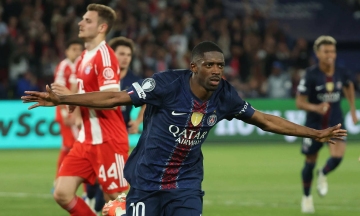
"If a player covers their mouth and says something with racist implications, then they must be sent off the field," Gianni Infantino told Sky News. He asserted, "We have the right to assume that they said things they shouldn't have, otherwise there would be no reason to cover their mouth. These are actions that we can and must eliminate to affirm our seriousness in the fight against racism."
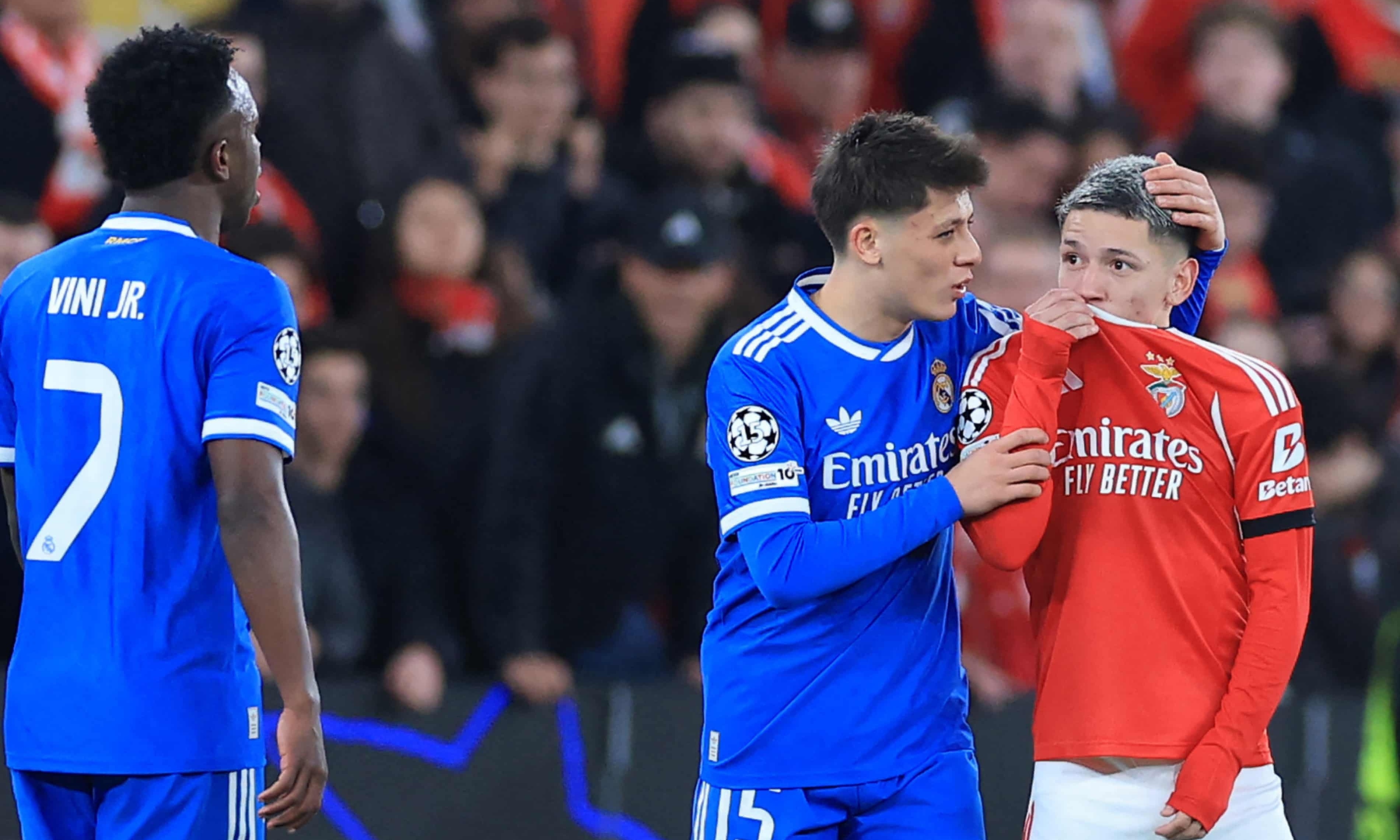
This proposal follows a recent incident involving Real Madrid forward Vinicius, who accused Benfica player Gianluca Prestianni of making racist insults. The accusation arose during the first leg of the Champions League play-off on 18/2, bringing renewed attention to the long-standing habit of players covering their mouths to obscure conversations from cameras.
 |
Gianluca Prestianni (in red) covers his mouth while speaking to Vinicius during Benfica's 0-1 loss to Real in the first leg of the Champions League play-off on 17/2. *Photo: Socrates*
The match in Lisbon was halted for about 10 minutes to implement UEFA's anti-racism protocol. This occurred after the Brazilian star informed chief referee Francois Letexier that Prestianni had called him a "monkey."
Following the game, Vinicius posted a statement in Portuguese on Instagram, asserting: "Racists, first and foremost, are cowards. They have to cover their mouths with their shirts to hide their weakness."
In contrast, Prestianni and the entire Benfica Club denied the accusation. The Argentinian player stated on his personal Instagram page that Vinicius had "unfortunately misunderstood what he heard." Despite the denial, the winger was suspended from playing in the second leg pending the official investigation results from UEFA.
This issue was discussed at the International Football Association Board (IFAB) meeting on 28/2. The head of FIFA affirmed the need for a more robust interventionist approach to punish those who intentionally cover their mouths to avoid detection.
Infantino further declared, "Of course, in a disciplinary process, we need to analyze the situation and gather evidence, but in the future, we cannot stop there. We must act more firmly and with greater deterrence." He also suggested considering cultural change and offering opportunities for players to apologize: "Perhaps we should not only consider punishment but also change the culture and create opportunities for players or anyone who offends to apologize. In the heat of the moment, people can do things they regret. If they apologize, the penalty should then be considered differently. We should perhaps consider this possibility."
The measures Infantino mentioned could be adopted and applied as early as the 2026 World Cup. The FIFA Congress in Vancouver, Canada, in March this year will be the next important milestone to consider this issue.
Ha Phuong (according to Guardian, L’Equipe)